
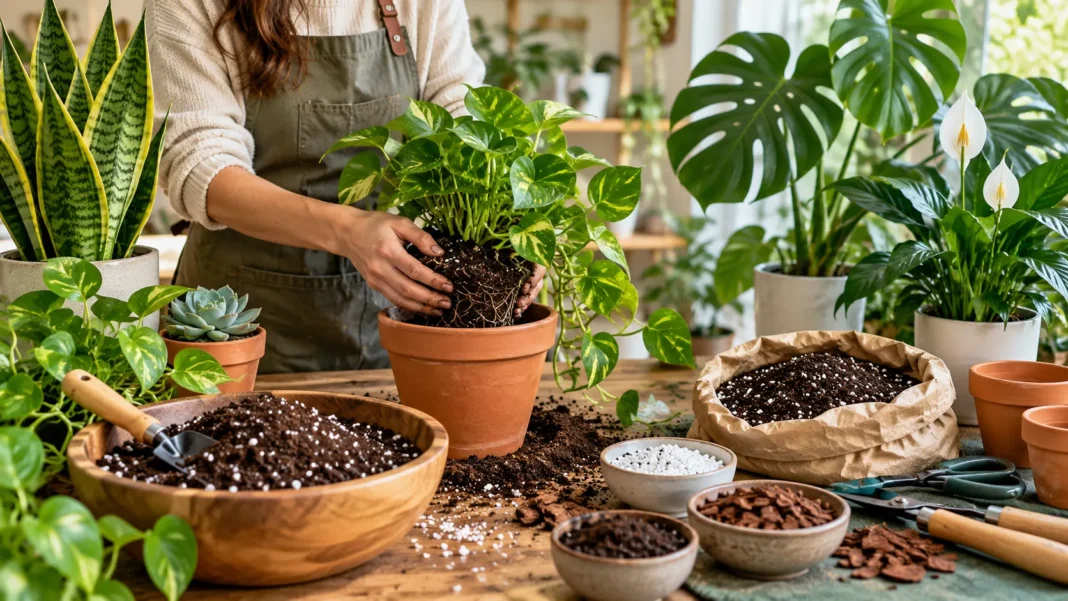

Choosing the best soil for indoor plants and houseplants is essential for healthy roots, steady growth, and long-lasting greenery. Many indoor plant problems, including yellowing leaves, slow growth, and root rot, begin with unsuitable potting soil. The right growing medium provides a healthy balance of moisture, air circulation, drainage, and nutrients, helping plants thrive inside homes and offices.
However, not every houseplant grows well in the same type of soil. Tropical foliage plants often prefer a moisture-retentive but airy potting mix, while succulents and cacti require faster-draining materials. Understanding these differences makes it easier to select soil that supports each plant’s natural growing habits.
This guide explains the best soil for indoor plants, essential potting mix ingredients, and practical ways to improve drainage and moisture retention. You will also learn how to choose soil for popular houseplants, prepare homemade potting mixes, recognize poor soil conditions, and maintain healthy indoor plants throughout the year.
What Is the Best Soil for Indoor Plants?
The best soil for indoor plants is generally a lightweight, well-draining potting mix that retains enough moisture to support healthy roots. Unlike ordinary garden soil, indoor potting mixes are designed for growing plants inside containers. They commonly contain ingredients such as peat moss, coco coir, perlite, and composted bark. These materials provide a useful balance of moisture retention and air circulation.
Most houseplants need soil that allows excess water to drain while keeping sufficient moisture available between watering sessions. A mixture that remains constantly saturated can reduce oxygen around roots and encourage root problems. Conversely, soil that dries extremely quickly may leave plants without enough water. The ideal growing medium depends on the species, container size, lighting conditions, and indoor environment.
A general-purpose indoor potting mix is a practical starting point for many common foliage plants. However, orchids, cacti, succulents, and certain tropical species benefit from more specialized growing media. Checking the plant’s natural growing requirements helps determine whether additional drainage or moisture retention is necessary. Selecting suitable soil from the beginning makes ongoing plant care considerably easier.
Why Good Potting Soil Matters for Houseplant Health
Healthy roots need access to water, oxygen, and essential nutrients to support plant development. Potting soil acts as the foundation that supplies these resources within the limited space of a container. When the growing medium has suitable structure, roots can spread and absorb moisture effectively. This supports leaf production, plant stability, and overall growth.
Poor potting soil can create several problems, particularly when it becomes compacted or remains wet for extended periods. Excessively dense material restricts airflow and may contribute to root rot. Soil that repels water after drying can also create inconsistent watering conditions. These problems may appear as yellow leaves, wilting, weak growth, or damaged roots.
Choosing high-quality potting soil also makes routine houseplant maintenance more manageable. A suitable mixture allows water to move through the container without immediately washing away all available moisture. It can also support beneficial microbial activity and nutrient availability. Good soil cannot replace proper lighting and watering, but it provides an important foundation for successful indoor gardening.
Essential Ingredients in a Quality Indoor Potting Mix
Most quality indoor potting mixes combine several ingredients that perform different functions. Coco coir and peat moss help retain moisture, while perlite improves drainage and air circulation. Composted pine bark adds structure and creates spaces through which water and air can move. Combining these materials allows growers to adjust soil characteristics for different houseplants.
Coco coir is produced from coconut husks and is commonly used as an alternative to peat-based materials. It retains moisture while helping create a relatively lightweight growing medium. Perlite is a porous volcanic material that provides additional air spaces within potting mixes. These two ingredients are often combined when preparing soil for tropical indoor plants.
Other useful ingredients include pumice, horticultural charcoal, worm castings, and composted organic matter. Pumice supports drainage and structure, while worm castings can contribute small amounts of plant nutrients. Charcoal may serve specific purposes in certain mixes but is not essential for most houseplants. Understanding each ingredient helps gardeners avoid adding unnecessary materials that may affect soil performance.
Best Soil for Pothos and Philodendron Plants
Pothos and many common philodendrons are popular indoor plants because they adapt to a range of household conditions. These tropical plants generally prefer a loose growing medium that holds moderate moisture while allowing excess water to drain. A standard houseplant potting mix can work well when it contains sufficient aeration materials. Healthy roots are more important than using a complicated soil recipe.
A practical mixture can combine two parts general-purpose potting mix with one part perlite and one part fine orchid bark. This creates additional air spaces while retaining some moisture for root growth. The exact proportions can be adjusted based on indoor humidity and watering habits. Plants growing in warmer, brighter locations may require more frequent watering.
Pothos and philodendron plants should not remain in constantly saturated soil. Containers with suitable drainage holes help excess water escape after watering. Allowing the upper portion of the mixture to dry slightly before watering again often supports healthy growth. Monitoring actual soil moisture is more reliable than following a rigid watering schedule.
Best Soil for Monstera and Other Aroid Houseplants
Monstera plants are known for their impressive foliage and benefit from potting mixes that combine moisture retention with generous airflow. Many commonly grown aroids naturally develop roots in environments containing decomposing organic material and loose debris. A chunky indoor potting mix can imitate some of these conditions. This helps prevent dense soil from remaining wet around sensitive roots.
A suitable Monstera potting mix may include regular potting soil, orchid bark, perlite, and coco coir. Bark provides structure, while perlite helps create spaces that allow roots to receive oxygen. The moisture-retaining ingredients prevent the mixture from drying too quickly. Gardeners can adjust the proportions depending on pot size, growing conditions, and the plant’s watering requirements.
Other aroids, including certain Anthurium and philodendron varieties, may benefit from similar airy mixtures. However, individual species differ in moisture preferences and root structure. Young plants growing in smaller containers may need finer ingredients than mature specimens with larger root systems. Observing moisture levels and root health helps determine whether the potting mix is suitable.
Best Soil for Snake Plants and ZZ Plants
Snake plants and ZZ plants are popular houseplants because they can tolerate occasional periods of dry soil. Their underground structures store moisture, making consistently wet potting mixes a common source of problems. These plants benefit from well-draining growing media that allow water to move through the container efficiently. A lightweight succulent-style potting mix is often suitable.
You can improve a general-purpose potting mix by adding perlite or pumice to create greater drainage and aeration. A commercial cactus and succulent mix may also work well for these species. The growing medium should retain some moisture without remaining saturated for long periods. Containers with drainage holes are particularly helpful for avoiding excessive water accumulation.
Snake plants and ZZ plants often require less frequent watering than moisture-loving tropical foliage plants. Their watering needs still depend on light, temperature, container size, and soil composition. Check the growing medium before adding more water rather than relying on a fixed weekly routine. Using an appropriate potting mix makes it easier to maintain healthy roots.
Best Soil for Cacti and Indoor Succulents
Cacti and succulents generally require faster-draining soil than many tropical houseplants. These plants often store water in their leaves, stems, or roots, allowing them to tolerate periods of dryness. A dense potting mix that stays wet can create unfavorable growing conditions. Choosing a mineral-rich, well-aerated mixture helps maintain healthier roots and reduces the risk of excessive moisture.
Commercial cactus and succulent potting mixes provide a convenient starting point for indoor growing. These products often contain materials such as perlite, pumice, coarse sand, and organic matter. Additional mineral ingredients may improve drainage when a commercial mix retains too much moisture. Avoid using fine construction sand because it can compact and reduce airflow around roots.
Successful succulent care involves balancing soil drainage with appropriate watering and lighting. Even fast-draining soil may remain wet when containers are excessively large or receive very little sunlight. Allow the growing medium to dry according to the plant’s requirements before watering again. Combining suitable soil with adequate light supports healthier and more consistent growth.
Best Soil for Peace Lilies and Tropical Foliage Plants
Peace lilies prefer a growing medium that retains consistent moisture without becoming waterlogged. These tropical plants generally grow well in a high-quality indoor potting mix containing moisture-retaining organic materials. Coco coir, peat moss, and fine bark can help maintain suitable conditions. Adding perlite allows excess water to drain and improves the availability of oxygen around roots.
Other tropical foliage plants, including many Calathea and Maranta varieties, may benefit from similarly moisture-retentive mixtures. However, these plants can differ in their sensitivity to dryness and saturated conditions. A potting mix that drains well while remaining lightly moist is often a useful starting point. Regularly checking soil conditions helps prevent both underwatering and excessive watering.
Peace lilies may develop drooping leaves when their growing medium becomes too dry, although other problems can produce similar symptoms. Yellowing leaves can also occur when roots remain wet for extended periods. Rather than watering automatically, check the actual moisture level before adding water. Appropriate soil selection makes these common indoor plant care decisions easier.
Best Potting Mix for Orchids and Epiphytic Plants
Many popular indoor orchids require a different growing medium from ordinary houseplants. Phalaenopsis orchids, for example, naturally grow attached to trees rather than rooted in dense ground soil. Their roots benefit from excellent airflow and suitable moisture levels. Traditional potting soil can remain too compact around these roots, making specialized orchid mixes a better choice.
Orchid growing media commonly contain chunky bark, perlite, and sometimes sphagnum moss. Bark creates large air spaces, while moss can provide additional moisture retention when used appropriately. The ideal combination depends on the orchid species, container, humidity, and watering routine. A mixture suitable for one orchid variety may not work equally well for another.
When repotting orchids, examine the condition of the roots and remove deteriorated growing material. Replace old bark when it begins breaking down and losing its open structure. Choose a container that allows appropriate drainage and airflow for the orchid being grown. Avoid packing the mixture tightly because healthy orchid roots generally benefit from good air circulation.
How to Make Homemade Potting Soil for Indoor Plants
Making homemade potting soil allows you to adjust the growing medium to suit different houseplant requirements. A basic mixture can combine two parts quality potting mix, one part perlite, and one part coco coir. This provides moisture retention alongside improved aeration. The recipe works as a starting point for many foliage plants but may require adjustments.
For plants requiring faster drainage, increase the proportion of perlite, pumice, or suitable bark. Moisture-loving tropical plants may benefit from additional coco coir or another appropriate moisture-retaining ingredient. Always consider how quickly the mixture dries under your household conditions. Testing a small batch before repotting several plants can help you evaluate its performance.
Use clean containers and fresh ingredients when preparing homemade potting mixes. Avoid collecting ordinary garden soil without proper assessment because it may contain pests, pathogens, or unsuitable mineral particles. Mix ingredients thoroughly so drainage materials are distributed throughout the growing medium. Store unused potting mix in a clean, dry location to maintain its quality.
Common Indoor Plant Soil Mistakes to Avoid
One common mistake is using heavy outdoor garden soil inside houseplant containers. Garden soil can become compacted, restrict root airflow, and drain poorly under indoor growing conditions. It may also introduce unwanted organisms or weed seeds. Commercial potting mixes are usually more suitable because they are formulated for container gardening and controlled moisture management.
Another problem is choosing containers without appropriate drainage holes. Even a well-formulated potting mix can remain excessively wet when water cannot escape. Adding stones or gravel to the bottom does not replace proper drainage and may create unfavorable moisture conditions. Select containers that allow excess water to leave the root zone after watering.
Using the same soil mixture for every houseplant can also create unnecessary growing problems. Succulents, orchids, and tropical foliage plants often require different levels of moisture retention and aeration. Gardeners should choose growing media according to the plant’s natural requirements. Regularly observing soil moisture, leaf condition, and root health helps identify problems before they become severe.
When to Replace Soil and Repot Indoor Houseplants
Indoor plants may eventually require fresh potting soil as organic ingredients break down and roots fill their containers. Older mixtures sometimes become compacted, drain poorly, or develop unwanted salt buildup. Slow growth and water collecting on the soil surface can indicate potential problems. However, these symptoms should be assessed alongside lighting, watering, and seasonal growth patterns.
Repotting is often appropriate when roots circle tightly around the container or grow extensively through drainage holes. Choose a slightly larger pot rather than moving a small plant into an excessively large container. Remove loose, deteriorated potting material carefully without unnecessarily damaging healthy roots. Add a suitable fresh mixture that matches the plant’s moisture and drainage requirements.
Spring and early summer are convenient repotting periods for many actively growing houseplants. However, urgent root problems may require attention at other times of the year. After repotting, provide appropriate lighting and water according to the plant’s needs. Avoid unnecessary fertilizer applications immediately after repotting, particularly when fresh potting soil already contains nutrients.
Conclusion
Choosing the best soil for indoor plants begins with understanding how different houseplants absorb water, obtain oxygen, and develop healthy roots. Most common foliage plants thrive in lightweight potting mixtures that balance moisture retention with effective drainage. Succulents, cacti, and orchids often need more specialized growing media suited to their individual requirements.
Good indoor potting soil commonly contains ingredients such as coco coir, perlite, bark, and other suitable organic or mineral materials. These components help maintain structure while supporting moisture management and airflow. Selecting appropriate containers, avoiding compaction, and following sensible watering habits are equally important for long-term houseplant health.
Whether you purchase commercial potting soil or prepare your own mixture, focus on the actual needs of each plant. Check soil conditions regularly and replace deteriorated growing media when necessary. With the right combination of drainage, aeration, moisture, and nutrients, you can create healthier growing conditions for a wide variety of indoor plants.
Frequently Asked Questions
What is the best all-purpose soil for indoor plants?
A lightweight indoor potting mix containing coco coir or peat moss, perlite, and composted bark works well for many common houseplants. However, specialized plants may require different drainage and moisture conditions.
Can I use regular garden soil for indoor plants?
Regular garden soil is generally not recommended for indoor containers because it can become compacted and drain poorly. A commercial potting mix provides better aeration, moisture control, and root-growing conditions.
How often should I change the soil in houseplants?
Many houseplants benefit from soil replacement or repotting every one to three years, depending on growth and soil condition. Replace deteriorated mixes sooner if drainage problems or severe compaction develop.
Is perlite necessary for indoor potting soil?
Perlite is not essential in every growing medium, but it can significantly improve drainage and aeration. Alternatives such as pumice or suitable bark may provide similar structural benefits for different houseplants.
What soil is best for preventing root rot?
A well-draining, properly aerated potting mix helps reduce conditions that encourage root rot. However, appropriate watering, drainage holes, and suitable container sizes are also essential for protecting indoor plant roots.


[…] Best Soil for Indoor Plants and Houseplants […]