
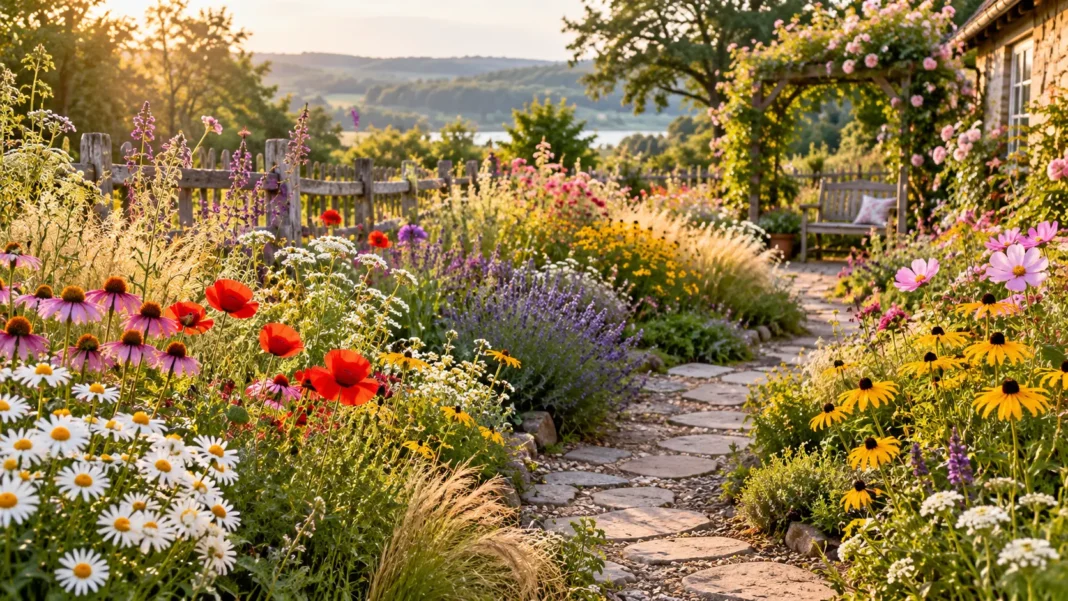

A wildflower garden brings natural beauty, vibrant colors, and a relaxed atmosphere to any outdoor space. Unlike traditional flower beds with carefully arranged plants, wildflower gardens celebrate organic shapes, seasonal changes, and diverse plant combinations. They can transform ordinary lawns, backyard corners, and unused spaces into beautiful landscapes that feel connected to nature.
Whether you have a spacious backyard or a small urban garden, there are many creative wildflower garden ideas to explore. Native flowers, ornamental grasses, winding pathways, and pollinator-friendly plants can create an attractive environment while supporting local wildlife. With thoughtful planning, you can achieve a natural appearance without making the garden feel neglected.
This guide explores practical ways to design a wildflower garden, select suitable plants, prepare the soil, and maintain beautiful seasonal displays. From colorful meadow borders to compact container arrangements, these ideas will help you create an inviting outdoor space that changes beautifully throughout the year.
1. Create a Natural Wildflower Meadow
A wildflower meadow is one of the most beautiful ways to introduce a natural landscape into your garden. Instead of maintaining a traditional lawn, dedicate an open area to flowering plants and suitable native grasses. The combination creates a relaxed appearance that changes throughout the growing season while offering habitat for beneficial insects.
Start by selecting wildflower species that match your climate, soil conditions, and available sunlight. Choose a mixture of annuals and perennials to provide both early color and longer-term growth. Locally native species are especially valuable because they can support regional pollinators and are better suited to the surrounding ecosystem.
Avoid scattering seeds directly into an established lawn because existing grasses may prevent successful germination. Prepare the planting area by removing competing vegetation and following the seed supplier’s instructions. Once established, a meadow can require less frequent mowing than a conventional lawn, although regular monitoring and seasonal maintenance remain important.
2. Design Curved Wildflower Garden Borders
Curved garden borders create a softer appearance than perfectly straight planting lines. They are particularly effective when designing a natural-looking landscape because they follow the informal shapes commonly found in meadows and woodland clearings. Wildflowers planted along these borders can create colorful transitions between lawns, pathways, and surrounding garden features.
Choose several plant varieties with different heights, flowering periods, and textures. Taller plants generally work well toward the back of a border, while shorter flowering species can soften the edges. Repeating small groups of the same plants throughout the border helps establish visual harmony without creating an overly formal arrangement.
Use natural edging materials such as stone, timber, or a neatly maintained grass strip to define the planting area. These boundaries prevent vigorous plants from spreading into neighboring spaces while maintaining an informal appearance. Allow flower stems and leaves to overlap slightly, creating the layered effect associated with natural wildflower landscapes.
3. Plant Native Wildflowers for Local Wildlife
Native wildflowers are plants that naturally occur within a particular region and have developed relationships with local wildlife. Incorporating suitable native species can provide nectar, pollen, seeds, and habitat for beneficial insects and birds. This approach creates a garden that feels connected to the surrounding environment rather than relying entirely on decorative plant varieties.
Research which wildflowers are native to your region before purchasing seeds or established plants. Species such as black-eyed Susans, purple coneflowers, and certain asters are native to parts of North America, although their suitability varies by location. Local plant nurseries and regional gardening resources can help identify appropriate choices for your specific growing conditions.
Combine flowers that bloom at different times to provide seasonal interest and support wildlife throughout the growing period. Avoid planting species known to spread aggressively or become invasive in your area. A thoughtfully selected native wildflower garden can offer lasting visual appeal while contributing positively to the local ecosystem.
4. Add Winding Pathways Through Wildflowers
A winding pathway can transform a wildflower garden into an inviting outdoor space that encourages exploration. Instead of creating a straight walkway, design gentle curves that move naturally between planting areas. This approach makes even a modest garden feel more interesting while providing convenient access for maintenance and seasonal observation.
Materials such as gravel, stepping stones, bark chips, or natural paving can complement an informal garden design. Choose a surface that suits your climate, drainage conditions, and expected foot traffic. Keep pathways wide enough for comfortable movement, particularly if you need access for watering, pruning, or other gardening activities.
Plant low-growing wildflowers and suitable grasses near the path edges to create a soft transition between the walkway and surrounding vegetation. Avoid placing thorny or excessively tall plants where they could obstruct movement. A well-designed pathway provides structure without taking away from the relaxed character of the wildflower landscape.
5. Mix Wildflowers With Ornamental Grasses
Combining wildflowers with ornamental grasses is an effective way to create a meadow-inspired garden. Grasses provide movement, texture, and a natural backdrop that highlights colorful blooms. Their slender leaves and seed heads can remain visually interesting even when flowering plants are between seasonal displays.
Choose grasses that are suitable for your region and compatible with the wildflowers you plan to grow. Native bunchgrasses can work particularly well because their growth habits often complement meadow plants. Avoid aggressive spreading varieties that might overwhelm smaller flowers or compete excessively for available moisture and nutrients.
Arrange grasses in small groups throughout the planting area rather than creating rigid rows. Allow their foliage to blend naturally with surrounding flowers while maintaining enough spacing for healthy growth. This combination can create a layered landscape that responds beautifully to gentle breezes and provides visual interest beyond the main flowering season.
6. Create a Pollinator-Friendly Wildflower Garden
A pollinator-friendly garden provides flowering plants that offer food and shelter for bees, butterflies, and other beneficial insects. Wildflowers are particularly useful because many species produce accessible nectar and pollen. Creating diverse planting areas can support local wildlife while adding natural movement and seasonal color to your outdoor space.
Choose flowers with different shapes and blooming periods to accommodate a variety of pollinators. Include spring, summer, and autumn flowering species whenever your climate allows. Planting several individuals of the same flower together can also make food sources easier for visiting insects to locate.
Avoid unnecessary pesticide applications, particularly when flowers are blooming and pollinators are active. Leave some suitable habitat features, such as hollow stems or patches of undisturbed soil, where appropriate. A successful pollinator garden balances attractive planting arrangements with the practical needs of the insects and wildlife it is intended to support.
7. Design a Small Wildflower Garden
A beautiful wildflower garden does not require a large backyard or extensive open space. Small planting beds, narrow borders, and unused corners can accommodate a carefully selected combination of flowering plants. The key is choosing species with manageable growth habits that complement the available dimensions.
Start with a limited selection of flowers that offer different colors, textures, and blooming periods. Compact varieties can provide visual interest without overcrowding neighboring plants. Grouping flowers in informal clusters creates a more cohesive appearance than planting numerous unrelated varieties individually throughout a small space.
Keep the design simple by using one or two dominant colors supported by smaller contrasting accents. Add a natural stone, compact birdbath, or small pathway if the space allows. Thoughtful plant selection and consistent maintenance can create an attractive miniature meadow without making the garden appear crowded.
8. Grow Wildflowers in Containers and Raised Beds
Containers and raised beds offer flexible options for growing wildflowers when suitable ground space is limited. They are useful for patios, balconies, courtyards, and gardens with challenging soil conditions. By selecting appropriate containers and growing media, you can introduce natural-looking flowers into areas where traditional meadow planting would be impractical.
Choose containers with drainage holes and enough depth to accommodate the selected plants’ root systems. Combine compact wildflower species that share similar sunlight and watering requirements. Avoid overcrowding individual containers because competition for nutrients and moisture can affect flowering and overall plant health.
Raised beds can accommodate larger combinations of wildflowers while providing a clearly defined planting area. Their structured edges create an attractive contrast with the informal arrangement of flowers inside. Regular watering may be necessary because containers and raised beds can dry out more quickly than plants growing directly in the ground.
9. Use Colorful Wildflower Combinations
Color plays an important role in creating a wildflower garden that looks natural and visually appealing. Combining complementary shades of purple, yellow, pink, white, and blue can produce a lively yet balanced landscape. Rather than arranging every flower by color, allow small groups to overlap and create gentle transitions between different shades.
For a softer appearance, choose pale pink, lavender, cream, and white flowers mixed with fine-textured greenery. A brighter meadow-style design might feature yellow blooms alongside purple and blue wildflowers. Both approaches can look natural when supported by varied foliage shapes and plants with different flowering heights.
Consider how the garden’s colors will change throughout the growing season. Some flowers bloom early, while others provide color during warmer months or autumn. Planning overlapping flowering periods helps prevent large gaps in the display and creates a landscape that remains interesting even as individual plants finish blooming.
10. Create a Cottage-Style Wildflower Garden
A cottage-style wildflower garden combines informal planting with charming traditional garden features. This approach works especially well around small homes, garden fences, and outdoor seating areas. Flowers grow in relaxed clusters, creating a soft and welcoming appearance without the strict symmetry associated with formal landscape designs.
Mix suitable wildflowers with traditional cottage-garden plants that share similar growing requirements. Delicate flowering stems, ornamental grasses, and climbing plants can add texture and height. Keep taller varieties near fences or boundaries, allowing shorter flowers to soften pathways and the edges of planting beds.
Natural materials such as weathered wood, stone edging, and simple garden furniture complement this style beautifully. Avoid adding too many decorative objects because the planting should remain the main attraction. A cottage-inspired wildflower garden can feel abundant and romantic while still benefiting from careful plant selection and regular maintenance.
11. Add Wildflowers Around Trees and Shrubs
Planting wildflowers around existing trees and shrubs can help connect different areas of the garden into one natural landscape. Flowering plants soften the transition between larger woody plants and open ground. The result can resemble a woodland edge, where vegetation grows in layers rather than appearing as separate decorative features.
Choose species that tolerate the available light and compete successfully without harming established plants. Woodland wildflowers may suit partially shaded conditions, while sun-loving meadow flowers usually require more open exposure. Avoid disturbing major tree roots during planting, and keep soil or mulch from accumulating directly against tree trunks.
Create irregular groups of flowers around the outer edges of planting areas rather than forcing them into narrow circles. This arrangement looks more natural and can provide enough growing space for different species. Monitor moisture carefully because established trees and shrubs may absorb significant amounts of water from the surrounding soil.
12. Include Wildflowers That Bloom in Different Seasons
A successful wildflower garden should offer more than one short period of intense flowering. Selecting plants with different blooming schedules creates a changing landscape that remains appealing throughout the growing season. Early flowers may provide the first color after winter, while later varieties extend the display into autumn.
Begin by identifying suitable spring-blooming species for your region, then add plants that flower during summer and fall. Native asters, goldenrods, and other seasonal plants may be useful depending on local conditions. Matching flowering periods with climate and soil requirements creates a more dependable planting arrangement.
Remember that flowers are only one part of a garden’s visual appeal. Seed heads, ornamental grasses, and changing foliage can provide texture after blooms fade. Allowing selected plants to complete their natural growth cycles can also provide resources for wildlife and opportunities for self-seeding where appropriate.
13. Use Natural Stones and Rustic Garden Features
Natural stones can add structure to a wildflower garden without introducing an overly formal appearance. Small rocks, gravel areas, and carefully positioned boulders create attractive contrasts with soft flowering plants. They can also help define pathways, support informal boundaries, and connect the planting design with the surrounding landscape.
Choose stones that complement the colors and materials already present in your garden. Local stone can create a particularly harmonious appearance when available and suitable for landscaping. Place larger features thoughtfully rather than scattering numerous decorative rocks throughout the planting area, which can make the design feel unnecessarily busy.
Rustic features such as wooden benches, simple birdbaths, and weather-resistant garden ornaments can provide additional interest. Keep decorations limited so flowers and grasses remain the primary focus. These elements work best when they serve a practical purpose or create a quiet focal point within the natural planting arrangement.
14. Transform a Lawn Into a Wildflower Garden
Replacing part of a traditional lawn with wildflowers can introduce greater plant diversity and create a more natural outdoor environment. Start with a manageable section rather than converting the entire area immediately. This allows you to assess soil conditions, plant performance, and maintenance requirements before expanding the garden.
Successful lawn conversion usually requires removing existing turf and reducing competition from established grasses and weeds. Depending on the planting method, you may use native plant plugs, established perennials, or an appropriate seed mixture. Follow regional planting guidance because seed preparation and establishment methods vary between climates.
During the first growing season, monitor unwanted vegetation and provide water when necessary to support establishment. Wildflower areas may require periodic mowing or cutting, depending on the chosen plant community. Over time, thoughtful management can create a beautiful alternative to conventional turf while supporting local biodiversity.
15. Create a Low-Maintenance Wildflower Garden
A low-maintenance wildflower garden begins with choosing plants that suit the existing conditions rather than constantly modifying the environment. Consider soil type, rainfall, sunlight, and the mature size of each species. Plants adapted to local conditions may require less supplemental watering and fewer interventions once they become established.
Grouping plants with similar needs makes maintenance easier and helps prevent problems caused by inconsistent care. Native perennials and suitable grasses can create stable planting combinations when correctly selected. However, even well-established wildflower gardens require monitoring for invasive species, unwanted weeds, and changes in plant coverage.
Develop a simple seasonal maintenance routine that includes observing plant health, removing problematic vegetation, and cutting back growth when appropriate. Leave selected stems and seed heads standing through colder months if suitable for your garden and local wildlife. A natural appearance should reflect thoughtful management rather than complete neglect of the planting area.
Conclusion
Wildflower garden ideas offer countless opportunities to create an outdoor space filled with natural beauty, seasonal color, and ecological value. From informal meadows and curved borders to container gardens and pollinator-friendly planting areas, there are suitable designs for almost every landscape. The key is choosing plants that complement your local environment while creating a relaxed and welcoming appearance.
A successful wildflower garden combines thoughtful planning with an appreciation for natural growth patterns. Selecting native species, mixing flowering periods, and introducing grasses or rustic features can create a balanced landscape. Preparing the soil properly and managing competing vegetation are equally important for establishing a healthy garden that continues to develop over time.
Whether you are transforming an existing lawn or planting a small backyard corner, start with a manageable design and expand gradually. Allow your plants to establish naturally, monitor their progress, and make adjustments when necessary. With patience and appropriate care, your wildflower garden can become a colorful outdoor retreat that supports wildlife and celebrates the beauty of nature.
Frequently Asked Questions
What are the best flowers for a natural wildflower garden?
The best choices depend on your region and growing conditions. Suitable native coneflowers, black-eyed Susans, asters, and other regional wildflowers can create beautiful combinations while supporting local pollinators.
How do you start a wildflower garden from scratch?
Choose a suitable location, remove competing weeds and grass, and prepare the soil according to your planting method. Sow locally appropriate seeds or plant established wildflowers, then provide necessary care during establishment.
Do wildflower gardens need a lot of maintenance?
Established wildflower gardens can require less frequent mowing than traditional lawns. However, they still need occasional weeding, monitoring for invasive plants, and seasonal maintenance to remain healthy and attractive.
Can you grow wildflowers in a small backyard?
Yes, wildflowers can grow in small borders, raised beds, containers, and compact garden corners. Choose appropriately sized species and combine plants with similar sunlight, soil, and watering requirements.
What is the best time to plant a wildflower garden?
The ideal planting time depends on your climate and selected species. Spring and autumn are common planting seasons, but some native wildflower seeds benefit from winter cold exposure before germination.


[…] Wildflower Garden Ideas for a Natural Look […]