
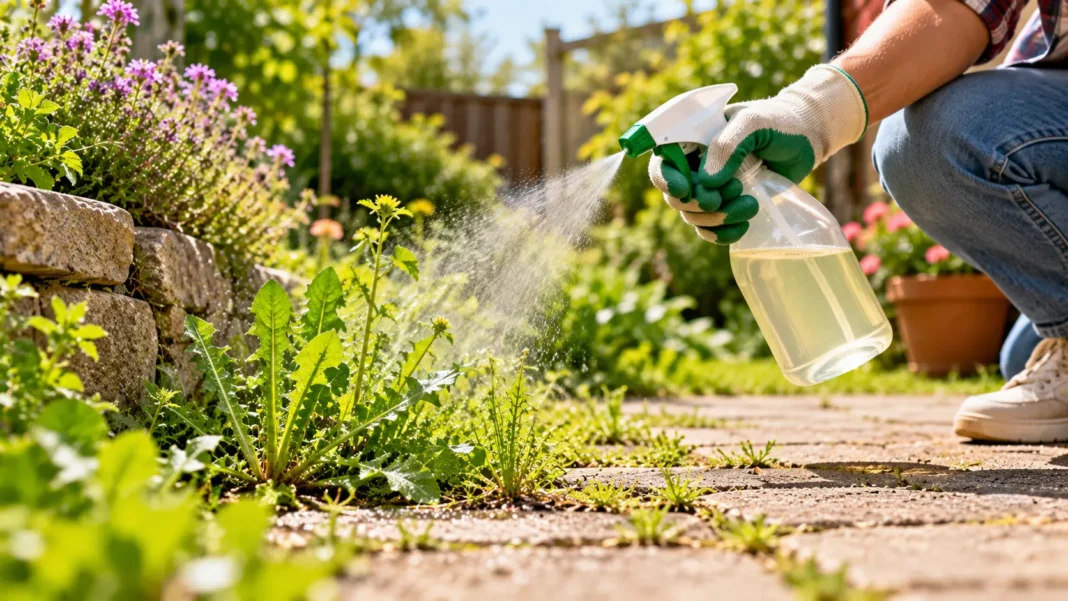

Vinegar weed killer has become a popular topic among gardeners looking for different ways to manage unwanted plants around their homes. From weeds growing between patio stones to small plants appearing along garden pathways, vinegar-based products are often discussed as alternatives to conventional herbicides. However, understanding how these products work, where they may be effective, and what risks they carry is important before choosing a weed control method.
Learning about vinegar weed killer can help homeowners make informed decisions about maintaining gardens, driveways, and outdoor spaces. Although vinegar contains acetic acid, which can damage plant tissue, its effectiveness depends on the weed species, product formulation, and growing conditions. This guide explores the different types of vinegar-based weed killers, their common uses, limitations, safety considerations, and important buying tips.
1. What Is Vinegar Weed Killer and How Does It Work?
Vinegar weed killer refers to products containing acetic acid that are marketed or discussed for controlling unwanted vegetation. Acetic acid can damage plant cells when it contacts exposed leaves and stems. Unlike certain systemic herbicides, vinegar-based weed control generally affects the plant tissue it touches rather than traveling throughout the entire root system.
The visible effects of acetic acid on plants can include leaf discoloration, drying, and damage to exposed growth. Young plants with delicate leaves are generally more susceptible than established weeds with extensive underground roots. These differences help explain why vinegar-based treatments may produce noticeable surface changes without providing lasting control of certain unwanted plants.
Understanding this contact-based action is important when evaluating vinegar weed killer claims. Products that damage visible leaves may not prevent surviving roots from producing new growth. Gardeners should therefore consider the type of weeds present, the surrounding vegetation, and the overall maintenance requirements before deciding whether vinegar-based weed control is appropriate.
2. Household Vinegar vs. Commercial Vinegar Weed Killer
Household vinegar is commonly used for cooking, food preparation, and general household purposes. It contains acetic acid, but ordinary food-grade vinegar is not formulated or tested as a dedicated garden herbicide. Although it may damage very small seedlings, its performance against established weeds is generally limited and inconsistent.
Commercial vinegar-based herbicides are products specifically formulated for vegetation control. Some contain substantially more concentrated acetic acid than ordinary household vinegar, creating greater risks of skin injury, eye damage, and respiratory irritation. These products should never be treated as harmless simply because their active ingredient is associated with a familiar household substance.
The most important difference is that food-grade vinegar and commercial herbicides have different intended uses and safety requirements. Household vinegar should not be assumed to provide reliable weed control. Commercial products require careful evaluation of their legal status, warning labels, and suitability, while manual weeding remains a practical alternative for many home gardens.
3. Understand the Different Types of Vinegar-Based Weed Killers
Vinegar-based weed control products are available in several formulations, although their availability varies by location. Some are marketed as ready-to-use herbicides, while others are concentrated products intended for specialized applications. Understanding these categories helps explain why products containing the same general ingredient may differ significantly in effectiveness and safety.
Ready-to-use herbicide formulations are designed for a particular purpose and come with manufacturer instructions for their intended application. Concentrated horticultural acetic acid products are considerably more hazardous and require specialized safety considerations. They are not equivalent to household vinegar and should not be handled casually or used for household experiments.
Some commercial weed control formulas also contain other active ingredients that influence their performance. Reading the complete ingredient statement helps identify whether a product relies solely on acetic acid or combines different substances. For ordinary household maintenance, nonchemical options such as hand weeding, mulching, and appropriate garden tools may offer a safer approach.
4. Common Uses of Vinegar Weed Killer Around the Home
Vinegar-based weed killers are commonly marketed for unwanted vegetation in outdoor areas such as patios, walkways, and gravel surfaces. These locations often develop small weeds in spaces where soil and moisture collect. However, whether a particular herbicide is appropriate depends on its approved uses, surrounding materials, and environmental conditions.
Weeds growing between paving stones are a familiar maintenance problem for many homeowners. Small seedlings can appear along driveways, garden borders, and other exposed surfaces after rainfall. Physical removal with a suitable weeding tool can often address these problems without introducing herbicides into areas used by children, pets, or other household members.
Garden beds require additional consideration because desirable flowers, vegetables, shrubs, and ornamental plants may grow close to unwanted vegetation. Acetic acid does not reliably distinguish weeds from valued plants. Manual removal, suitable ground covers, and preventive garden maintenance are often better options where protecting established vegetation is especially important.
5. Does Vinegar Weed Killer Work on All Types of Weeds?
Vinegar weed killer does not work equally well on every type of weed. Its effects depend on plant age, leaf structure, growth habit, and the extent of the underground root system. Young annual weeds generally respond differently from perennial plants that can regenerate from established roots or underground structures.
Annual weeds complete their life cycle within a growing season, while perennial weeds can survive and return over multiple years. Acetic acid may damage visible leaves on both groups, but established perennial weeds can often recover. This limitation makes vinegar-based products less dependable for long-term management of persistent vegetation.
Gardeners should identify the unwanted plants before selecting a control method. A small annual seedling may require a different approach from an established dandelion or spreading perennial weed. Understanding how the plant grows helps determine whether physical removal, improved garden maintenance, or professional advice will provide more effective results.
6. Vinegar Weed Killer for Driveways and Patios
Driveways and patios often develop unwanted vegetation between cracks, paving joints, and gravel sections. These areas can accumulate dust, organic material, and moisture that provide suitable conditions for weed growth. Maintaining the surfaces regularly can reduce the number of plants that establish themselves in these narrow spaces.
Vinegar-based herbicides are sometimes marketed for hard-surface weed control because they can damage exposed plant growth. However, they may not eliminate underground roots or prevent new seeds from germinating. Certain paving materials, nearby vegetation, and drainage conditions may also make chemical treatments unsuitable for a particular outdoor area.
A practical maintenance strategy can include removing accumulated debris and using suitable hand tools to clear weeds from paving joints. Repairing damaged surfaces may also reduce spaces where unwanted vegetation can establish itself. These methods address contributing conditions rather than depending entirely on products that may offer only temporary control.
7. Can Vinegar Weed Killer Damage Grass and Garden Plants?
Acetic acid is generally considered a nonselective contact herbicide, meaning it can damage many types of plants rather than targeting only unwanted weeds. Grass, flowers, vegetables, and ornamental plants may all be affected by contact with certain formulations. This characteristic is an important limitation when considering vinegar-based weed control near established landscaping.
Lawns contain closely growing grass plants, making selective treatment of individual weeds difficult with nonselective products. A substance that damages a broadleaf weed may also harm the surrounding turf. Consequently, vinegar-based herbicides are not generally suitable as selective treatments for unwanted plants growing among healthy lawn grass.
Flower beds and vegetable gardens present similar concerns because valued plants often grow close together. Maintaining clear planting spaces, using appropriate mulch, and removing weeds manually can help protect surrounding vegetation. Gardeners should avoid assuming that a product described as natural will automatically be gentle on desirable plants.
8. Advantages and Limitations of Vinegar-Based Weed Control
One potential advantage of acetic acid herbicides is their ability to produce visible damage on susceptible young weeds. Some formulations also have limited residual activity, meaning they generally do not continue controlling new plants long after the initial treatment. These characteristics may be useful in certain professionally managed vegetation-control programs.
However, vinegar weed killers have important limitations, particularly when dealing with mature weeds and perennial root systems. Damaging exposed leaves does not necessarily eliminate the entire plant. New seedlings may also emerge from seeds already present in the soil, meaning one treatment cannot provide permanent protection against future weed growth.
Another disadvantage is the safety risk associated with concentrated acetic acid products. Despite being derived from a familiar household ingredient, certain formulations can cause serious injuries. Gardeners should evaluate both effectiveness and potential hazards rather than assuming that vinegar-based treatments are automatically safer than other vegetation-management methods.
9. Important Safety Concerns With Vinegar Weed Killer
Safety is one of the most important considerations when evaluating vinegar-based weed control. Concentrated acetic acid is corrosive and can cause significant skin and eye injuries. Vapors may also irritate the respiratory system, particularly when exposure occurs in poorly ventilated or otherwise unsuitable conditions.
Products described as organic, natural, or environmentally friendly are not necessarily harmless. The strength of the formulation, its additional ingredients, and the circumstances of exposure all influence potential risks. Warning labels should be taken seriously, and hazardous gardening chemicals should remain under the control of a responsible adult.
Vinegar should not be combined with bleach, household cleaners, salt, or other substances to create homemade weed-killing mixtures. Such combinations can introduce additional hazards without providing dependable garden benefits. For routine weed management, physical removal and preventive landscaping methods are safer choices that avoid unnecessary chemical exposure.
10. Environmental Effects of Vinegar Weed Killer
Environmental impact is another important factor when considering vinegar-based herbicides. Acetic acid can break down relatively quickly under environmental conditions, but that does not mean every application is harmless. Direct contact can damage desirable vegetation, while careless use may affect nearby organisms or sensitive landscaping areas.
Soil contains microorganisms, plant roots, and other living components that contribute to a healthy garden ecosystem. Introducing unsuitable chemicals can affect this environment, particularly when products are used outside their intended purpose. Vinegar is not a reliable method for permanently changing soil conditions or preventing unwanted plants from returning.
Responsible weed management should focus on reducing unnecessary chemical use and protecting surrounding habitats. Mulching, maintaining healthy ground cover, and preventing weed seeds from spreading can help address recurring problems. These approaches support garden maintenance while reducing the likelihood of exposing beneficial plants and organisms to avoidable risks.
11. Buying Tips: Check Product Labels and Intended Uses
Choosing a garden weed control product begins with understanding what problem needs to be addressed. Not every herbicide is suitable for every location, plant species, or outdoor surface. Product descriptions should clearly identify the intended use, relevant precautions, and whether the formulation is legally authorized for its stated purpose.
A properly labeled herbicide should provide essential information about its active ingredients, warnings, restrictions, and manufacturer. In the United States, many registered pesticide products include an Environmental Protection Agency registration number. Requirements differ internationally, so products should be evaluated according to the regulations applicable in the country where they are sold.
Homeowners should be cautious about products promoted through vague claims such as completely safe, permanent weed removal, or harmless to all plants. These statements may overlook important limitations. When uncertain about a product’s suitability or warnings, consulting a qualified garden professional is preferable to experimenting with unfamiliar chemical formulations.
12. Compare Product Value Beyond the Purchase Price
The cheapest weed control product is not necessarily the most economical choice over time. Total value depends on whether it addresses the actual vegetation problem, how long the results last, and whether additional maintenance is required. Products that only damage surface growth may offer limited value when established roots remain.
A fair comparison should consider the type of weeds involved, garden size, surrounding plants, and expected maintenance needs. For example, recurring weeds between paving stones may indicate accumulated soil or damaged joints. Addressing those underlying conditions can sometimes provide better long-term value than repeatedly purchasing short-lived treatments.
Garden tools, mulch, and appropriate landscaping materials may also be worth comparing with chemical products. Many reusable tools require an initial purchase but can remain useful across multiple gardening seasons. Evaluating durability, convenience, and environmental considerations helps homeowners make more thoughtful decisions about maintaining outdoor spaces.
13. Alternatives to Vinegar Weed Killer for Garden Maintenance
Manual weed removal is one of the most accessible alternatives to chemical vegetation control. Hand tools can help remove small unwanted plants from garden beds, paving joints, and other manageable areas. Removing the roots when practical may reduce regrowth, although results depend on the weed species and underground growth pattern.
Mulching is another useful strategy because suitable ground coverings can reduce light reaching the soil surface and limit opportunities for some weed seeds to establish. Organic mulch can also help moderate soil temperature and conserve moisture. The appropriate material depends on the garden layout, surrounding plants, and local growing conditions.
Other preventive approaches include maintaining healthy lawns, filling bare planting spaces with suitable vegetation, and monitoring areas where weeds frequently appear. These methods work best as part of regular garden care rather than one-time treatments. Combining physical removal with thoughtful landscaping can reduce the need for chemical interventions.
14. Common Mistakes and Misconceptions About Vinegar Weed Killer
One common misconception is that vinegar can permanently eliminate all unwanted plants. In reality, acetic acid primarily damages contacted plant tissue and does not reliably destroy established root systems. Perennial weeds may recover, while additional seeds can germinate after the visible plants have disappeared.
Another mistake is assuming that household vinegar and concentrated horticultural products have the same safety characteristics. Commercial acetic acid herbicides may present substantially greater hazards than ordinary food-grade vinegar. Marketing descriptions that emphasize natural ingredients can sometimes distract consumers from important warnings about toxicity, irritation, and potential plant damage.
A third misconception is that homemade mixtures automatically provide better value than properly maintained gardening tools. Combining household ingredients can produce unpredictable results and unnecessary risks. Gardeners benefit more from identifying the actual weed problem and choosing suitable, safe maintenance techniques than relying on unsupported claims about miracle weed killers.
15. How to Choose the Right Weed Control Approach
The most suitable weed control approach depends on the location, vegetation type, surrounding landscape, and amount of maintenance required. A small patio with occasional seedlings has different needs from a large garden affected by persistent perennial weeds. Identifying those differences helps homeowners avoid unnecessary products and ineffective maintenance practices.
For small areas, manual removal and routine surface cleaning may be sufficient. Garden beds often benefit from suitable mulch, thoughtful planting, and regular attention to emerging weeds. More complicated vegetation problems may require advice from qualified gardening professionals who can recommend methods appropriate for local conditions.
Vinegar-based herbicides should be evaluated realistically rather than viewed as universal solutions. Their limited activity against established roots and the hazards of concentrated formulations are important disadvantages. A balanced approach focused on prevention, practical garden care, and informed product decisions can provide more dependable long-term results.
Conclusion
Vinegar weed killer is a widely discussed vegetation-control option because acetic acid can damage the visible growth of certain unwanted plants. However, its effectiveness varies depending on weed maturity, species, and root structure. Household vinegar is generally unreliable for established weeds, while concentrated commercial formulations present important safety concerns that should not be underestimated.
Understanding the different product categories, intended uses, and limitations helps homeowners make informed garden maintenance decisions. Areas such as patios, driveways, and garden pathways may benefit from consistent weed management, but chemical treatments are not always necessary. Manual removal, mulching, and preventive landscaping can offer practical alternatives without introducing avoidable chemical hazards.
Before buying any vinegar-based weed control product, consider the actual gardening problem and review relevant safety information. Avoid relying on exaggerated marketing claims or experimenting with homemade chemical mixtures. A thoughtful approach to weed prevention and regular outdoor maintenance can help keep gardens, pathways, and landscaped spaces manageable throughout the growing season.
Frequently Asked Questions (FAQs)
Does vinegar weed killer permanently kill weeds?
Vinegar-based herbicides generally damage exposed plant tissue rather than eliminating established root systems. Some young annual weeds may die, but perennial plants can regrow, and new weeds may emerge from seeds.
What is the difference between household vinegar and horticultural vinegar?
Household vinegar is intended primarily for food use, while horticultural acetic acid products may be highly concentrated. Concentrated formulations can cause serious skin and eye injuries and should not be treated as ordinary household vinegar.
Can vinegar weed killer damage grass and flowers?
Yes, acetic acid can damage desirable plants, including lawn grass, flowers, and vegetables. It is generally nonselective, meaning contact with plant tissue can cause injury regardless of whether the plant is considered a weed.
Is vinegar weed killer safe for pets and children?
Vinegar-based herbicides should not automatically be considered safe for pets or children. Concentrated products are especially hazardous, and all gardening chemicals should be secured and managed according to their safety warnings.
What are the best alternatives to vinegar weed killer?
Useful alternatives include manual weeding, mulching, appropriate ground covers, and regular garden maintenance. The best method depends on the weed species, location, surrounding vegetation, and whether underground roots are established.


[…] Vinegar Weed Killer: Types, Uses and Buying Tips […]