
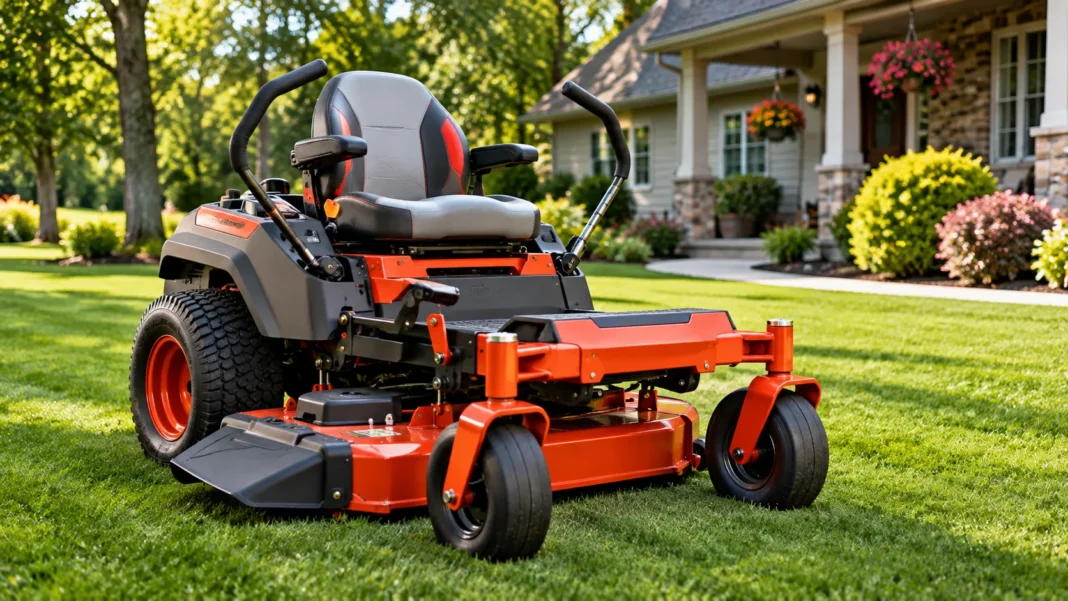

Maintaining a large lawn can take considerable time and effort, especially when using traditional mowing equipment. Homeowners with spacious yards often look for machines that provide efficient cutting, comfortable operation, and better maneuverability. A zero turn mower has become a popular choice because it can navigate around trees, landscaping features, and other obstacles with greater precision.
A zero turn mower is a riding lawn mower designed to turn within a very small radius using independently controlled drive wheels. Unlike conventional riding mowers, it can change direction quickly without making wide turns. This feature helps reduce unnecessary movement and makes mowing large, relatively open lawns more efficient.
This guide explains how zero turn mowers work, their advantages, limitations, important features, and buying considerations. You will learn about cutting deck sizes, engine performance, lawn conditions, maintenance requirements, and safety features. Understanding these factors can help you choose suitable lawn equipment without spending money on features you may not need.
What Is a Zero Turn Mower?
A zero turn mower is a specialized riding lawn mower designed for efficient grass cutting and precise maneuverability. Its main feature is the ability to turn around with almost no conventional turning radius. This allows the machine to change direction without making the wide loops required by many traditional lawn tractors. Zero turn mowers are commonly used for residential and commercial lawn maintenance.
Most models use two independently driven rear wheels to control movement and turning. Instead of a conventional steering wheel, many designs feature two steering levers. Other models use steering wheels or alternative control systems. The operating mechanism allows the mower to navigate around landscaping obstacles with greater flexibility.
Zero turn mowers are particularly useful for larger lawns with multiple trees, garden beds, or decorative features. Their maneuverability may reduce the amount of additional trimming required after mowing. However, they are not automatically suitable for every yard. Small spaces, steep slopes, and uneven terrain can make other mower designs more practical.
How Does a Zero Turn Mower Work?
A zero turn mower works by controlling the speed and direction of its drive wheels independently. This arrangement allows the machine to move forward, reverse, and turn without relying on conventional front-wheel steering. The front caster wheels generally follow the direction of movement. This design creates the tight turning ability associated with zero turn equipment.
Many zero turn mowers use hydrostatic transmissions to transfer engine power to the drive wheels. These systems provide variable movement control without traditional manual gear changes. The cutting deck contains rotating blades that cut grass as the machine travels across the lawn. Engine power supports both movement and the mowing system.
The independent wheel-drive design makes zero turn mowers different from ordinary riding lawn tractors. It can improve maneuverability around obstacles and reduce time spent making wide turns. However, the control system requires familiarity and careful handling. Operators should follow manufacturer instructions and receive appropriate training before using the equipment.
Different Types of Zero Turn Mowers
Zero turn mowers are available in several categories designed for different lawn sizes and workloads. Residential models are generally intended for homeowners maintaining personal properties. They often emphasize affordability, manageable dimensions, and everyday comfort. These machines may be suitable for routine mowing when used within the manufacturer’s recommended conditions.
Commercial zero turn mowers are designed for more demanding and frequent use. They may feature reinforced cutting decks, heavy-duty components, and engines intended for extended workloads. Professional landscaping businesses often choose these machines for their durability and productivity. However, commercial equipment usually costs more and may require additional maintenance.
Stand-on zero turn mowers represent another category commonly used in professional landscaping. Their compact designs can provide flexibility in certain working environments. Some specialized models also feature different steering arrangements or electric power systems. Buyers should select equipment based on actual mowing requirements rather than assuming one category is universally better.
Benefits of Using a Zero Turn Mower
One of the biggest advantages of a zero turn mower is efficient maneuverability. The tight turning radius allows the machine to navigate around trees, flower beds, and other landscaping features. This can reduce repeated repositioning during mowing. For suitable properties, the result may be a more efficient lawn maintenance process.
Zero turn mowers can also provide strong productivity on large, relatively open lawns. Many models feature wide cutting decks that cover substantial areas during each pass. This can reduce the number of passes required compared with smaller equipment. However, actual mowing time depends on terrain, obstacles, grass conditions, and safe operating speeds.
Another advantage is the variety of available features and configurations. Buyers can choose different deck widths, seating options, power systems, and comfort features. Some models include adjustable cutting heights and accessories for grass collection. These options make it easier to match the equipment to specific lawn maintenance needs.
Zero Turn Mower vs. Traditional Riding Mower
Zero turn mowers and traditional riding lawn tractors both help maintain larger lawns, but their designs differ. A zero turn mower focuses on tight maneuverability and efficient grass cutting. A lawn tractor generally uses conventional steering and may support a wider variety of yard attachments. The better choice depends on property characteristics and intended tasks.
For lawns containing numerous obstacles, zero turn maneuverability can be particularly useful. The machine may require fewer wide turns when navigating around landscaping features. Traditional lawn tractors can be suitable for more general property maintenance, depending on their attachment capabilities. Neither design guarantees faster mowing in every situation.
Terrain conditions also influence which mower is appropriate. Some lawn tractors may offer characteristics that suit particular property layouts, while zero turn models perform best within their specified operating limits. Buyers should compare traction, stability, and manufacturer recommendations. Selecting equipment based on actual yard conditions is more valuable than focusing only on speed.
Choosing the Right Cutting Deck Size
Cutting deck size is one of the most important considerations when selecting a zero turn mower. The deck determines how wide an area the mower can cut during a single pass. Wider decks can improve productivity on open lawns. However, they also make the machine larger and potentially harder to maneuver through narrow spaces.
Common residential cutting widths include approximately 42, 48, 54, and 60 inches, although available sizes vary between manufacturers. Smaller decks may be more practical for properties with limited access or numerous obstacles. Wider decks are often attractive for larger open areas. Buyers should consider lawn layout rather than acreage alone.
Before choosing a deck size, evaluate gates, pathways, storage entrances, and other potential access restrictions. A mower that cannot comfortably fit through necessary spaces may create significant inconvenience. Deck design and cutting quality also matter beyond width. A suitable cutting deck should match the property’s conditions and normal maintenance requirements.
Engine Power and Electric Mower Options
Zero turn mowers are available with different engine sizes and power systems. Traditional gasoline-powered models use internal combustion engines to drive the machine and cutting blades. Engine specifications vary according to deck size and intended workload. Adequate power is important for maintaining consistent performance in suitable grass conditions.
Electric zero turn mowers have also become an alternative for certain residential and commercial applications. These models use batteries and electric motors instead of conventional gasoline engines. They can reduce local exhaust emissions and may operate more quietly. However, battery capacity, charging requirements, and operating time must be considered.
Choosing between gasoline and electric power depends on property size, maintenance preferences, and available charging facilities. Gasoline models require fuel and engine servicing, while electric designs introduce battery-related considerations. Neither option is automatically suitable for every property. Buyers should compare complete operating requirements rather than focusing only on advertised power ratings.
Lawn Size and Terrain Considerations
Lawn size plays an important role in determining whether a zero turn mower is a practical investment. Larger properties may benefit from wider cutting decks and efficient turning capabilities. Smaller yards may be easier to maintain using compact walk-behind equipment. The presence of obstacles can also influence how useful a zero turn design becomes.
Terrain is equally important because not every mower is designed for steep or uneven ground. Slopes, wet grass, loose soil, and drainage areas can affect traction and stability. Zero turn mowers may have particular limitations on inclines. Buyers should follow the manufacturer’s slope restrictions rather than assuming all models handle the same terrain.
Properties with narrow passages, raised landscaping, or complicated boundaries require additional consideration. A large mower may struggle to access every section even when its turning radius is small. Mapping the lawn’s main features can help identify practical equipment requirements. Suitable terrain compatibility is more important than purchasing the fastest available machine.
Comfort and Ease of Operation
Operator comfort becomes especially important when maintaining larger lawns that require extended mowing sessions. Zero turn mowers may offer adjustable seats, armrests, and vibration-reducing features. These components can improve the overall user experience. However, comfort varies considerably depending on machine design and individual preferences.
Control layout also affects how approachable a mower feels. Steering levers, cutting height controls, and dashboard indicators should be clearly arranged and easy to understand. Some models include additional features such as convenient storage compartments or improved visibility. Buyers should review accessibility and ergonomic design alongside technical specifications.
A comfortable mower should also support stable positioning and clear awareness of the surrounding area. Suspension systems may improve the experience on certain uneven surfaces, although they do not remove terrain limitations. Manufacturer instructions remain essential for correct operation. Comfort features should complement safe design rather than encourage excessive operating speed.
Zero Turn Mower Safety Features
Safety should be a major consideration when comparing zero turn mowers. These machines contain powerful cutting components and moving mechanical systems. Common safety features may include operator-presence controls, blade engagement safeguards, and protective structures on suitable models. Their purpose is to reduce specific risks during operation.
Some models include rollover protective structures and compatible restraint systems, depending on their design and intended use. However, these features do not make steep or unstable terrain safe. Manufacturers establish operating restrictions based on equipment characteristics. Following these limitations is important for protecting both the operator and people nearby.
Young children and pets should remain away from active mowing areas, and mowing equipment should never be treated as a recreational vehicle. Operators should also follow manufacturer guidance concerning protective equipment, inspections, and safe storage. Suitable training and adult supervision are important where applicable. Safety should never be sacrificed for faster mowing.
Maintenance and Long-Term Ownership Costs
Regular maintenance helps keep a zero turn mower operating reliably. Gasoline models typically require engine servicing, blade inspection, and attention to other mechanical components. Electric models have different maintenance requirements but still need inspections and appropriate battery care. The exact schedule depends on the equipment and manufacturer’s recommendations.
Cutting deck condition can influence mowing quality and overall machine performance. Worn or damaged components may cause uneven results and additional mechanical stress. Professional servicing may be appropriate when repairs involve complex or hazardous systems. Following approved maintenance procedures can reduce avoidable breakdowns and support equipment longevity.
Ownership costs include more than the initial purchase price. Fuel or electricity, replacement parts, servicing, storage, and possible repairs contribute to long-term expenses. Commercial-grade equipment may require a larger initial investment but can offer benefits for demanding workloads. Buyers should compare total ownership costs rather than purchase prices alone.
How to Choose the Best Zero Turn Mower
Choosing the best zero turn mower begins with identifying your lawn’s size, layout, and terrain conditions. Consider whether the property contains trees, narrow pathways, slopes, or numerous landscaping features. These details influence cutting deck size and equipment suitability. A clear understanding of mowing requirements helps narrow the available options.
Next, compare important specifications such as deck construction, engine or motor performance, transmission design, and comfort features. Manufacturer support and warranty coverage should also influence your decision. Read reliable product reviews that discuss real-world cutting performance and maintenance. Avoid assuming that the most expensive model automatically offers the best value.
Finally, consider storage space, servicing availability, and long-term operating expenses. A mower should comfortably fit the property and meet the operator’s requirements. Choosing reputable equipment with appropriate safety features is especially important. A thoughtful comparison helps ensure that the purchase provides practical value over time.
Conclusion
A zero turn mower can be an effective solution for maintaining larger lawns with trees, garden beds, and other obstacles. Its tight turning radius and available cutting deck options can improve mowing efficiency under suitable conditions. However, the advantages depend on property layout, terrain, and equipment design.
Before buying, consider cutting width, engine performance, operating comfort, safety features, and maintenance requirements. Compare residential and commercial models based on actual workload rather than appearance or advertised speed. Steep slopes and restricted spaces may make other mower types more appropriate.
The best zero turn mower is one that matches your property’s needs while providing reliable performance and manageable ownership costs. Research specifications, review manufacturer limitations, and prioritize safe operation. With careful selection and proper maintenance, a suitable mower can make regular lawn care more convenient and efficient.
Frequently Asked Questions
What is a zero turn mower?
A zero turn mower is a riding lawn mower with independently controlled drive wheels that allow very tight turns. It is commonly used for efficiently cutting larger lawns and navigating around landscaping obstacles.
Is a zero turn mower better than a lawn tractor?
A zero turn mower often provides better maneuverability around obstacles, while a lawn tractor may offer greater versatility for certain yard tasks. The best choice depends on terrain, property size, and intended use.
What size zero turn mower is best for residential lawns?
The ideal size depends on lawn area, obstacles, and available access. Cutting decks around 42 to 54 inches are common residential options, but larger or smaller equipment may be more suitable.
Can a zero turn mower handle hills?
Some zero turn mowers can operate on gentle slopes within manufacturer limits. However, steep, wet, or uneven terrain can create serious stability risks. Always follow the specific model’s operating restrictions.
Are electric zero turn mowers worth buying?
Electric zero turn mowers may be worthwhile for suitable properties because they offer quieter operation and avoid local exhaust emissions. Battery runtime, charging needs, purchase cost, and servicing availability should guide the decision.

