
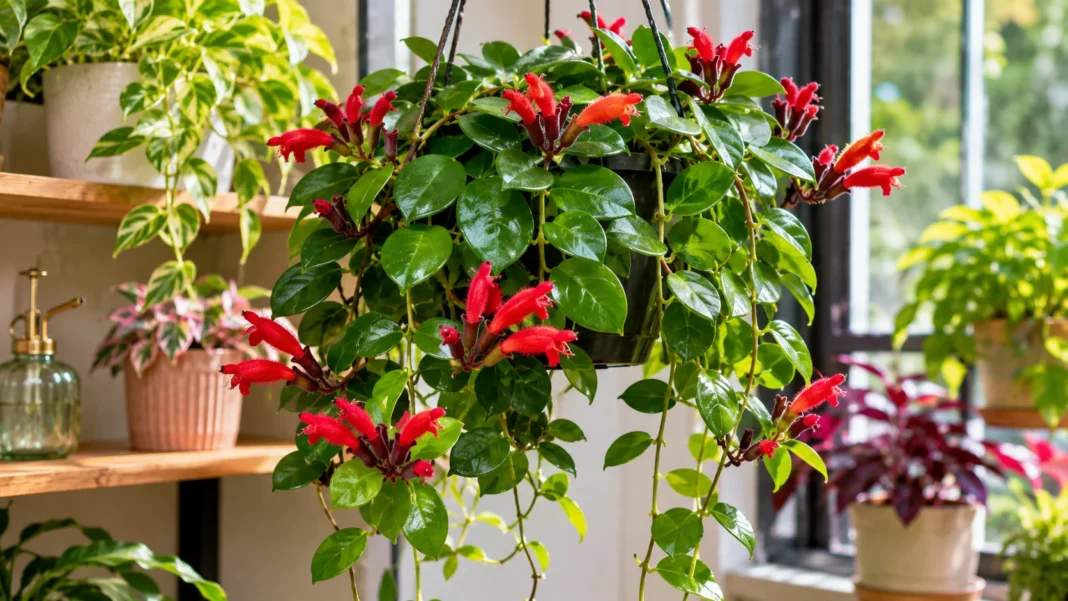

The lipstick plant is a beautiful tropical houseplant known for its glossy green leaves, trailing vines, and distinctive tubular flowers. Its vibrant red blossoms emerge from darker buds, creating an appearance that resembles lipstick extending from a tube. With attractive foliage and colorful flowers, the lipstick plant is an excellent choice for hanging baskets, shelves, and indoor plant collections.
Although this tropical plant looks unusual, it can grow successfully indoors when provided with suitable conditions. Proper sunlight, consistent watering, well-draining soil, and adequate humidity help support healthy foliage and attractive blooms. This guide explains everything you need to know about lipstick plant care, including popular varieties, propagation methods, common growing problems, and practical tips for encouraging beautiful flowers.
What Is a Lipstick Plant?
The lipstick plant belongs to the genus Aeschynanthus, a group of tropical flowering plants within the Gesneriaceae family. Many species grow naturally in warm, humid forests across parts of Southeast Asia. They are often epiphytic, meaning they grow on trees or other supporting surfaces without obtaining nutrients directly from the host plant.
Its common name comes from the unusual appearance of its flowers, which often emerge from dark, tube-like structures resembling lipstick containers. The flowers may appear red, orange, yellow, or other warm shades depending on the species and cultivar. Many varieties also develop attractive trailing stems covered with glossy or textured green leaves.
As an indoor plant, the lipstick plant is particularly popular for hanging baskets because its stems naturally grow downward. Mature plants can form beautiful cascading displays when provided with sufficient light and suitable growing conditions. Its decorative foliage remains attractive between flowering periods, making it a useful houseplant even when colorful blossoms are temporarily absent.
Popular Lipstick Plant Varieties to Grow Indoors
Several lipstick plant varieties are available for indoor gardening, each offering distinctive foliage and flowering characteristics. Aeschynanthus radicans is one of the most familiar types, known for its trailing stems and bright red tubular flowers. It is commonly grown in hanging baskets and can produce attractive displays when provided with bright indirect light.
The Black Pagoda lipstick plant, often sold as Aeschynanthus longicaulis, is admired for its patterned leaves and contrasting undersides. Unlike some traditional varieties, its foliage is a major ornamental feature, even when the plant is not flowering. This variety can produce yellowish-green flowers with darker markings, adding visual interest to its unusual leaves.
Another popular option is the curly lipstick plant, sometimes marketed as ‘Rasta’ or ‘Twister,’ which develops curled foliage along trailing stems. Variegated lipstick plants are also available, featuring leaves with lighter markings or contrasting colors. Because commercial plant names can vary, checking the botanical identification helps you understand the specific growing requirements of your chosen variety.
Best Sunlight Conditions for a Lipstick Plant
Providing suitable sunlight is one of the most important parts of successful lipstick plant care. These tropical houseplants generally prefer bright, indirect light that supports healthy leaf growth and flower development. An east-facing window or a position near a bright window with filtered sunlight often provides comfortable growing conditions.
Insufficient light may cause weak growth, longer spaces between leaves, and reduced flower production. If your lipstick plant produces healthy foliage but rarely develops blossoms, inadequate brightness could be one contributing factor. Moving the plant gradually toward a brighter location may improve growth, provided the leaves remain protected from excessive direct sunlight.
Strong afternoon sunlight can damage delicate foliage, especially when plants are placed directly against hot windows. Brown patches, faded leaves, or unusual dryness may indicate excessive light exposure. Use a sheer curtain or move the pot slightly away from the window when necessary, allowing the plant to receive bright illumination without prolonged heat stress.
How Often Should You Water a Lipstick Plant?
Lipstick plants prefer consistent moisture during active growth but should not remain in waterlogged soil. Allowing the upper portion of the potting mix to dry slightly between waterings helps maintain a healthier balance. The correct frequency depends on indoor temperature, humidity, pot size, growing medium, and the amount of light the plant receives.
During spring and summer, the plant may require more frequent watering as warmer conditions encourage active growth. Check the soil with your finger before adding water rather than following a strict daily schedule. Water thoroughly until excess moisture drains from the bottom, then empty any standing water from the saucer or decorative container.
Watering requirements often decrease during cooler months when plant growth slows. Excessive watering during this period can increase the risk of root problems, especially in poorly draining containers. Monitor the potting mix regularly and adjust your routine according to actual soil conditions, keeping the roots lightly moist without allowing them to remain constantly saturated.
Best Soil Mix for Healthy Lipstick Plant Growth
Lipstick plants grow best in a loose, airy potting mixture that provides moisture while allowing excess water to drain away. Because many species naturally grow on trees, their roots benefit from good airflow rather than dense, compacted soil. A suitable indoor growing medium should support root development without trapping excessive moisture around the plant.
A practical mixture may include quality indoor potting soil combined with orchid bark and perlite. These ingredients help create an open structure while maintaining enough moisture for healthy growth. The exact proportions can vary depending on your indoor environment, container size, and watering habits, so observe how quickly the mixture dries after watering.
Avoid using heavy garden soil in hanging baskets or indoor containers because it may compact easily and reduce drainage. Always choose a pot with suitable drainage holes, even when using an attractive decorative planter. Healthy roots are essential for strong foliage and consistent flowering, making the growing medium an important part of long-term lipstick plant maintenance.
Temperature and Humidity Requirements
Lipstick plants naturally grow in tropical environments and generally prefer warm indoor temperatures. A range of approximately 65–80°F (18–27°C) is suitable for many commonly cultivated varieties. Avoid exposing plants to freezing conditions, cold drafts, or sudden temperature changes because these environmental stresses can damage leaves and interfere with normal growth.
Moderate to high humidity helps support healthy foliage, particularly in homes where heating or air conditioning creates dry conditions. Many lipstick plants perform well when humidity remains around 50–60% or somewhat higher, provided airflow is adequate. Extremely dry air may contribute to leaf problems, although symptoms can also result from watering or temperature issues.
A room humidifier can help maintain suitable moisture levels when indoor air becomes excessively dry. Grouping compatible houseplants may also create slightly more humid conditions around their foliage. Avoid placing the lipstick plant directly beside heating vents or cold air outlets, and maintain gentle air circulation to discourage problems associated with constantly damp leaves.
How to Fertilize a Lipstick Plant Properly
Lipstick plants benefit from moderate fertilization during periods of active growth, especially when cultivated in containers with limited nutrients. A balanced liquid houseplant fertilizer can provide essential elements needed for foliage development and flowering. However, applying too much fertilizer may damage sensitive roots or encourage excessive leafy growth without improving flower production.
During spring and summer, consider applying a diluted fertilizer according to the product’s instructions and the plant’s growth rate. Some growers fertilize approximately every two to four weeks during active development, although requirements vary. Start with a conservative feeding schedule and observe the plant’s response before increasing the amount or frequency.
Reduce fertilization during slower growth periods, particularly when light and temperatures decrease. White mineral deposits on the soil surface, damaged leaf tips, or declining growth may indicate excess fertilizer salts or other growing problems. Occasionally flushing the potting mix with suitable water can help reduce accumulated salts, provided the container drains freely.
How to Encourage a Lipstick Plant to Bloom
Healthy lipstick plants can produce beautiful tubular flowers when their environmental needs are met. Bright indirect light is particularly important because insufficient illumination can limit flowering even when the foliage appears healthy. Maintaining suitable warmth, consistent moisture, and moderate feeding helps create conditions that support flower development during active growing periods.
Avoid moving the plant repeatedly once flower buds begin forming, particularly between locations with significantly different temperatures or light levels. Sudden environmental changes may contribute to bud drop in sensitive plants. Consistent growing conditions and careful watering are generally more helpful than frequently adjusting the plant’s placement in an attempt to encourage additional blossoms.
Some lipstick plant varieties may respond to slightly cooler conditions or seasonal changes, but flowering requirements differ between species and cultivars. Avoid exposing the plant to damaging cold temperatures simply to encourage blooms. Instead, focus on appropriate light, healthy roots, and consistent care, allowing the plant to develop flowers according to its natural growth cycle.
How to Prune a Lipstick Plant for Fuller Growth
Pruning helps maintain an attractive shape and can encourage branching in lipstick plants with long trailing stems. Without occasional trimming, some plants develop uneven growth or become sparse near the center. Removing selected stem tips allows gardeners to manage the overall appearance while keeping hanging baskets and indoor displays tidy.
Use clean, sharp pruning scissors to remove excessively long, weak, or damaged stems. Make cuts just above a leaf node, where new growth may develop under suitable conditions. Avoid removing too much healthy foliage at once because the plant needs its leaves to produce energy and support future flowering.
The best time for major shaping is generally during active growth or after a flowering period. Light trimming may be appropriate at other times when necessary, depending on plant health. Save suitable healthy stem cuttings for propagation, allowing you to create additional plants while maintaining the appearance of the original lipstick plant.
How to Propagate a Lipstick Plant From Cuttings
Stem propagation is one of the easiest methods for producing new lipstick plants from an established specimen. Choose a healthy, non-flowering stem with several leaves and no obvious signs of disease or pest damage. Using clean scissors, remove a cutting approximately four to six inches long, making the cut just below a suitable leaf node.
Remove the leaves from the lower portion of the cutting and place the exposed nodes into water or a lightly moist propagation medium. A mixture containing perlite and suitable potting material can provide good drainage while supporting root development. Keep the cutting in bright indirect light and maintain warm conditions without allowing the growing medium to become saturated.
Root formation may take several weeks, depending on temperature, humidity, and plant variety. When roots have developed sufficiently, transfer the cutting into a small pot containing suitable soil. Keep the young plant consistently but lightly moist during establishment, gradually adjusting care as new growth appears and the roots become established.
When and How to Repot a Lipstick Plant
Lipstick plants do not always require frequent repotting because many grow comfortably in relatively compact containers. However, roots emerging through drainage holes, rapidly drying soil, or declining growth may indicate the need for a larger pot. Assess the condition of the growing medium and roots before deciding whether repotting is necessary.
Choose a new container only slightly larger than the existing root system, generally one pot size larger. Excessively large pots can hold more moisture than the roots can use, increasing the likelihood of waterlogging. Prepare a fresh, well-draining potting mixture and gently remove the plant from its current container without unnecessarily damaging healthy roots.
Place the plant at approximately the same growing depth and fill the surrounding space with fresh potting mix. Water gently after repotting, allowing excess moisture to drain completely. Keep the plant in stable, bright indirect light while it adjusts, and avoid unnecessary fertilization immediately after disturbing the roots.
Common Lipstick Plant Problems and Solutions
Yellow leaves are among the most common concerns when growing lipstick plants indoors. They may develop because of excessive watering, poor drainage, insufficient light, or natural aging of older foliage. Check the soil moisture and root condition before changing your care routine, since several different problems can produce similar symptoms.
Brown leaf tips and crispy edges may result from dry air, inconsistent watering, fertilizer buildup, or excessive sunlight. Meanwhile, sudden leaf drop can occur when plants experience cold drafts or abrupt environmental changes. Identifying recent changes in temperature, lighting, or watering can help determine the most likely cause before applying corrective measures.
Healthy growing conditions are usually the best starting point for solving plant problems. Ensure the pot drains properly, provide suitable illumination, and maintain consistent indoor temperatures. Remove badly damaged foliage when appropriate, but avoid making several major adjustments at once because gradual changes make it easier to recognize which correction improves plant health.
Common Pests That Affect Lipstick Plants
Lipstick plants can occasionally attract common houseplant pests, including mealybugs, spider mites, aphids, and scale insects. These pests may feed on leaves or stems, affecting plant appearance and overall growth. Regular inspection helps identify infestations early, particularly around leaf joints, developing shoots, and the undersides of foliage.
Mealybugs often appear as small white, cotton-like clusters, while spider mites may cause fine stippling and delicate webbing. Scale insects can resemble small raised bumps attached to plant surfaces. Isolate affected plants from other houseplants when appropriate and inspect nearby specimens to determine whether the problem has spread.
For minor infestations, carefully removing visible pests and cleaning affected areas may help control the problem. Insecticidal soap or other products specifically labeled for suitable houseplants may be appropriate when used according to instructions. Always test treatments cautiously on a small area because some varieties have sensitive foliage that may react poorly.
Is the Lipstick Plant Toxic to Cats and Dogs?
Lipstick plants are generally regarded as non-toxic to cats and dogs, making them a popular option for households with pets. However, the common name can refer to different species and cultivars within the Aeschynanthus genus. Confirming the botanical identity helps avoid confusion with unrelated plants that may have similar common names.
Even plants considered non-toxic can occasionally cause mild digestive discomfort if an animal chews or consumes significant amounts of foliage. Hanging baskets can help keep trailing stems away from curious pets while also displaying the plant attractively. Avoid leaving fertilizers, pest treatments, or other gardening products where animals can access them.
If a pet consumes an unfamiliar plant and develops concerning symptoms, contact a veterinarian for appropriate advice. Do not assume every ornamental plant is harmless simply because it resembles a known non-toxic variety. Identifying houseplants correctly and maintaining a safe growing environment supports both plant health and responsible pet care.
Best Ways to Display Lipstick Plants Indoors
The trailing growth habit of lipstick plants makes them especially attractive in hanging baskets. Positioning a basket near a bright window allows stems to cascade naturally while receiving suitable indirect sunlight. Choose a location where leaves will not rub constantly against furniture or walls, helping maintain a healthy and attractive appearance.
Lipstick plants also look beautiful on floating shelves, plant stands, and elevated indoor displays. Their glossy foliage provides natural texture, while occasional flowers introduce bright color into the surrounding space. Combining them with other tropical houseplants can create an appealing arrangement, provided each plant receives the light and moisture conditions it needs.
When selecting a display location, consider watering accessibility and the risk of excess water dripping onto furniture. Use suitable saucers or protective containers without allowing standing water to remain around the roots. A well-positioned lipstick plant can provide year-round decorative interest while making indoor spaces feel greener and more welcoming.
Conclusion
The lipstick plant is a beautiful tropical houseplant that combines trailing foliage with distinctive, colorful flowers. Its attractive growth habit makes it particularly suitable for hanging baskets, indoor shelves, and decorative plant displays. With suitable sunlight, consistent watering, and well-draining soil, many popular varieties can grow successfully in ordinary indoor environments.
Successful lipstick plant care depends on maintaining comfortable temperatures, appropriate humidity, and healthy root conditions. Regular observation helps identify problems such as yellow leaves, insufficient light, or excessive moisture before they become serious. Occasional pruning, careful fertilization, and proper propagation techniques can also encourage fuller growth and support long-term plant health.
Whether you choose a classic red-flowering variety, a patterned Black Pagoda plant, or a curly-leaved cultivar, each offers distinctive ornamental features. Begin with a healthy specimen and adjust its care according to your indoor conditions. With patience and consistent attention, a lipstick plant can become an attractive and rewarding addition to your houseplant collection.
Frequently Asked Questions (FAQs)
How Often Should You Water a Lipstick Plant?
Water when the upper portion of the potting mix begins to dry. Frequency depends on temperature, humidity, light, and container size. Avoid keeping the roots continuously wet or allowing water to accumulate.
Does a Lipstick Plant Need Direct Sunlight?
Lipstick plants generally prefer bright, indirect sunlight. Gentle morning sun may be tolerated, but strong afternoon exposure can damage foliage. Insufficient light may also reduce flower production and cause weak growth.
Why Is My Lipstick Plant Not Flowering?
Common reasons include insufficient light, environmental stress, inappropriate watering, and unsuitable growing conditions. Providing bright indirect light, stable temperatures, and moderate fertilization during active growth may help encourage flowering.
Can You Grow a Lipstick Plant From Cuttings?
Yes, lipstick plants can be propagated from healthy stem cuttings placed in water or a suitable moist propagation medium. Keep cuttings warm and provide bright indirect light while roots develop.
Is a Lipstick Plant Safe for Cats and Dogs?
Plants commonly identified as Aeschynanthus lipstick plants are generally considered non-toxic to cats and dogs. However, confirm the plant’s identity and contact a veterinarian if a pet develops symptoms after eating foliage.

