
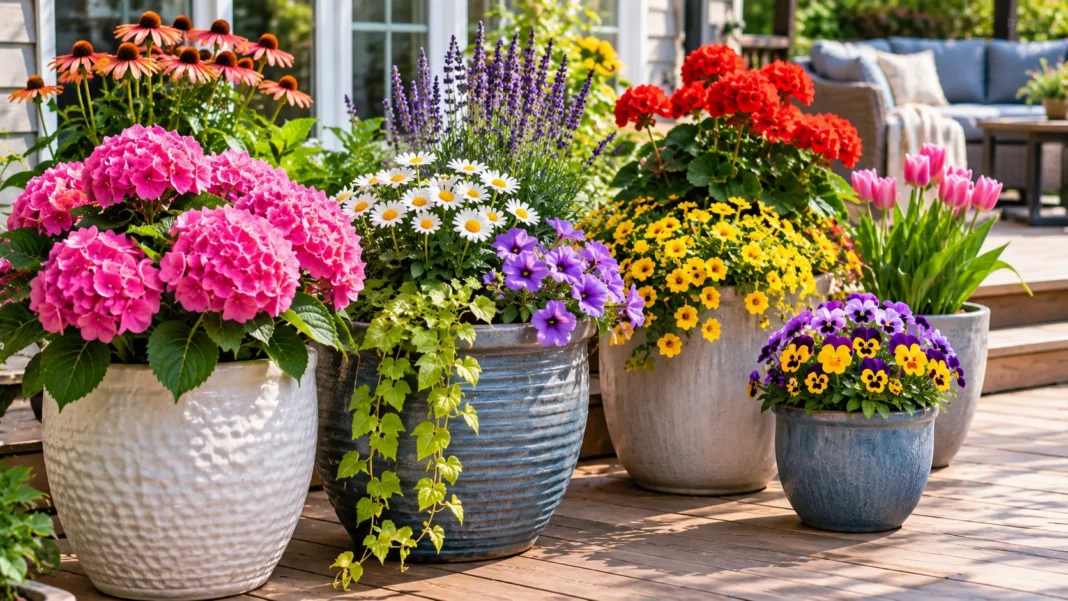

Container flower gardens are a beautiful way to bring color, fragrance, and natural charm to almost any outdoor space. Whether you have a small balcony, spacious patio, front porch, or backyard, flowering plants in containers can transform ordinary areas into inviting garden displays. The best part is that you do not need a large garden or extensive experience to get started.
With the right container flower garden ideas, you can enjoy attractive seasonal arrangements throughout the year. Spring bulbs, colorful summer annuals, autumn chrysanthemums, and winter-friendly flowers offer opportunities to refresh your outdoor space as the seasons change. This guide explores creative flower combinations, container choices, planting techniques, and simple maintenance tips to help you build a thriving seasonal garden.
What Is a Container Flower Garden?
A container flower garden is a collection of flowering plants grown in pots, planters, baskets, or other suitable containers instead of directly in the ground. This gardening method allows you to arrange flowers in different locations and adjust their placement when necessary. It is particularly useful for patios, balconies, small yards, and outdoor areas with limited planting space.
Container gardening provides greater control over growing conditions because you can select the potting mix, container size, and planting location. Different flowers have different sunlight, watering, and drainage requirements, making these choices important. Matching plants with suitable containers helps support healthy roots, attractive foliage, and consistent flowering during their growing seasons.
Another benefit is the flexibility to change your garden’s appearance throughout the year. You can replace seasonal flowers, rearrange pots, or experiment with new color combinations without redesigning an entire landscape. This makes flower container gardening a practical option for beginners and experienced gardeners who enjoy creating fresh outdoor displays.
Why Container Flower Gardens Are Perfect for Small Spaces
Container flower gardens make it possible to grow beautiful plants even when outdoor space is limited. A balcony, narrow patio, or small front entrance can accommodate several carefully positioned pots. By choosing containers that fit your available area, you can introduce greenery and seasonal color without overcrowding the space.
Vertical arrangements can increase planting opportunities when floor space is limited. Hanging baskets, tiered plant stands, and railing planters allow flowers to grow at different heights. These displays add visual interest while leaving room for walking, seating, or other everyday activities in your outdoor area.
Container gardening also allows renters and people with limited garden access to enjoy flowering plants. Many arrangements can be moved when necessary, although large pots may become heavy. Choosing manageable containers and suitable plant varieties helps make seasonal gardening more accessible, flexible, and enjoyable.
Best Flowers for Spring Container Gardens
Spring is an excellent time to introduce colorful blooms after the colder months. Tulips, daffodils, hyacinths, and crocuses are popular spring-flowering bulbs that create cheerful container displays. These plants are generally planted during autumn in climates where they receive the chilling conditions needed for flowering.
Pansies, violas, and primroses are additional choices for cool-season flower arrangements. Their colorful blooms work beautifully in window boxes, patio planters, and decorative pots. Depending on the local climate, these flowers may bloom through mild winter conditions and continue producing flowers during early spring.
For a balanced spring container garden, combine plants with similar sunlight and moisture needs. A pot containing pansies and complementary spring bulbs can create changing color as different flowers appear. Remember that bulb performance depends on climate, so gardeners in warmer areas may need pre-chilled bulbs or locally suitable alternatives.
Colorful Summer Container Flower Garden Ideas
Summer provides many opportunities to create bright and lively container flower arrangements. Petunias, zinnias, marigolds, and verbena are popular choices for sunny outdoor spaces. Their colorful blooms can transform patios, balconies, and garden entrances into attractive displays when appropriate growing conditions and regular care are provided.
For a cheerful summer combination, plant yellow marigolds alongside purple verbena or similarly compatible flowers. The contrasting colors create an energetic appearance without requiring complicated garden design. Choose a sufficiently large container with drainage holes, and ensure that the plants have similar sunlight and watering requirements.
Summer container gardens may require more frequent watering because warm temperatures increase moisture loss. Check the potting mix regularly rather than following a fixed watering schedule. Providing adequate sunlight, appropriate feeding, and occasional removal of faded flowers can help many summer annuals continue blooming throughout their growing season.
Beautiful Fall Container Flower Arrangements
Autumn container gardens can introduce warm colors and attractive textures as summer flowers begin to fade. Chrysanthemums, ornamental kale, pansies, and asters are popular choices for seasonal arrangements. Their varied foliage and flower colors complement the natural tones associated with cooler weather and changing landscapes.
A classic fall display might combine orange or burgundy chrysanthemums with ornamental grasses and decorative foliage. This arrangement creates visual interest through differences in plant height, leaf shape, and color. Choosing a neutral container can help emphasize the flowers while keeping the overall appearance balanced.
In regions with mild autumn temperatures, pansies and other cool-season flowers may continue blooming for an extended period. Gardeners in colder areas should select plants suited to expected temperatures and frost conditions. Preparing containers for seasonal changes helps maintain an attractive display without relying on plants that cannot tolerate local weather.
Winter Container Flower Garden Ideas
Winter container gardening depends heavily on local temperatures and the plants available in your region. In mild climates, pansies, violas, cyclamen, and certain primroses may provide seasonal flowers. These plants can create colorful displays when growing conditions remain suitable and containers are protected from damaging weather.
In colder climates, flowering options become more limited, particularly when soil freezes for extended periods. Evergreen foliage, ornamental branches, and cold-tolerant decorative plants can provide structure and visual interest. Winter arrangements may emphasize texture and greenery rather than continuous flowering during the coldest months.
To protect winter containers, choose weather-resistant materials and avoid leaving vulnerable pots exposed to repeated freezing and thawing. Plants in containers often experience colder root conditions than those growing in the ground. Moving sensitive arrangements into sheltered locations can help reduce damage, although protection requirements depend on the plant and local climate.
How to Choose the Right Containers for Flowers
Selecting suitable containers is one of the most important steps in creating a successful flower garden. Pots should provide enough space for healthy root development while supporting the size of the plants. Containers that are too small may dry out quickly, restrict growth, and require more frequent maintenance.
Common container materials include terracotta, plastic, ceramic, fiberglass, and wood. Terracotta provides a traditional appearance but often loses moisture faster than nonporous materials. Plastic containers are generally lightweight and retain moisture longer, while larger ceramic planters can create attractive focal points in outdoor spaces.
Drainage holes are essential for most flowering plants because excess water can damage roots. A suitable potting mix should allow water to move through the container while retaining enough moisture for plant growth. Avoid relying on a layer of stones to replace drainage holes, as this does not solve poor drainage.
Best Potting Mix for Container Flower Gardens
Container flowers grow best in a potting mix designed to provide both moisture retention and adequate drainage. Unlike ordinary garden soil, commercial potting mixes are formulated to support roots in confined spaces. Their lighter structure helps maintain airflow around roots while allowing excess water to drain more effectively.
Many potting mixes contain materials such as composted bark, coir, peat-based ingredients, or perlite. The exact combination varies depending on the product and intended plants. Choosing a quality mix suitable for flowering containers is generally easier than attempting to reproduce garden soil conditions inside a pot.
Some flowering plants require specialized growing media, particularly when their natural preferences differ from typical annual flowers. Check individual plant requirements before selecting the potting mix. Refreshing or replacing exhausted growing media between planting seasons can also help maintain suitable conditions for new flowers.
Container Flower Garden Ideas for Sunny Patios
Sunny patios provide excellent growing conditions for flowers that prefer several hours of direct sunlight each day. Zinnias, marigolds, petunias, and certain salvias are common choices for bright locations. Their colorful blooms can create lively displays when containers receive appropriate watering and enough room for healthy growth.
Try arranging several containers of different heights near a seating area or along a patio edge. Taller flowering plants can provide structure, while shorter varieties add color closer to the ground. Using pots with similar finishes can create a coordinated appearance without requiring every flower to be the same color.
Full-sun containers may become hot and dry quickly during summer, especially when placed against reflective walls or paving. Larger planters can help reduce rapid drying by holding more growing medium. Monitor moisture regularly and consider afternoon protection for plants that struggle during extreme heat.
Best Container Flowers for Shady Areas
Shady balconies and patios can also support beautiful flower gardens when appropriate plants are selected. Impatiens, begonias, and certain fuchsias are popular options for locations receiving limited direct sunlight. Their flowering performance depends on climate and the amount of available light, so checking individual requirements is important.
For a soft, colorful arrangement, combine shade-tolerant begonias with complementary foliage plants that enjoy similar conditions. The contrasting leaves and flowers create an attractive display without requiring direct afternoon sunshine. Containers placed beneath covered patios or near shaded walls can provide suitable growing environments for selected varieties.
Shade does not always mean that containers require less attention. Sheltered areas may receive little rainfall, while excessive watering can still damage roots. Check soil moisture carefully and avoid choosing flowers that require strong sunlight when your growing area remains shaded throughout most of the day.
Hanging Basket Flower Garden Ideas
Hanging baskets are a practical way to add flowers when ground space is limited. They work well near balconies, porches, pergolas, and suitable outdoor structures. Trailing petunias, lobelia, bacopa, and certain begonias can create attractive displays, depending on the available sunlight and local growing conditions.
A hanging basket containing several compatible trailing flowers can provide a colorful waterfall effect. Combining purple petunias with white bacopa creates a simple contrast that works in many garden settings. Choose a basket large enough for the plants and ensure it is securely attached to a structure capable of supporting the full weight.
Hanging baskets often dry out faster than containers resting on the ground because air circulates around more of their surface. Check moisture frequently, especially during warm or windy weather. Regular watering and appropriate feeding can support healthy growth, while trimming overgrown plants may help maintain a balanced appearance.
Window Box Flower Arrangements for Every Season
Window boxes bring flowers closer to everyday living spaces and can brighten exterior walls, balconies, and building entrances. Their narrow shape makes them suitable for combining compact flowers and trailing plants. Choosing varieties with compatible requirements helps create attractive arrangements that are easier to maintain throughout the season.
During spring, pansies and violas can provide cheerful color in window boxes where temperatures remain suitable. Summer displays may feature petunias, begonias, or other locally appropriate annuals. As autumn approaches, cool-season flowers and decorative foliage can replace plants that are reaching the end of their growing period.
Window boxes should be securely installed and positioned where excess drainage water will not create problems. Because their growing volume is limited, plants may require regular moisture checks and occasional feeding. Selecting compact varieties helps prevent overcrowding and keeps the arrangement proportional to the available planting space.
Creative Color Combinations for Flower Containers
Color combinations can transform a simple group of potted flowers into a coordinated garden display. Complementary colors, such as purple and yellow, create noticeable contrast, while similar shades produce a softer appearance. You can experiment with different combinations based on the atmosphere you want to create in your outdoor space.
For a cheerful arrangement, combine yellow marigolds with purple or blue-toned flowers that share similar growing requirements. Pink and white flowers can create a gentler display, while orange and red blooms add warmth. Repeating one or two colors across several containers helps establish visual consistency.
Flower color is not the only feature that contributes to attractive arrangements. Leaf shape, foliage color, bloom size, and plant height also influence the overall appearance. Combining different textures can make even a limited color palette interesting, especially when containers are positioned together as a group.
Using the Thriller, Filler, and Spiller Method
The thriller, filler, and spiller method is a popular approach to designing mixed container arrangements. A thriller provides height or a central focal point, while filler plants occupy the middle space. Spiller plants trail over the container’s edges, creating a layered display with different shapes and textures.
For example, a suitable upright flowering salvia may serve as the thriller in a large sunny planter. Compact flowering plants can fill the surrounding space, while trailing varieties soften the container edges. The exact combination should depend on available room, mature plant size, and shared growing requirements.
This method works particularly well in large patio planters and decorative entrance containers. However, it is not necessary for every flower arrangement. A simple pot containing one healthy flowering variety can look equally attractive, especially when several containers are grouped thoughtfully in the surrounding space.
How to Water Container Flowers Correctly
Watering is one of the most important parts of maintaining healthy container flowers. Plants growing in pots depend on the limited moisture available in their growing medium. Their watering needs change according to temperature, container size, plant type, sunlight exposure, and the amount of rainfall received.
Rather than watering every container on an identical schedule, check the growing medium with your finger. Many common flowering annuals benefit from watering when the upper layer begins to feel dry. Water thoroughly until excess moisture drains from the bottom, then avoid leaving the container standing in water unless the plant specifically requires different conditions.
Hot weather may increase watering frequency, while cooler temperatures generally reduce moisture loss. Overwatering can cause root problems, so drainage and observation are essential. Learning how quickly each container dries helps you maintain healthier plants without relying on an unnecessarily rigid watering routine.
How to Fertilize Flowers for Healthy Growth
Container flowers may need additional nutrients because regular watering can gradually remove soluble nutrients from the potting mix. Many commercial growing media contain starter fertilizer, but these nutrients may not last throughout the growing season. A suitable fertilizer can support plant growth and flowering when used according to the product instructions.
Slow-release fertilizers provide nutrients gradually, while liquid fertilizers are generally applied at intervals recommended on their labels. The best choice depends on the plant, growing medium, and preferred maintenance routine. Avoid applying excessive fertilizer because too much can damage roots or encourage unwanted growth patterns.
Different flowering plants have different nutritional needs, making it important to avoid treating every container identically. Some plants bloom well with modest feeding, while vigorous annuals may benefit from more regular nutrition. Observing plant growth and following appropriate guidance helps maintain healthy flowers without unnecessary fertilizer use.
Common Container Gardening Mistakes to Avoid
One common container gardening mistake is overcrowding plants inside a small pot. Although closely packed flowers may look attractive initially, they can compete for water, nutrients, and growing space. Checking mature plant sizes before planting helps prevent unnecessary crowding and supports healthier development throughout the season.
Poor drainage is another frequent problem that can cause roots to remain excessively wet. Decorative containers without drainage holes may appear convenient, but they can make moisture management difficult. Using a suitable inner pot with drainage can help protect the plants while maintaining the appearance of a decorative outer container.
Choosing plants with incompatible sunlight and watering requirements can also create maintenance challenges. A drought-tolerant flower may struggle when planted beside a variety requiring consistently moist soil. Selecting compatible plants and observing their performance makes container gardening easier and reduces the need for frequent replacement.
How to Maintain Flower Containers Throughout the Year
Seasonal maintenance helps keep container flower gardens attractive and healthy as growing conditions change. Remove faded blooms when appropriate, trim damaged growth, and inspect leaves for unusual discoloration or pests. Some modern flowering varieties require little deadheading, while others benefit from occasional removal of spent flowers.
As one season ends, evaluate which plants can remain and which should be replaced. Annual flowers may finish their life cycle, while suitable perennials can return under favorable conditions. Refreshing containers with new seasonal plants allows you to maintain color without completely redesigning the garden.
During colder months, protect vulnerable containers and plants according to local conditions. Large temperature changes, frozen soil, and strong winds can affect plants growing above ground. Cleaning reusable pots, checking drainage, and planning future flower combinations can also prepare your container garden for the next growing season.
Conclusion
Container flower garden ideas provide practical ways to enjoy colorful blooms throughout the year, even when outdoor space is limited. Spring bulbs, summer annuals, autumn flowers, and suitable winter arrangements can create changing seasonal displays. By choosing appropriate plants and containers, you can design a garden that reflects your preferences and local growing conditions.
Successful container gardening depends on suitable potting mix, reliable drainage, proper sunlight, and thoughtful watering. Combining flowers with similar requirements helps simplify maintenance and supports healthier growth. Creative arrangements, hanging baskets, and window boxes also make it possible to bring flowers into patios, balconies, and other compact spaces.
Whether you begin with one small planter or develop a collection of seasonal flower containers, gradual experimentation can make gardening enjoyable and rewarding. Observe how plants respond to their environment and adjust your care routine as needed. With consistent attention and practical planning, a container flower garden can provide lasting beauty across the changing seasons.
Frequently Asked Questions
What are the best flowers for container gardens all year round?
No single flower blooms continuously in every climate. Pansies, petunias, marigolds, chrysanthemums, and seasonal bulbs can provide color at different times when selected according to local temperatures and growing conditions.
How many flowers should I plant in one container?
The number depends on container size and the mature growth of each plant. Choose enough space for healthy root development and airflow rather than crowding multiple flowers into a small pot.
What is the best soil for container flowers?
A quality potting mix designed for containers is usually the best choice. It should provide appropriate drainage, moisture retention, and aeration to support healthy roots and consistent plant growth.
How often should container flowers be watered?
Watering frequency depends on weather, plant type, container size, and sunlight exposure. Check the potting mix regularly and water when appropriate rather than following one fixed schedule for every container.
Can container flowers survive winter outdoors?
Some cold-tolerant flowers and perennials can survive outdoors, depending on the climate and container protection. However, exposed roots may experience colder conditions than plants growing directly in garden soil.

