
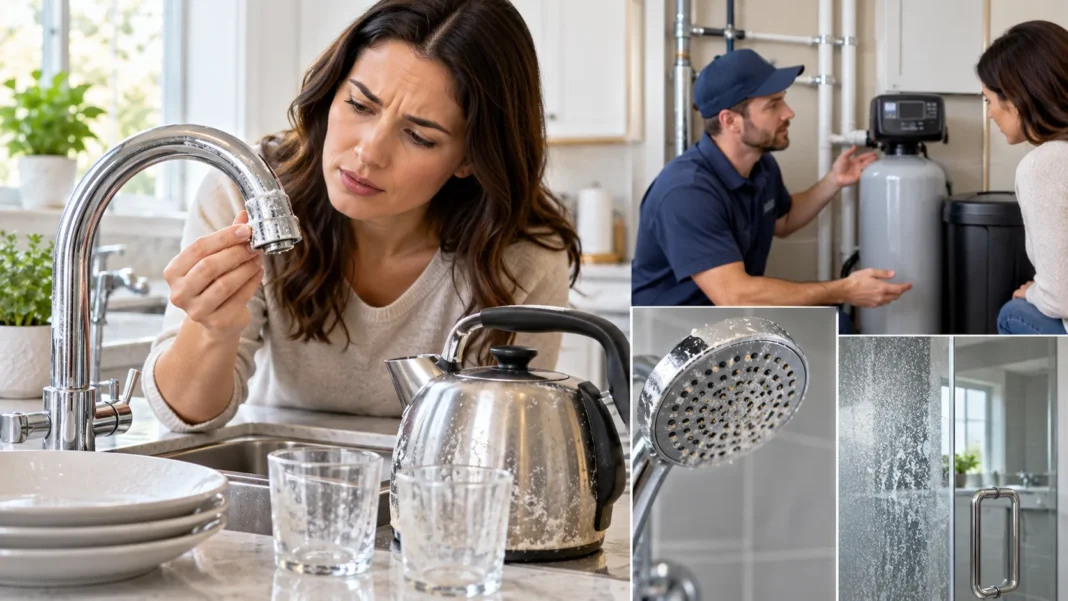

Water is essential for everyday activities, from drinking and cooking to bathing, cleaning, and washing clothes. However, not all water has the same mineral composition, and some households experience problems caused by naturally occurring minerals. Hard water is a common issue that can leave stains on bathroom fixtures, create mineral deposits inside appliances, and make everyday cleaning more difficult.
Understanding what hard water is, how it develops, and which solutions work best can help homeowners manage these problems effectively. Although hard water is generally safe to drink, its mineral content can affect plumbing, household appliances, laundry, and personal care routines. This guide explains the signs, causes, effects, and practical solutions for dealing with hard water at home.
What Is Hard Water?
Hard water is water that contains relatively high concentrations of dissolved minerals, primarily calcium and magnesium. These minerals enter water naturally as it moves through soil, rocks, and underground geological formations. Water hardness is determined by the amount of these dissolved minerals, which can vary depending on the local environment and the source supplying a household.
Unlike contaminated water, hard water is not automatically unsafe for drinking or everyday use. Calcium and magnesium are naturally occurring minerals that are also important nutrients in the human diet. However, their presence in water can cause practical household problems, particularly when mineral deposits accumulate on surfaces or inside plumbing and heating equipment.
Hard water behaves differently from soft water when it interacts with soap, detergents, and heated surfaces. It may produce less soap lather and leave behind chalky deposits after evaporation. Understanding these characteristics helps explain why some households experience persistent bathroom stains, cloudy glassware, or reduced appliance efficiency despite maintaining regular cleaning routines.
What Causes Hard Water in Homes?
The main cause of hard water is the natural movement of water through mineral-rich geological formations. Rainwater enters the ground and gradually passes through layers containing limestone, chalk, or other minerals. During this process, calcium and magnesium compounds dissolve into the water, increasing its hardness before it reaches underground wells, reservoirs, or household plumbing systems.
Groundwater often contains higher mineral concentrations because it may remain in contact with underground rocks for extended periods. However, surface water from rivers and lakes can also become hard depending on the surrounding geology. Municipal water supplies may contain varying hardness levels because their treatment processes do not necessarily remove dissolved calcium and magnesium.
Water hardness can differ considerably between neighborhoods and even individual properties using separate wells. Seasonal changes, water sources, and local treatment practices may also influence mineral concentrations. Homeowners experiencing recurring mineral buildup should investigate their water supply rather than assuming that cleaning products or plumbing fixtures are responsible for the problem.
Common Signs of Hard Water in Your Home
One of the most noticeable signs of hard water is white, chalky buildup around faucets, showerheads, and sinks. These deposits form when water evaporates and leaves dissolved minerals behind. Over time, the buildup can become difficult to remove, particularly on frequently used bathroom fixtures and surfaces exposed to warm water.
Cloudy drinking glasses and spotted dishes are other common indicators of mineral-rich water. Even after washing, dishes may develop visible marks because dissolved minerals remain on their surfaces as water dries. Soap scum on shower walls and bathtubs can also become more noticeable because calcium and magnesium react with certain soap ingredients.
Homeowners may also notice reduced soap lather, stiff laundry, or recurring deposits inside kettles and coffee makers. Some appliances may require more frequent cleaning because minerals accumulate during normal use. Although these symptoms suggest possible water hardness, testing the water provides a more reliable way to confirm the problem and determine its severity.
How Hard Water Affects Your Skin and Hair
Hard water can influence how soap, shampoo, and other personal care products perform during bathing. Calcium and magnesium may interact with certain cleansing ingredients, leaving residue that is harder to rinse away. Some people notice that their skin feels less comfortable after showering, although individual experiences vary depending on skin sensitivity and the products used.
Hair washed with hard water may sometimes feel rough, less manageable, or coated with residue. Mineral deposits and interactions with hair care products can contribute to these changes, particularly when suitable cleansing products are not used. However, hard water does not affect everyone’s hair in the same way, and dryness can have several other causes.
People experiencing persistent skin irritation should avoid assuming that hard water is the only explanation. Fragranced products, environmental conditions, and existing skin concerns may also contribute to discomfort. Using gentle cleansers, moisturizing appropriately, and evaluating household water hardness can help identify practical improvements without relying on unnecessary or expensive personal care products.
Effects of Hard Water on Laundry and Household Cleaning
Hard water can make laundry cleaning less efficient because dissolved minerals interact with some detergent ingredients. This may reduce cleaning performance and contribute to residue remaining on clothing after washing. Fabrics can sometimes feel stiff or appear less bright, especially when mineral buildup and detergent residue accumulate over repeated washing cycles.
Household cleaning can also become more challenging when mineral-rich water leaves visible marks after surfaces dry. Shower doors, tiles, sinks, and bathroom fixtures may require additional attention to remove deposits and soap scum. Repeatedly cleaning these surfaces without addressing the water hardness can become frustrating because the same mineral stains often return.
Using detergents formulated for hard water and following appropriate product instructions can improve cleaning results. Rinse aids may also help reduce spotting on dishwasher-cleaned dishes, depending on the appliance and water conditions. For households dealing with severe hardness, water treatment may offer a more consistent solution than repeatedly increasing cleaning product quantities.
Can Hard Water Damage Plumbing and Household Appliances?
Hard water can contribute to mineral scale accumulation inside plumbing fixtures and appliances that repeatedly heat or evaporate water. Kettles, coffee makers, water heaters, and certain household machines are especially vulnerable to these deposits. Over time, scale buildup may reduce heating efficiency, interfere with normal operation, and increase maintenance requirements for affected equipment.
Water heaters can experience performance problems when mineral deposits accumulate on heating surfaces or within storage tanks. Scale acts as an insulating layer that can make heat transfer less efficient in some systems. The extent of these problems depends on water hardness, equipment design, operating temperature, usage patterns, and how regularly the appliance receives maintenance.
Mineral buildup can also restrict water flow through showerheads, faucet aerators, and narrow internal passages. However, not every plumbing problem is caused by hard water, and different pipe materials respond differently to mineral deposits. Regular equipment inspections and appropriate descaling procedures can help homeowners manage these issues before they become more expensive repairs.
Is Hard Water Safe to Drink?
Hard water is generally safe to drink when the water supply meets applicable drinking water safety standards. Its main distinguishing feature is a higher concentration of calcium and magnesium rather than the presence of harmful microorganisms or toxic substances. These minerals naturally occur in many drinking water supplies and can contribute small amounts to daily mineral intake.
The taste of hard water may differ from softer water because dissolved minerals influence its flavor. Some people notice a slightly mineral-like taste, while others cannot distinguish between water hardness levels. Taste preferences do not reliably indicate whether water is safe, so unusual flavors or odors should be evaluated separately from ordinary mineral hardness.
Water hardness should never be used as the only measure of drinking water quality. Water can be soft yet contain unwanted contaminants, while hard water may meet drinking water standards. Households using private wells should consider appropriate water quality testing because hardness tests alone cannot identify bacteria, arsenic, nitrates, or other potential contaminants.
How to Test Water Hardness at Home
Testing water hardness helps homeowners determine whether mineral concentrations are high enough to justify treatment. Simple testing methods can provide useful information without requiring complicated equipment or professional installation. Many home improvement stores sell water hardness test strips or kits that estimate calcium and magnesium levels using a color comparison or chemical measurement.
Water hardness is commonly measured in milligrams per liter, expressed as calcium carbonate equivalents. Water containing approximately 0–60 mg/L is generally classified as soft, while 61–120 mg/L is considered moderately hard. Levels between 121–180 mg/L are typically classified as hard, and concentrations above 180 mg/L are considered very hard.
Homeowners receiving municipal water can often obtain hardness information from their local water supplier. Private well owners may prefer laboratory testing when they need more precise results or additional water quality information. Testing before purchasing treatment equipment helps prevent unnecessary spending and provides a reliable baseline for evaluating improvements after installation.
Best Water Softening Solutions for Hard Water
Installing a water softener is one of the most common approaches to treating hard water throughout a household. Traditional ion-exchange water softeners replace calcium and magnesium ions with sodium or potassium ions. This process reduces hardness and helps prevent scale formation, making treated water more suitable for appliances, cleaning, and other everyday household activities.
Water softeners vary in capacity, regeneration requirements, maintenance needs, and installation costs. Choosing the appropriate system depends on household water consumption, measured hardness, available space, and local plumbing conditions. Because sodium-based systems add some sodium to treated water, households with specific dietary requirements may want to discuss appropriate options with a qualified professional.
Salt-free water conditioners are another option marketed for scale management, but they generally do not remove hardness minerals. Certain systems may change how minerals form deposits under suitable conditions, although performance varies. Homeowners should distinguish between actual water softening and scale conditioning before purchasing equipment, especially when their primary goal is reducing measured water hardness.
How to Remove Hard Water Stains and Mineral Buildup
Removing existing hard water stains requires cleaning methods that address mineral deposits rather than ordinary dirt alone. Many chalky stains can be dissolved using suitable acidic cleaning products designed for bathroom fixtures or appliances. White vinegar may help remove light mineral deposits from certain compatible surfaces, although homeowners should always check manufacturer instructions before applying cleaning solutions.
Hard water stains commonly develop around faucet openings, showerheads, sinks, and glass surfaces exposed to repeated water evaporation. Gentle cleaning with an appropriate product and a nonabrasive cloth can help reduce visible buildup. Avoid using vinegar or acidic descalers on acid-sensitive materials such as marble, limestone, and some stone finishes because these products can damage surfaces.
Appliances such as kettles and coffee makers may also require periodic descaling to maintain normal performance. Homeowners should use cleaning products and procedures recommended for their specific equipment. Removing existing scale improves cleanliness and may restore affected performance, but deposits can return unless water hardness is managed or surfaces receive consistent maintenance.
How to Choose the Right Hard Water Solution
Selecting a hard water treatment method begins with understanding the severity of the problem and the household’s priorities. Some homeowners mainly want cleaner shower doors, while others need to reduce scale inside water heaters or plumbing fixtures. Identifying the most important concern makes it easier to choose between targeted maintenance, point-of-use treatment, and whole-house water softening.
A whole-house water softener may be appropriate when significant hardness affects multiple appliances and fixtures. However, smaller problems can sometimes be managed through descaling and suitable cleaning products. Reverse osmosis systems can reduce dissolved minerals at individual drinking water taps, but ordinary activated carbon filters generally do not remove the calcium and magnesium responsible for hardness.
Homeowners should compare equipment costs, installation requirements, maintenance expenses, water usage, and treatment performance before making a decision. Testing results and household consumption patterns provide valuable guidance when selecting system capacity. Consulting a qualified water treatment professional can also help ensure the chosen solution addresses actual water conditions rather than relying on marketing claims.
How to Prevent Hard Water Problems Long Term
Preventing recurring hard water problems requires consistent maintenance and an understanding of household water conditions. Even after installing treatment equipment, homeowners should monitor system performance and follow recommended maintenance schedules. Water softeners may need regular salt replenishment, cleaning, and occasional servicing to continue reducing mineral hardness effectively throughout the home’s plumbing system.
Routine cleaning can help prevent light mineral deposits from becoming difficult to remove. Drying shower glass, wiping faucets, and descaling suitable appliances according to manufacturer recommendations may reduce visible buildup. Addressing minor deposits early is generally easier than allowing thick layers of scale to develop over several months of repeated water exposure.
Long-term water management should also include periodic hardness testing when conditions change or treatment performance becomes uncertain. Households using private wells may experience differences in mineral concentrations, while municipal supplies can change water sources. Combining appropriate treatment, regular maintenance, and informed product selection helps homeowners manage hard water without unnecessary expenses or unrealistic expectations.
Conclusion
Hard water is a common household condition caused by elevated concentrations of dissolved calcium and magnesium. Although it is generally safe to drink when the supply meets drinking water standards, it can create practical difficulties involving cleaning, plumbing, appliances, and personal care. Recognizing common signs such as mineral deposits, cloudy glassware, and reduced soap lather helps homeowners identify potential hardness problems.
Understanding the causes and effects of hard water makes it easier to choose practical solutions. Testing provides a reliable starting point for determining hardness levels and evaluating whether treatment is necessary. Depending on household needs, water softeners, targeted descaling, suitable cleaning products, and proper appliance maintenance can reduce many of the inconveniences associated with mineral-rich water.
The most effective approach to managing hard water combines accurate testing, appropriate treatment, and consistent maintenance. Homeowners should consider their water source, budget, and specific problems before investing in equipment. By making informed decisions and following suitable care practices, households can reduce mineral buildup, protect appliances, and maintain cleaner, more comfortable living environments.
Frequently Asked Questions (FAQs)
1. What is hard water in simple terms?
Hard water contains relatively high levels of dissolved calcium and magnesium minerals. These minerals naturally enter water through contact with rocks and soil, potentially causing scale buildup, soap residue, and cleaning difficulties.
2. What are the most common signs of hard water?
Common signs include white deposits around faucets, cloudy drinking glasses, soap scum, reduced soap lather, and mineral buildup inside appliances. Hard water may also contribute to stiff laundry and recurring bathroom stains.
3. Is hard water bad for your health?
Hard water is generally safe to drink when it meets drinking water standards. Calcium and magnesium are natural minerals, but hardness alone does not establish overall water safety or rule out other contaminants.
4. How can you soften hard water at home?
An ion-exchange water softener can remove hardness minerals throughout the home. Reverse osmosis can reduce dissolved minerals at individual drinking water taps, while ordinary carbon filters generally do not soften hard water.
5. Does boiling water remove hardness?
Boiling can reduce temporary hardness by causing some calcium carbonate to precipitate. However, it does not reliably remove permanent hardness or provide a practical solution for treating an entire household water supply.


[…] What Is Hard Water? Signs, Causes, and Solutions […]