
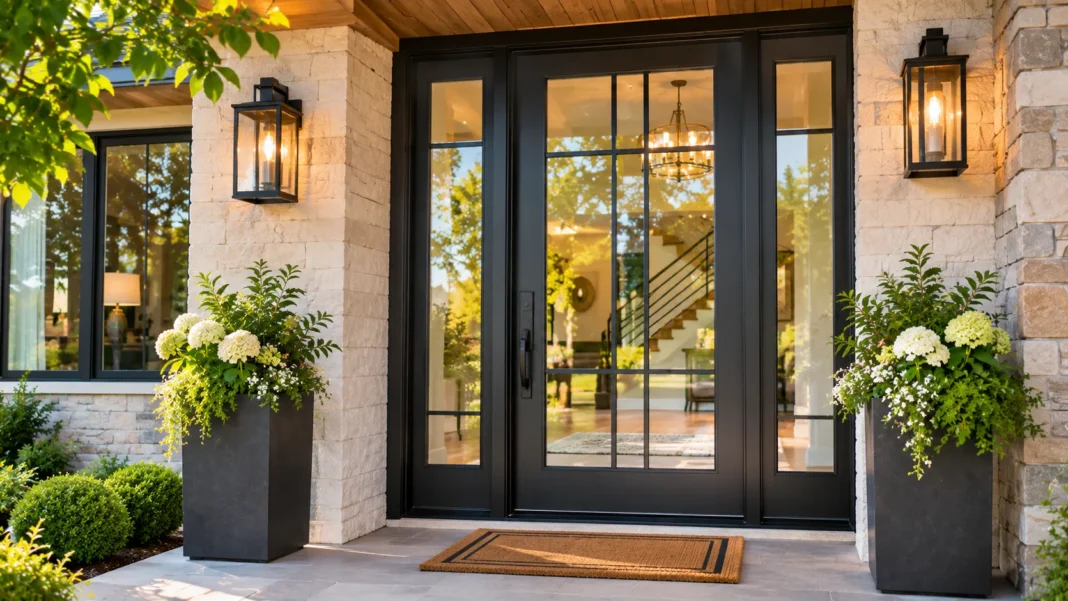

Front doors with glass are a popular choice for homeowners who want to improve their home’s appearance while allowing more natural light inside. These doors combine the practical function of an entrance door with decorative glass panels that create a welcoming atmosphere. Available in modern, traditional, and farmhouse styles, they can complement different architectural designs and personal preferences.
However, choosing a glass front door involves more than selecting an attractive design. Privacy, security, insulation, durability, and maintenance are important factors that influence long-term satisfaction. This guide explores the benefits, disadvantages, popular styles, glass options, and practical buying tips to help you choose an entry door that looks beautiful without creating unnecessary problems.
What Are Front Doors with Glass?
Front doors with glass are exterior entrance doors that contain one or more glass panels within their structure. The glass may cover a small section near the top or extend across most of the door. These designs allow daylight to enter while maintaining the basic functions of a traditional exterior door.
Glass front doors are available in materials such as fiberglass, steel, and wood. Each material offers different benefits regarding durability, appearance, insulation, and maintenance requirements. Manufacturers also provide different glass finishes, frame colors, and decorative patterns, allowing homeowners to select designs that complement their home’s exterior and interior spaces.
Unlike fully solid entrance doors, glass-paneled doors create a visual connection between indoor and outdoor areas. Some provide clear views, while others use textured or decorative glass to limit visibility. Choosing the right combination of door material and glazing helps balance natural lighting, privacy, security, and overall curb appeal.
Why Choose a Front Door with Glass?
One of the biggest advantages of glass front doors is their ability to introduce natural light into entryways. Hallways and foyers without nearby windows can appear brighter during the day. This additional daylight may reduce the need for artificial lighting at certain times while making the entrance feel more open and welcoming.
Glass panels can also improve curb appeal by adding architectural interest to an otherwise simple exterior. Decorative patterns, elegant framing, and attractive finishes help create a distinctive entrance. Whether a house features contemporary architecture or traditional detailing, a carefully chosen glass entry door can complement its existing design.
Another benefit is the wide variety of available configurations. Homeowners can select small decorative inserts, narrow vertical panels, or larger glass sections depending on their preferences. However, the most attractive option is not always the most practical, making it important to consider visibility, climate, and security before purchasing.
Popular Styles of Front Doors with Glass
Modern front doors with glass often feature clean lines, simple frames, and large rectangular panels. Black, charcoal, and natural wood finishes are common choices for contemporary homes. These designs create an uncluttered appearance while allowing natural light to become an important part of the entrance’s overall visual character.
Traditional glass entry doors typically include decorative grilles, divided-light patterns, or elegant glass inserts. Some designs incorporate arched panels or ornamental detailing inspired by classic architecture. These features work particularly well with colonial, craftsman, and other established residential styles where symmetry and traditional materials influence the exterior appearance.
Farmhouse-style doors commonly combine wood-look finishes with simple glass panels and understated hardware. A half-glass or divided-light design can provide a familiar, welcoming appearance without feeling overly decorative. Selecting a style that reflects the home’s architecture generally produces a more cohesive result than choosing a door based entirely on current trends.
Full Glass vs. Half Glass Front Doors
Full glass front doors contain large glazing areas that occupy most of the door’s visible surface. They allow substantial daylight into the entryway and create a strong connection with outdoor surroundings. These designs work particularly well when the entrance opens toward a private garden, landscaped courtyard, or another attractive exterior view.
Half glass front doors include a glass panel in the upper portion while maintaining a solid lower section. This arrangement provides daylight while limiting direct visibility into certain areas of the home. Half-glass designs are often suitable for homeowners who want a balance between traditional door construction and decorative glazing.
The best option depends on the entrance layout, privacy requirements, and personal preferences. A larger glass area may feel brighter but can expose more of the interior to outside views. Smaller panels provide greater visual separation while still allowing light to enter, making them practical for entrances facing busy streets or neighboring properties.
Choosing the Best Glass for Privacy
Privacy is an important consideration when selecting front doors with glass, especially for homes located near sidewalks or neighboring buildings. Clear glass provides the greatest visibility in both directions, which may not suit every entrance. Frosted, textured, and patterned glass offer alternatives that admit daylight while reducing the clarity of outside views.
Frosted glass creates a translucent appearance that obscures recognizable details behind the panel. Textured glass uses surface patterns to distort visibility and can add decorative character. Reeded, rain, and obscure glass are popular options, although their actual privacy levels vary depending on the pattern, lighting conditions, and viewing distance.
Decorative glass can provide another layer of visual separation through colored sections, bevels, or intricate designs. However, some patterns contain clear areas that may reduce privacy. Before purchasing, examine a sample under different lighting conditions, including at night when interior lights can make silhouettes more noticeable from outside.
Are Front Doors with Glass Secure?
Glass front doors can provide effective security when manufactured with appropriate materials and installed correctly. However, the presence of glass requires additional consideration because glazing and surrounding frames may introduce potential weak points. Door construction, locking hardware, glass strength, and installation quality all influence how well an entry door resists unauthorized access.
Laminated security glazing can offer additional protection because its interlayer helps hold broken glass together. Certain reinforced or security-rated glazing systems provide stronger resistance when properly installed. Tempered glass is designed to break into relatively small pieces, improving some safety characteristics, but it should not be mistaken for security-resistant glazing.
Strong deadbolts, properly reinforced strike plates, and secure frames are also essential components of entrance security. A durable glass panel cannot compensate for weak hardware or poor installation. Homeowners should consider the entire door assembly and choose products that meet applicable safety and security requirements rather than judging protection by glass thickness alone.
Energy Efficiency and Insulation Performance
Energy efficiency is another important factor when choosing glass front doors. Glass areas can transfer heat differently from insulated solid door sections, affecting indoor comfort and heating or cooling demands. However, modern insulated glazing can improve thermal performance, making properly designed glass entry doors suitable for many residential climates.
Double-pane and triple-pane glass assemblies use multiple layers separated by insulating spaces. Low-emissivity coatings can reduce certain forms of radiant heat transfer, while gas-filled glazing units may provide additional insulation. The overall performance depends on the complete door design, including its frame, glazing, weatherstripping, and installation quality.
Homeowners should compare energy performance ratings rather than assuming every glass door provides similar insulation. In the United States, relevant measurements may include U-factor and solar heat gain coefficient. Choosing a door appropriate for the local climate can help manage unwanted heat transfer while maintaining comfortable indoor conditions throughout the year.
Best Materials for Glass Front Doors
Fiberglass is a popular material for front doors with glass because it offers durability and relatively low maintenance requirements. Many fiberglass doors are available with realistic wood-grain textures and attractive finishes. Insulated models can also provide good thermal performance, making them a practical choice for homeowners who want appearance and functionality.
Steel glass entry doors offer strength and a clean appearance at different price points. They can be suitable for traditional and modern homes, although damaged protective coatings may allow corrosion to develop. Regular inspection and appropriate maintenance help preserve the finish, particularly in environments exposed to moisture or harsh weather.
Wood front doors provide natural character and can complement classic architectural styles. However, wood generally requires more attention to protect it from moisture, sunlight, and changing temperatures. The right material depends on the home’s climate, desired appearance, maintenance preferences, and budget rather than one material being universally superior.
How Much Do Front Doors with Glass Cost?
The cost of front doors with glass varies depending on materials, dimensions, glazing options, and overall design complexity. Standard manufactured doors are generally more affordable than custom architectural designs. Decorative glass, premium hardware, specialized finishes, and advanced security features can increase the total purchase price substantially.
Installation costs also depend on the condition of the existing entrance and whether structural modifications are required. Replacing a door with another of similar dimensions is usually simpler than creating a larger opening. Additional work may include frame repairs, weatherproofing, trim replacement, and adjustments to surrounding exterior materials.
Homeowners should compare complete project estimates rather than looking only at the advertised price of the door. A lower initial cost may not provide the desired durability, energy performance, or finish quality. Obtaining detailed quotations from qualified installers can help identify included services and reduce the likelihood of unexpected expenses.
Common Mistakes to Avoid When Buying Glass Front Doors
One common mistake is choosing a door based only on its appearance without considering privacy. Large clear-glass panels may look attractive in product photographs but expose the entryway to unwanted views. Understanding how the entrance faces neighboring homes, walkways, and streets can prevent disappointment after the new door is installed.
Another mistake is overlooking insulation and weather resistance. Poorly sealed doors may allow drafts, moisture, or uncomfortable temperature changes around the entrance. Selecting appropriate glazing and ensuring proper installation can reduce these problems, while checking product specifications helps homeowners understand what level of performance to expect.
Incorrect measurements can also create expensive installation difficulties. Door openings, frames, thresholds, and swing directions must be considered before ordering a replacement. Professional measurement is particularly valuable for older homes or unusual openings because small dimensional differences can affect fit, operation, and long-term weather protection.
Maintenance Tips for Glass Entry Doors
Regular cleaning helps maintain the appearance of glass entry doors and prevents dirt from accumulating around frames and decorative details. Use cleaning products suitable for the glazing and surrounding door material. Avoid abrasive tools that may scratch glass coatings, painted finishes, or delicate decorative surfaces during routine maintenance.
Inspect weatherstripping, seals, hinges, and locking hardware periodically for signs of wear. Damaged seals can affect insulation and may allow moisture to enter around the glazing or frame. Addressing minor problems early can help maintain the door’s performance and prevent more extensive repairs from becoming necessary.
Maintenance requirements vary depending on whether the door is made from fiberglass, steel, or wood. Painted finishes may need occasional touch-ups, while wooden surfaces can require additional protection from weather exposure. Following the manufacturer’s care instructions helps preserve appearance, support reliable operation, and maintain applicable product warranty conditions.
How to Choose the Right Glass Front Door for Your Home
Start by identifying what matters most for your entrance, whether that is increased daylight, improved privacy, security, or architectural style. Consider the direction the door faces and how much sunlight reaches the entryway. These details influence which glass configuration and energy performance characteristics will be most suitable for your home.
Next, compare materials, glazing types, and hardware quality within your available budget. Look for products designed for exterior use and appropriate local building requirements. Reviewing warranty coverage, installation specifications, and maintenance recommendations can also help distinguish between options that appear similar but offer different long-term benefits.
Finally, consider how the door will look alongside your home’s windows, siding, trim, and entrance lighting. A coordinated design often improves curb appeal more effectively than an overly complicated statement door. Taking time to evaluate practical requirements and visual details helps ensure your purchase remains satisfying after the initial excitement of installation.
Conclusion
Front doors with glass offer a beautiful way to improve natural lighting, strengthen curb appeal, and create a more welcoming entrance. Available in modern, traditional, and farmhouse designs, they provide flexibility for different architectural styles. However, selecting the right door requires attention to more than appearance, particularly when considering privacy, insulation, and security.
The best glass entry door should combine attractive design with durable construction and dependable performance. Features such as privacy glazing, quality locking hardware, insulated glass, and suitable frame materials can improve everyday comfort. Careful measurements and professional installation also help prevent common problems associated with drafts, poor fitting, and premature wear.
Before making a final decision, compare different styles, examine product specifications, and consider how the door will perform in your local climate. Choose features that match your household’s needs rather than following appearance trends alone. With thoughtful planning, a glass front door can become a practical and attractive addition to your home for years to come.
Frequently Asked Questions
Are Front Doors with Glass a Good Idea?
Yes, front doors with glass can improve natural lighting and curb appeal while creating an attractive entrance. Choosing appropriate privacy glazing, quality materials, secure hardware, and professional installation helps address common concerns.
What Type of Glass Is Best for a Front Door?
The best glass depends on your priorities. Frosted or textured glass improves privacy, insulated glazing supports energy efficiency, and appropriately rated laminated security glass can provide additional protection against forced entry.
Do Glass Front Doors Make Your House Less Secure?
Not necessarily. A properly manufactured glass front door with suitable security glazing, strong locking hardware, and a reinforced frame can provide effective protection. Overall security depends on the complete door assembly.
Are Glass Front Doors Energy Efficient?
Yes, glass front doors can be energy efficient when they use suitable insulated glazing, quality weatherstripping, and well-designed frames. Performance varies, so checking energy ratings and selecting climate-appropriate products is important.
Can You Replace a Solid Front Door with a Glass Door?
Yes, most solid front doors can be replaced with glass-paneled models when dimensions and installation requirements are compatible. Professional measurement helps ensure proper fitting, weatherproofing, and reliable operation.

