
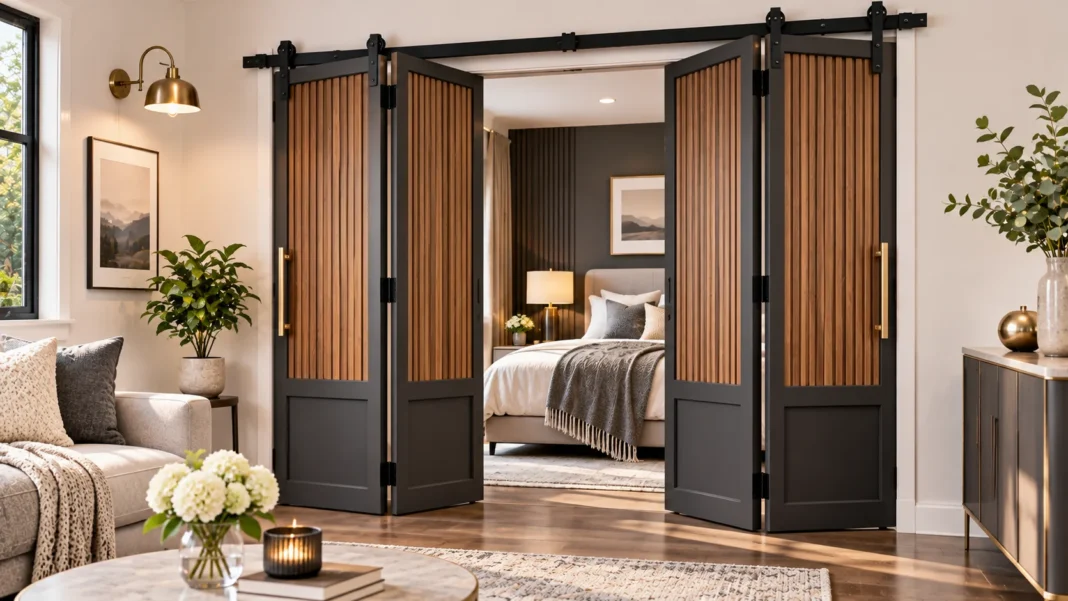

A folding barn door is a practical and stylish solution for homeowners who want to save space without compromising interior design. Unlike traditional swinging doors, folding barn doors use hinged panels that fold together as they open. This clever design makes them useful for closets, bedrooms, laundry rooms, and other areas where space is limited. They also introduce a distinctive decorative feature that complements different home styles.
Folding barn doors combine the rustic appeal of traditional barn doors with the convenience of modern folding mechanisms. They are available in different materials, finishes, and configurations, making them suitable for a variety of interiors. Whether you are renovating a small room or upgrading an existing doorway, understanding their features can help you make an informed decision.
What Is a Folding Barn Door?
A folding barn door is an interior door system made from two or more connected panels that fold together when opened. Unlike a conventional hinged door, it generally uses a track or guide system to control movement. The folding action reduces the space required for opening. This makes it attractive for rooms with limited floor space.
Most folding barn doors have panels joined by hinges and supported by specialized hardware. Depending on the design, the panels may fold toward one side or split in opposite directions. Some systems use an overhead track, while others include additional guiding components. The exact movement depends on the manufacturer’s mechanism.
Folding barn doors are commonly selected for their combination of functionality and appearance. They can feature rustic wood, painted finishes, glass inserts, or modern decorative panels. Their design works in traditional and contemporary interiors. However, selecting the correct hardware and dimensions is essential for reliable performance.
How Does a Folding Barn Door Work?
A folding barn door operates through a combination of hinges, rollers, and guiding hardware. As the door opens, connected panels pivot and fold toward one another. The track controls their movement and helps maintain alignment. This reduces the clearance required compared with a conventional swinging door.
The folding mechanism may differ depending on the door configuration. Some systems have two panels that fold toward one side of the opening. Others use four panels that separate and fold toward opposite sides. Certain designs also require wall-mounted brackets or floor guides for stability.
Smooth operation depends on accurate installation and compatible hardware. The door panels must be correctly aligned to avoid rubbing or uneven movement. Suitable hinges and rollers help support the weight of the system. Regular inspection and basic maintenance can keep the folding mechanism operating properly.
Folding Barn Door vs Traditional Sliding Barn Door
Traditional sliding barn doors usually move horizontally along a track mounted above the doorway. A single large panel slides across the adjacent wall when opened. This creates a distinctive appearance but requires sufficient unobstructed wall space. Furniture, switches, or other fixtures can interfere with the sliding path.
A folding barn door uses connected panels that fold together rather than requiring one large panel to slide entirely across the wall. This can reduce the amount of horizontal wall space needed. However, the folded panels occupy some space beside or within the opening. The exact clearance depends on the system.
Both options offer attractive alternatives to conventional hinged doors. Sliding barn doors may suit rooms with long, empty wall sections. Folding doors can work better when wall clearance is limited. Comparing the available space and intended use helps determine which design is more practical.
Benefits of Installing a Folding Barn Door
One major benefit of folding barn doors is their ability to reduce the floor clearance needed for opening. Traditional swing doors require space for their full opening arc. Folding systems use a smaller movement area by bringing panels together. This can help homeowners arrange furniture more efficiently.
Another advantage is their decorative flexibility. Folding barn doors are available in rustic, industrial, farmhouse, and contemporary styles. Homeowners can choose finishes that coordinate with flooring, cabinets, and other interior features. A carefully selected door can become an attractive focal point.
Folding systems can also provide convenient access to closets and storage areas. Depending on their configuration, they may expose more of the doorway than certain sliding arrangements. However, folded panels can partially obstruct the opening. Checking the actual clear opening is important before purchasing.
Where Can You Install a Folding Barn Door?
Folding barn doors can be installed in several parts of a home, depending on the doorway dimensions and surrounding structure. Closets are among the most common applications because they benefit from reduced opening clearance. Bedrooms and home offices may also use these systems. The choice depends on privacy, convenience, and space requirements.
Laundry rooms and pantries are other popular locations for folding doors. These areas often contain appliances, shelves, or cabinets that make conventional swinging doors inconvenient. Folding panels can provide access while occupying less usable floor space. However, the hardware must not interfere with nearby fixtures.
Some homeowners also use folding barn doors between living spaces. A wider opening may accommodate multiple panels that divide a room when necessary. These installations can introduce visual separation without building a permanent wall. Before choosing this arrangement, consider sound control, accessibility, and the required opening width.
Folding Barn Doors for Small Spaces
Small rooms often present challenges when selecting suitable doors. Traditional hinged doors need clearance that may compete with furniture and storage areas. Folding barn doors can reduce this problem through their compact opening movement. They are particularly useful where an unobstructed wall is unavailable for a large sliding door.
A narrow closet or utility space may benefit from a two-panel folding arrangement. The panels fold together rather than swinging through the room at full width. This can make nearby furniture placement easier. However, the folded stack still requires some clearance, which must be included in planning.
Careful measurements are essential in smaller spaces. Homeowners should check the doorway width, available wall area, ceiling clearance, and surrounding fixtures. The door must also open without blocking important walking paths. A compact design works best when its actual movement matches the available room layout.
Popular Folding Barn Door Design Styles
Rustic folding barn doors are popular in farmhouse-inspired interiors. These designs often feature visible wood grain, natural finishes, and traditional panel patterns. Black metal hardware can provide a contrasting detail. The result is a warm appearance that complements timber furniture and neutral interiors.
Modern folding barn doors typically use cleaner lines and simpler decorative features. Smooth painted panels, understated hardware, and neutral colors create a contemporary look. White, charcoal, and soft gray finishes are versatile options. These designs work well in minimalist homes where unnecessary decoration is avoided.
Industrial-inspired doors offer another distinctive style. Dark metal accents, textured finishes, and glass panels may create a bold appearance. Homeowners can also choose transitional designs that combine traditional wood details with modern hardware. Selecting a style that matches existing architectural features creates a more coordinated interior.
Wood Folding Barn Doors: Types and Finishes
Wood is a common material for folding barn doors because it offers different textures, colors, and design possibilities. Solid wood panels can provide a traditional appearance and substantial construction. Engineered wood products may offer other practical options. Each material has different characteristics involving weight, durability, and cost.
Pine is commonly associated with rustic interior doors because of its visible grain and relatively accessible pricing. Oak and other hardwoods may offer different grain patterns and surface characteristics. Engineered products such as MDF are frequently used for painted designs. Material selection should consider the intended finish and hardware capacity.
Wood doors may be stained, painted, or sealed according to the desired appearance. Proper finishing can help protect surfaces from ordinary wear. However, changes in indoor humidity may affect certain wood products. Following manufacturer recommendations helps maintain the door’s condition and performance.
Glass Folding Barn Doors for Modern Interiors
Glass folding barn doors can introduce a modern appearance while allowing light to move between rooms. They are often used in home offices, living areas, and interior spaces that benefit from additional brightness. The panels may combine glass with metal or wood frames. Different designs offer varying levels of privacy.
Clear glass provides visibility between connected rooms. Frosted or textured glass can reduce direct visibility while still allowing some light transmission. This makes it useful for spaces where visual separation is preferred. However, glass doors generally do not provide the same privacy as solid panels.
Safety is an important consideration when choosing glass doors. Products should use appropriate safety glazing and hardware designed for their weight. Installation must follow the manufacturer’s instructions and applicable building requirements. Professional assistance may be advisable for heavy or large glass-panel systems.
How to Measure for a Folding Barn Door
Accurate measurements are essential before purchasing a folding barn door. Start by measuring the width and height of the doorway at several points. Check whether the opening is square and whether surrounding surfaces are level. Irregular dimensions may affect the required door size and installation method.
Next, examine the space around the doorway. Measure the available wall area, overhead clearance, and distance from nearby cabinets or furniture. Different folding systems require different hardware arrangements. Some panels fold outward from the opening, while others use a more compact configuration.
Always compare your measurements with the manufacturer’s specific sizing requirements. Door dimensions may differ from the clear opening they provide. The track, hinges, and panel stack also affect installation space. Accurate planning helps avoid purchasing a system that cannot operate properly in the intended location.
Folding Barn Door Hardware and Track Systems
The hardware is one of the most important components of a folding barn door. A typical system may include a track, rollers, hinges, brackets, and guiding components. These parts work together to control panel movement. Their design must be compatible with the door’s weight and dimensions.
Some folding barn doors use a top-mounted track that supports or guides the panels. Others require additional floor guides or pivot hardware to maintain alignment. The configuration depends on the product. Homeowners should avoid mixing incompatible components from different systems without manufacturer approval.
Hardware quality affects durability, smooth movement, and long-term reliability. Rollers should move consistently without excessive resistance or unusual noise. Mounting brackets must attach securely to suitable structural support. Choosing a complete, appropriately rated hardware kit can simplify installation and reduce compatibility problems.
How to Install a Folding Barn Door
Installing a folding barn door begins with checking the doorway and preparing the required mounting surfaces. The opening must meet the manufacturer’s dimensional requirements. Wall or header support must also be suitable for the selected hardware. Proper preparation is essential because the system must safely support the door panels.
Installation generally involves attaching the specified track or mounting brackets, connecting the panels, and positioning the rollers or pivots. The exact sequence differs between products. Accurate alignment helps prevent scraping and uneven operation. Heavy panels may require professional installation or additional assistance for safe handling.
After installation, the door should be tested through its complete range of movement. Check whether the panels fold smoothly and whether the hardware remains secure. Make adjustments only according to the manufacturer’s instructions. Correct installation supports dependable use and helps reduce premature wear.
Can You Install a Folding Barn Door Yourself?
Some folding barn door kits are designed for homeowners with suitable DIY experience. However, installation difficulty depends on panel weight, hardware complexity, and the condition of the doorway. Accurate measuring and secure mounting are essential. A poorly supported system can become difficult to operate or create safety risks.
Lightweight interior doors may be easier to install than heavy solid wood or glass designs. Even relatively simple kits can require specialized tools and careful alignment. Homeowners should review installation instructions before deciding to complete the project independently. Unclear structural support is a good reason to seek professional guidance.
Professional installation can be worthwhile when the doorway requires modification or the door is unusually heavy. Installers can evaluate mounting requirements and help achieve proper alignment. Labor costs vary according to project complexity and location. Comparing the total expense with your available skills helps determine the best approach.
How Much Does a Folding Barn Door Cost?
Folding barn door prices vary according to material, size, design, and included hardware. Basic interior folding door panels may cost a few hundred dollars, while customized wood or glass systems can cost considerably more. Some products include a complete track kit. Others require hardware purchases separately.
For planning purposes, a simple residential system might cost approximately $250 to $700 before installation. More elaborate or custom configurations may exceed $1,000. These are illustrative estimates rather than current market quotations. Dimensions, manufacturer, finish, and hardware quality strongly influence the final price.
Professional installation introduces additional expenses. Labor may increase when structural reinforcement, doorway adjustments, or custom fitting are necessary. Homeowners should request quotes that distinguish materials from installation work. Comparing complete project costs provides a more useful picture than looking at the door price alone.
Folding Barn Door vs Bifold Door
Folding barn doors and traditional bifold doors share the basic idea of using connected panels. However, their hardware and visual appearance can differ significantly. Conventional bifold closet doors often operate within a doorway using top tracks and pivot points. Folding barn doors commonly emphasize decorative panels and exposed or specialized hardware.
Traditional bifold doors are frequently selected for closets and utility spaces. Their designs may be relatively simple and economical. Folding barn doors can introduce a more decorative feature inspired by sliding barn door styles. However, the exact mechanism varies between manufacturers, and some products overlap in design.
The best choice depends on the desired appearance, available space, and project budget. A conventional bifold door may be suitable when practicality is the main concern. A folding barn door may appeal to homeowners who want a distinctive visual feature. Reviewing hardware requirements helps identify the most appropriate system.
Are Folding Barn Doors Good for Bedrooms?
Folding barn doors can work well for bedrooms where floor space is limited. Their folding action may create more flexibility for arranging furniture near the doorway. Different finishes also allow the door to coordinate with bedroom décor. However, privacy and sound control deserve careful consideration.
Many barn-style folding systems leave small gaps around the door panels. These openings can allow more sound transmission than a properly sealed conventional door. Light may also pass through the edges or between sections. Homeowners who require greater privacy should compare different designs before making a decision.
A solid-panel folding system may provide better visual privacy than a glass version. Nevertheless, material alone does not guarantee strong acoustic performance. Hardware alignment and edge sealing also influence the result. Choosing a suitable door requires balancing available space, appearance, and the room’s privacy needs.
Folding Barn Door Maintenance and Cleaning Tips
Regular maintenance helps keep folding barn doors operating smoothly. Dust and debris can collect around tracks, rollers, and hinges. Removing buildup according to the manufacturer’s recommendations may prevent unnecessary resistance. The cleaning method should match the door’s material and surface finish.
Wood panels can usually be cleaned with a soft cloth and a suitable cleaning product. Avoid excessive moisture unless the finish is designed to tolerate it. Glass panels may require an appropriate glass cleaner. Metal hardware should be maintained according to its protective coating and manufacturer guidance.
Periodically inspect visible fasteners, hinges, and guiding components. Unusual noises or uneven movement may indicate that adjustment is needed. Avoid forcing a door that becomes difficult to operate. Prompt attention to small problems can help prevent more serious damage to the system.
Common Folding Barn Door Problems
One common problem involves panels that rub against the floor or doorway. This may happen when the hardware becomes misaligned or the installation dimensions are incorrect. Uneven movement can make the door difficult to open. Correcting the issue may require adjustments to the track or supporting components.
Another problem is noisy operation caused by worn rollers, loose hardware, or accumulated debris. Some noise is normal, but persistent grinding or scraping deserves attention. Regular inspection can help identify obvious issues. Replacement parts should be compatible with the original system.
Folding doors may also develop gaps or fail to close properly when panels become misaligned. Hinges and pivots can affect how the sections meet. Repeatedly forcing the panels may worsen the problem. Following manufacturer maintenance instructions or contacting a qualified installer is safer than attempting unsupported modifications.
Mistakes to Avoid When Buying Folding Barn Doors
One major mistake is selecting a folding barn door without measuring the available space. The doorway dimensions alone do not determine whether a system will fit. You must also consider overhead clearance and the space occupied by folded panels. Inadequate planning can create installation problems.
Another mistake involves purchasing hardware that cannot support the selected panels. Heavy wood or glass doors require properly rated components. Mixing unsuitable hinges, tracks, and rollers may affect performance and safety. Choosing a complete compatible system can reduce unnecessary complications.
Homeowners should also avoid assuming that every folding barn door provides strong sound insulation or complete privacy. Many systems have gaps that influence acoustic performance. Material, construction, and installation details all matter. Comparing real product specifications helps prevent disappointment after installation.
How to Choose the Right Folding Barn Door
Choosing the right folding barn door begins with understanding the room’s practical needs. Consider whether the door will serve a closet, bedroom, pantry, or shared living area. Each location may require different levels of privacy and durability. The available clearance should guide the choice of mechanism.
Material and design are also important factors. Rustic wood may complement farmhouse interiors, while painted panels or glass inserts can suit modern spaces. Hardware finishes should coordinate with nearby fixtures when possible. A cohesive design creates a more attractive result without requiring extensive decorative changes.
Finally, compare the total cost, warranty, installation requirements, and maintenance needs. Review product dimensions and confirm that all required hardware is included. Consider professional installation when structural support or alignment is uncertain. Careful selection helps ensure that the finished door is both attractive and practical.
Conclusion
A folding barn door offers a practical way to reduce door-opening clearance while introducing character to an interior space. Its hinged panels fold together instead of requiring the full swing of a conventional door. This design can work well for closets, laundry rooms, and selected living areas. Different materials and finishes make it adaptable to various decorating styles.
However, folding barn doors still require careful planning. Homeowners must consider panel clearance, structural support, hardware compatibility, and privacy requirements. Accurate measurements and correct installation are essential for smooth operation. Comparing folding systems with traditional sliding and bifold doors helps identify the most suitable option.
With the right design and installation, folding barn doors can provide convenient access while enhancing a room’s appearance. Choose durable materials, maintain the hardware, and select a configuration that fits the available space. Small decisions involving size, finish, and functionality can make a significant difference. A thoughtfully selected folding barn door can improve everyday convenience without sacrificing style.
Frequently Asked Questions (FAQs)
What Is a Folding Barn Door?
A folding barn door is an interior door made from connected panels that fold together when opened. It combines a folding mechanism with barn-door-inspired styling and specialized hardware.
Do Folding Barn Doors Really Save Space?
Yes, folding barn doors can reduce the floor clearance required by conventional swing doors. However, the folded panels still occupy some space, so proper measurements are essential before installation.
Can You Use a Folding Barn Door for a Closet?
Yes, folding barn doors are commonly suitable for closets because they provide convenient access without requiring a full door swing. The best configuration depends on opening dimensions and available clearance.
Are Folding Barn Doors Difficult to Install?
Installation difficulty depends on door weight, hardware complexity, and doorway conditions. Some kits suit experienced DIY users, while heavy panels or structural modifications may require professional installation.
How Much Does a Folding Barn Door Cost?
A basic folding barn door system may cost several hundred dollars, while custom wood or glass designs can exceed $1,000. Hardware, dimensions, finish, and professional installation affect the total expense.

