
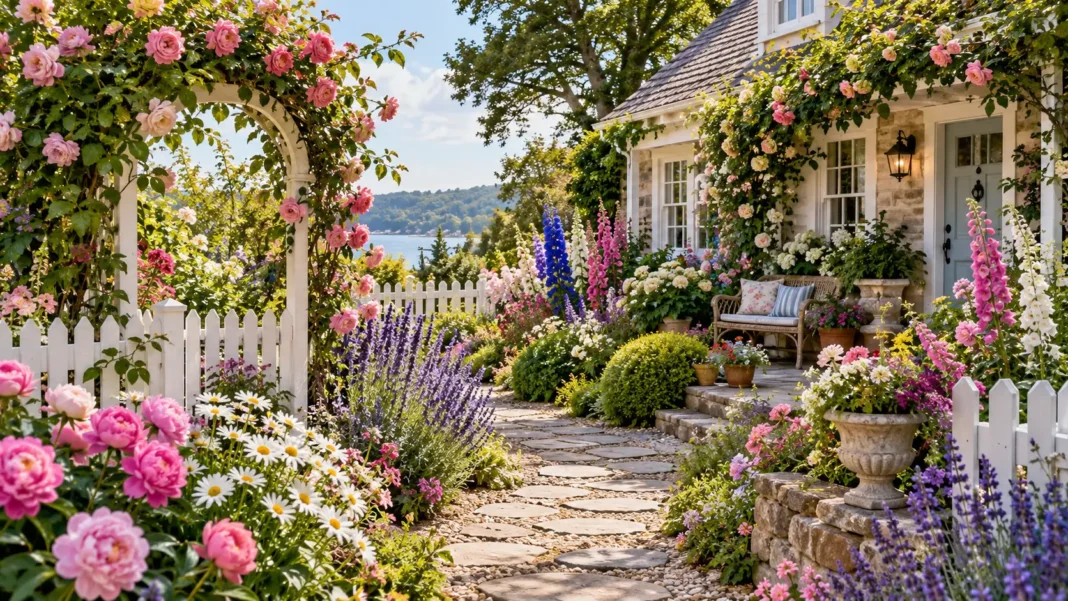

A beautiful cottage flower garden brings natural charm, colorful blooms, and a welcoming atmosphere to any outdoor space. Unlike formal landscapes with perfectly arranged plants, cottage gardens celebrate relaxed planting, winding pathways, and flowers growing together in delightful combinations. Whether you have a spacious backyard or a small front garden, the right cottage flower garden ideas can transform an ordinary yard into a peaceful retreat.
The traditional English cottage garden combines flowering perennials, fragrant herbs, climbing roses, and decorative features to create a romantic outdoor setting. Its appeal comes from the balance between abundant planting and thoughtful organization. Colorful borders, rustic fences, vintage containers, and natural garden paths work together to establish an inviting landscape that feels both beautiful and comfortable.
Creating this charming garden style does not require professional landscaping experience or an unlimited budget. With suitable plants, careful planning, and a few creative garden design ideas, you can build an outdoor space that develops character throughout the seasons. This guide explores practical cottage garden landscaping techniques, flower combinations, and decorative details that can make your yard feel like a countryside escape.
1. Understand the Timeless Beauty of a Cottage Flower Garden
A cottage flower garden is known for its informal layout, overflowing flower beds, and romantic countryside atmosphere. Instead of emphasizing straight lines and symmetrical arrangements, this gardening style encourages natural-looking combinations of flowers, shrubs, and greenery. The overall effect is abundant yet welcoming. Different plant heights, textures, and colors create a landscape that feels established and full of personality.
Traditional cottage gardens often included ornamental flowers alongside vegetables, culinary herbs, and medicinal plants. This combination made outdoor spaces attractive while providing useful plants for everyday life. Modern cottage garden designs continue this tradition by combining beauty with practicality. Flowering borders, edible plants, pollinator-friendly blooms, and climbing vines can all share the same carefully planned space.
The secret to a successful cottage garden is creating an informal appearance without neglecting plant health or accessibility. Flowers should have enough room to grow, pathways must remain usable, and each plant needs suitable conditions. Thoughtful arrangements help the garden feel naturally abundant rather than overcrowded. By combining relaxed styling with sensible maintenance, you can create lasting cottage garden charm.
2. Choose the Best Flowers for a Romantic Cottage Garden
Selecting the right flowers is essential when planning a colorful and inviting cottage-style landscape. Traditional favorites include roses, foxgloves, delphiniums, hollyhocks, lavender, and peonies, although their growing requirements vary considerably. These flowers offer different heights, textures, and blooming seasons. Choosing plants suited to your climate helps create an attractive garden with fewer maintenance challenges.
Combine tall flowering plants with medium-height perennials and low-growing border flowers to achieve a layered appearance. Hollyhocks and delphiniums can provide height in suitable climates, while hardy geraniums and catmint can soften planting edges. Compact annual flowers help fill seasonal gaps. This mixture creates visual depth and encourages the relaxed, overflowing effect associated with English cottage gardens.
Before purchasing plants, check their sunlight requirements, mature size, soil preferences, and regional suitability. Some classic cottage flowers struggle in areas with intense summer heat or high humidity. In warmer locations, zinnias, cosmos, salvias, and certain marigolds may offer more reliable seasonal color. Local growing conditions should guide your selections rather than relying on appearance alone.
3. Create Colorful Flower Borders With Layered Planting
Colorful flower borders are among the most recognizable features of traditional cottage garden design. These planting areas combine flowers of different heights to create a soft, abundant appearance along fences, pathways, and garden boundaries. Instead of arranging every plant in rigid rows, use small groups and gentle repetition. This technique makes the landscape feel natural while maintaining visual harmony.
Place taller flowers toward the back of borders where they will not unnecessarily shade smaller plants. Medium-height perennials can occupy the middle, while creeping flowers and compact annuals soften the front edges. In island beds viewed from every side, position taller plants closer to the center. This arrangement allows different flowers to remain visible and creates an attractive layered garden.
Choose a limited selection of complementary colors if you want a coordinated appearance. Soft pink, lavender, blue, cream, and white create a romantic atmosphere, while yellow and orange introduce cheerful contrast. Repeat a few favorite plants throughout the border to connect different sections visually. Balanced repetition helps a richly planted cottage flower garden feel intentional rather than randomly arranged.
4. Add Climbing Roses for a Classic English Cottage Look
Climbing roses can bring romance, height, and beautiful seasonal flowers to a cottage-inspired yard. Their arching stems and colorful blossoms make them suitable for decorating trellises, arches, fences, and garden entrances. Many varieties also offer attractive fragrance. Choosing a climbing rose that suits your local climate and available growing space is important for long-term success.
Install a sturdy support before the rose becomes established, allowing sufficient room for its mature growth. Guide flexible stems along the structure and secure them gently using suitable garden ties. Regular training encourages a more even arrangement of flowering branches. Follow the pruning requirements of your chosen variety because different climbing roses flower on different types of growth.
For a romantic garden entrance, position a rose-covered arch above a comfortable pathway. You can also combine climbing roses with compatible flowering vines, provided both plants have enough growing space and support. Clematis is a popular companion in suitable conditions. Together, these plants can create an attractive vertical display that adds character without occupying much ground space.
5. Design Winding Garden Paths for a Charming Landscape
Winding pathways contribute significantly to the relaxed character of a cottage flower garden. Curved routes invite visitors to explore different planting areas while creating a sense of discovery. Unlike strictly geometric walkways, gently flowing paths work naturally with abundant flower borders. Even a small yard can benefit from a thoughtfully positioned pathway that connects important garden features.
Popular cottage garden pathway materials include gravel, brick, natural stone, and stepping stones. Gravel offers a rustic appearance, while reclaimed-looking brick can complement traditional garden architecture. Choose materials that provide stable footing and suitable drainage for your climate. The width should also allow comfortable movement, especially when carrying watering cans or gardening tools.
Soften the edges of garden paths with compact flowers, herbs, and low-growing greenery. Creeping thyme may work well in suitable sunny conditions, while other spreading plants can provide seasonal color. Keep vigorous growth from covering the walking surface. A well-maintained pathway should feel surrounded by flowers without becoming difficult or unsafe to use during everyday gardening.
6. Incorporate Rustic Fences, Gates, and Garden Arches
Rustic garden structures add architectural character to a cottage-style landscape without compromising its informal appearance. Wooden picket fences, simple gates, and decorative arches are particularly effective in traditional garden settings. These features help define planting areas while providing support for climbing plants. Natural materials and understated finishes often complement the softness of abundant flower beds.
A low picket fence can frame a front cottage garden while allowing colorful flowers to remain visible. Wooden gates create welcoming entrances, especially when surrounded by flowering shrubs or climbing vines. Garden arches can mark transitions between outdoor spaces. Choose structures that match the scale of your property rather than introducing oversized features into smaller planting areas.
Weather-resistant materials and secure installation are essential for maintaining decorative garden structures. Untreated wood may deteriorate quickly in wet conditions, while certain metal structures require corrosion protection. Consider maintenance needs before choosing a finish or material. When carefully selected, fences and arches can remain attractive background features that support the garden’s natural beauty for years.
7. Use Fragrant Flowers and Herbs for a Sensory Garden
A cottage flower garden becomes especially inviting when it appeals to more than the sense of sight. Fragrant flowers and aromatic herbs can make pathways, seating areas, and entrances more enjoyable. Roses, lavender, sweet peas, and certain varieties of phlox are traditional favorites. Their suitability depends on local growing conditions, so choose fragrant plants that can thrive in your yard.
Position scented plants near places where people naturally spend time. Lavender may work beside sunny paths in well-drained soil, while fragrant roses can decorate garden entrances or seating areas. Mint provides fresh aromatic foliage but spreads aggressively in many environments. Growing vigorous herbs in containers can help prevent unwanted expansion into neighboring flower beds.
You can also combine practical culinary herbs with ornamental flowering plants for an attractive mixed border. Rosemary, thyme, sage, and chives offer useful foliage and seasonal flowers under suitable conditions. These plants create interesting textures while supporting the traditional cottage garden philosophy of combining beauty and usefulness. Their presence adds another enjoyable dimension to everyday outdoor living.
8. Create a Cottage Garden With Flowers That Bloom Across Seasons
A beautiful cottage flower garden benefits from thoughtful planning that provides interest throughout the growing year. Relying entirely on flowers that bloom during the same month can leave planting areas looking empty later. Instead, combine early, midseason, and late-flowering varieties. This approach creates changing displays while helping the garden maintain color and visual interest.
Spring-flowering bulbs, such as daffodils and tulips, can introduce early color in climates with suitable winter conditions. Summer may feature roses, cosmos, zinnias, and other seasonal flowers. Later displays can include asters, chrysanthemums, and selected salvias where they grow successfully. Adjust your planting choices according to regional seasons, temperature patterns, and available sunlight.
Foliage plants, evergreen shrubs, and ornamental grasses can provide structure when fewer flowers are blooming. Seed heads and textured leaves may also contribute seasonal interest. Keep a simple gardening calendar that records flowering periods and maintenance requirements. Over time, these observations will help you identify gaps in your planting plan and improve seasonal garden performance.
9. Design a Small Cottage Flower Garden With Limited Space
Small outdoor areas can support beautiful cottage garden designs when every planting space is used thoughtfully. A compact courtyard, narrow front yard, or modest backyard can still feature colorful borders, climbing flowers, and decorative pathways. The key is choosing appropriately sized plants and arranging them carefully. Vertical growing spaces can be particularly useful where ground area is limited.
Choose compact perennial varieties and seasonal annuals that provide color without overwhelming the available space. Narrow trellises can support suitable climbing plants, while containers add flexibility to patios and entrances. Raised beds may help organize planting in areas with difficult soil. Avoid placing too many large shrubs in confined spaces where they could restrict movement.
A simple design with a limited color palette can make a small garden feel cohesive. Repeat a few favorite plants and use vertical elements to draw attention upward. Keep paths and seating areas accessible as flowers mature. With careful planning, small cottage flower garden ideas can deliver much of the charm associated with larger countryside landscapes.
10. Add Vintage Containers and Decorative Garden Features
Vintage-inspired decorations help personalize a cottage garden and reinforce its traditional countryside character. Terracotta pots, weathered-looking planters, wooden containers, and simple watering cans can introduce attractive details among flower beds. These accessories work particularly well when used selectively. The goal is to complement the plants rather than overwhelm the garden with unnecessary decorative objects.
Group containers of different heights near entrances, patios, or quiet corners of the yard. Fill them with seasonal flowers, compact herbs, or trailing plants that suit the available light. Containers should have suitable drainage to prevent waterlogged soil. Choose stable planters that can withstand local weather conditions and provide enough growing space for healthy roots.
Decorative birdbaths, simple benches, and traditional garden ornaments can create additional focal points. Position these features where they can be enjoyed without interfering with plant growth or walking routes. Natural finishes usually blend comfortably with abundant greenery and colorful flowers. A few meaningful decorations can make the garden feel established, welcoming, and distinctly personal.
11. Attract Bees, Butterflies, and Other Garden Pollinators
Pollinator-friendly planting is a valuable addition to a thriving cottage flower garden. Bees, butterflies, and other beneficial insects visit flowers for nectar and pollen, helping support local ecosystems. A garden containing suitable flowering plants can provide useful resources throughout the growing season. Choosing a diversity of flower shapes and blooming periods may attract a wider range of pollinators.
Include locally native flowering species wherever practical because they can support regional wildlife. Coneflowers, asters, salvias, and other nectar-producing plants may be useful depending on your location. Single-flowered varieties often provide easier access to pollen and nectar than densely doubled flowers. Research local plant suitability to create a garden that genuinely benefits nearby insects.
Reduce unnecessary pesticide use and provide suitable shelter within the landscape. Leave some protected areas with natural materials where beneficial insects can find habitat. A shallow water source with safe landing surfaces may also be helpful, provided it is cleaned regularly. Combining wildlife-friendly gardening with traditional cottage planting creates an attractive landscape that supports biodiversity.
12. Maintain Healthy Soil for Stronger Flower Growth
Healthy soil provides the foundation for a successful cottage garden. Flowering plants depend on suitable soil structure, drainage, moisture, and available nutrients to support growth. Understanding your garden’s existing conditions can help you avoid common planting problems. A simple soil assessment is often more useful than adding fertilizers or amendments without knowing what your plants need.
Improve suitable garden soil with mature compost when additional organic matter is beneficial. Compost can support soil structure and moisture management, although the results depend on existing conditions. Avoid working heavy soil when it is excessively wet because compaction may damage its structure. Check drainage carefully before planting flowers that require consistently dry or well-drained conditions.
Mulching around established plants can help regulate soil temperature, reduce evaporation, and limit weed growth. Organic materials such as shredded leaves or suitable bark mulch can gradually contribute to soil improvement. Keep mulch away from vulnerable stems and crowns to reduce moisture-related problems. Consistent soil care supports healthier roots and makes seasonal cottage garden maintenance more manageable.
13. Create a Cozy Seating Area Surrounded by Flowers
A comfortable seating area allows you to enjoy your cottage flower garden as an outdoor living space. Whether you prefer a small wooden bench, simple garden chairs, or a compact bistro table, seating encourages relaxation. Surrounding the area with flowers and greenery can create a peaceful atmosphere. The location should offer convenient access and suitable comfort throughout the day.
Consider placing seating near fragrant flowers, attractive borders, or a favorite garden feature. Morning sunlight may suit an early coffee spot, while afternoon shade can provide comfort in warmer climates. Keep enough distance from thorny plants and vigorous climbers to allow easy movement. A stable, level surface also makes the seating area more practical.
Simple additions such as outdoor cushions, weather-resistant furniture, and potted flowers can create a welcoming setting. Choose materials designed for outdoor conditions and store vulnerable accessories during severe weather. Nearby herbs or flowering containers can provide color without requiring additional garden beds. This peaceful corner can become a favorite place for reading, conversation, or enjoying nature.
14. Combine Cottage Flowers With Vegetables and Edible Plants
Traditional cottage gardens often included vegetables and edible herbs alongside ornamental flowers. This practical planting style remains appealing because it combines visual beauty with useful harvests. Colorful vegetables can create attractive contrasts among flowering borders, while herbs contribute interesting textures and fragrance. Growing edible plants also offers an opportunity to make the garden productive throughout suitable seasons.
Leafy vegetables, compact tomatoes, peppers, and culinary herbs can be incorporated into mixed planting areas where conditions allow. Attractive flowering herbs may help soften the transition between ornamental and edible sections. Ensure each crop receives appropriate sunlight, spacing, and irrigation. Food-producing plants should also remain accessible for harvesting, inspection, and regular maintenance.
Companion planting can offer layout benefits, but individual plant combinations do not guarantee protection against pests or improved yields. Prioritize healthy soil, adequate airflow, and suitable growing conditions instead of relying on unsupported gardening claims. Use food-safe materials and follow appropriate pest-management practices around edible crops. A thoughtfully planned kitchen cottage garden can be both beautiful and functional.
15. Avoid Common Cottage Garden Design Mistakes
One common cottage garden mistake is planting too many flowers without considering their mature sizes. Although abundant planting creates the desired romantic appearance, excessive crowding can reduce airflow and complicate maintenance. Plants may compete for sunlight, water, and nutrients. Planning realistic spacing allows your flower beds to develop naturally while supporting healthier long-term growth.
Another mistake is choosing flowers based entirely on appearance without researching their growing requirements. Sun-loving plants may struggle in deep shade, while moisture-sensitive varieties can develop problems in poorly drained soil. Mixing plants with conflicting watering needs may also create unnecessary work. Grouping flowers with similar environmental preferences simplifies maintenance and helps maintain a consistent garden appearance.
Ignoring pathways, seasonal changes, and future plant growth can create additional difficulties. Leave room for gardening activities and select appropriate supports for climbing plants before they become established. Review your garden layout as different flowers mature. Small adjustments throughout the growing season are usually easier than redesigning overcrowded or poorly positioned beds later.
Conclusion
Creating a charming outdoor space becomes easier when you combine thoughtful planting with the relaxed character of traditional cottage garden design. Colorful flower borders, climbing roses, fragrant herbs, and rustic pathways can transform ordinary yards into welcoming landscapes. The most successful cottage flower garden ideas balance natural beauty with suitable growing conditions. Careful plant selection helps your garden remain attractive and practical throughout the seasons.
You do not need a large property or an expensive landscaping project to enjoy the beauty of a cottage-style garden. Small flower beds, vintage-inspired containers, compact climbing plants, and simple decorative details can create an inviting atmosphere. Focus on healthy soil, seasonal blooms, and comfortable pathways. Gradual improvements allow your garden to develop its own unique character over time.
Ultimately, a cottage flower garden should reflect your personal preferences while supporting healthy plants and enjoyable outdoor living. Experiment with colors, combine different textures, and introduce practical features that suit your space. As your flowers grow and mature, the landscape will naturally change. With consistent care and thoughtful planning, your yard can become a charming retreat filled with color, fragrance, and seasonal interest.
Frequently Asked Questions (FAQs)
1. What flowers are best for a cottage flower garden?
Popular cottage garden flowers include roses, lavender, hollyhocks, foxgloves, cosmos, and zinnias. Choose varieties suited to your climate, sunlight, and soil conditions to encourage healthy growth and colorful seasonal displays.
2. How do I start a cottage garden from scratch?
Begin by assessing sunlight, soil, drainage, and available space. Plan informal flower borders, choose suitable plants with different blooming periods, and introduce simple pathways or decorative features as the garden develops.
3. Can I create a cottage flower garden in a small backyard?
Yes, small cottage gardens can feature compact perennials, flowering containers, climbing plants, and narrow pathways. Use vertical space and coordinated plant groupings to create a charming appearance without overcrowding the yard.
4. How can I make my cottage garden low maintenance?
Choose climate-appropriate perennials, improve soil where needed, apply suitable mulch, and group plants with similar watering requirements. Regular weeding and occasional pruning can help maintain a healthy garden with manageable effort.
5. What is the difference between a cottage garden and a formal garden?
Cottage gardens feature informal layouts, abundant flowers, mixed planting, and natural-looking pathways. Formal gardens typically emphasize symmetry, carefully defined borders, structured planting arrangements, and more geometric landscape designs.


[…] Cottage Flower Garden Ideas for a Charming Yard […]