
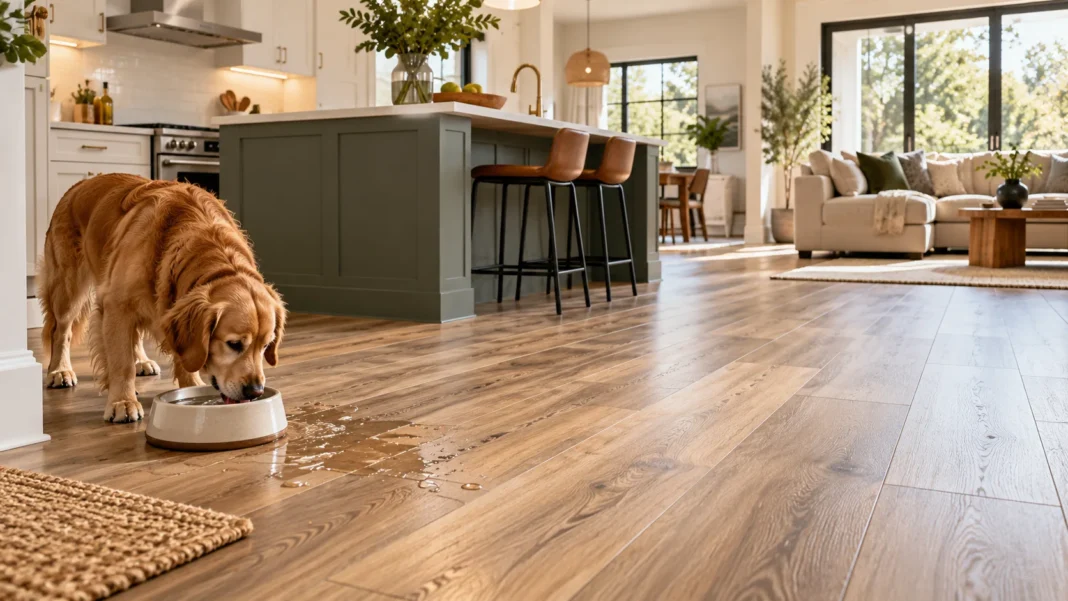

Waterproof laminate flooring has become a popular choice for homeowners who want attractive, durable, and affordable flooring that can handle everyday household spills. With realistic wood-look finishes, easy-to-clean surfaces, and modern installation systems, waterproof laminate offers an alternative to traditional hardwood and standard laminate flooring. It is commonly considered for kitchens, living rooms, bedrooms, and other areas where occasional moisture exposure is expected.
However, not every product marketed as waterproof laminate provides complete protection against water damage. Many products contain wood-based cores that can swell when exposed to prolonged moisture, leaking appliances, or flooding. This guide explores waterproof laminate flooring pros and cons, materials, installation costs, durability, maintenance requirements, and practical buying tips to help homeowners choose suitable flooring for their spaces.
What Is Waterproof Laminate Flooring?
Waterproof laminate flooring is a manufactured flooring product designed to resist water penetration more effectively than traditional laminate. It usually consists of multiple layers, including a decorative surface, protective wear layer, and structural core. Many products use high-density fiberboard with specialized treatments that help reduce moisture absorption during everyday household use.
The surface layer often features realistic wood, stone, or tile patterns created through advanced printing technologies. Protective coatings help resist scratches, stains, and ordinary wear, while tightly fitted locking systems reduce water entry through plank joints. Some manufacturers also use treated edges and additional moisture-resistant construction methods to improve performance.
Despite its name, waterproof laminate is not always completely impervious to water. The actual level of protection depends on the product, installation method, exposure duration, and manufacturer warranty. Homeowners should review technical specifications carefully because some products provide limited protection against surface spills rather than continuous water exposure.
How Does Waterproof Laminate Flooring Work?
Waterproof laminate flooring uses several design features to help prevent moisture from reaching vulnerable internal layers. A protective wear surface provides resistance against everyday spills, while specialized edge treatments can help reduce water penetration between planks. These features work together to improve performance compared with basic laminate products.
Many waterproof laminate systems incorporate click-lock joints that connect individual planks tightly. Properly installed joints limit the openings through which water can reach the underlying core. However, the connections do not necessarily create a completely sealed surface, particularly when installation requirements are not followed.
The structural core plays an important role in determining how the flooring responds to moisture. Most laminate products contain wood-based materials that can expand or swell when exposed to excessive water. Even when a product includes advanced moisture protection, prompt spill cleanup and suitable environmental conditions remain important for long-term performance.
Pros of Waterproof Laminate Flooring
One major advantage of waterproof laminate flooring is its improved resistance to everyday household spills. Products designed for surface moisture protection can provide additional reassurance in kitchens, dining rooms, and other frequently used areas. When installed and maintained correctly, these surfaces may tolerate occasional spills better than ordinary laminate flooring.
Another benefit is the wide variety of available colors, textures, and decorative finishes. Homeowners can choose laminate planks that resemble oak, walnut, maple, or other natural hardwood species. This versatility makes it possible to create attractive interiors without purchasing expensive solid hardwood flooring.
Waterproof laminate can also provide good scratch resistance, straightforward cleaning, and relatively affordable installation. Many products use floating click-lock systems that simplify the installation process. However, performance depends on construction quality, wear ratings, and correct installation, so homeowners should compare individual products rather than assuming every option offers identical benefits.
Cons of Waterproof Laminate Flooring
The biggest disadvantage of waterproof laminate flooring is that its moisture protection often has important limitations. Some products resist surface spills for a specified period but cannot tolerate flooding, prolonged standing water, or moisture entering from underneath. Water that reaches a wood-based core may cause swelling or permanent structural damage.
Another drawback is that laminate flooring generally cannot be sanded and refinished like solid hardwood. Deep scratches, severe moisture damage, or damaged locking joints may require replacement of individual planks or larger flooring sections. This can make repairs inconvenient when matching replacement products are unavailable.
Waterproof laminate may also feel harder underfoot than some alternative materials, depending on the subfloor and underlayment. Certain products can produce noticeable footsteps or hollow sounds when installed incorrectly. Although high-quality designs look realistic, some homeowners still prefer the natural texture and refinishing potential of genuine hardwood.
Waterproof vs. Water-Resistant Laminate Flooring
Waterproof and water-resistant are commonly used terms in flooring marketing, but they do not always describe completely different product categories. Water-resistant laminate generally offers protection against limited moisture exposure. Products marketed as waterproof may provide stronger surface protection, although their performance still depends on specific construction and warranty conditions.
Some manufacturers advertise moisture protection for periods such as 24, 48, or 72 hours. These claims usually apply under specified testing or installation conditions and should not be interpreted as permission to leave spills unattended. Flooding, leaking appliances, and subfloor moisture may remain excluded from product warranties.
The most reliable way to compare these flooring types is to read the manufacturer’s written warranty and installation guidelines. Look for information about surface water exposure, joint protection, approved rooms, and cleaning restrictions. Understanding these conditions helps homeowners avoid purchasing a product based entirely on a waterproof label.
How Durable Is Waterproof Laminate Flooring?
Waterproof laminate flooring can provide good durability for ordinary residential use when the selected product matches household conditions. Its protective wear layer helps resist certain scratches, stains, and surface marks. Durability varies depending on the quality of the materials, surface coating, installation method, and level of daily foot traffic.
Many laminate products use an abrasion classification system known as an AC rating. AC3 flooring is commonly associated with general residential applications, while AC4 products are often considered for busier environments. These classifications address wear performance rather than guaranteeing resistance to moisture or every type of physical damage.
Proper maintenance can help extend the flooring’s useful life by reducing unnecessary surface wear. Furniture pads, suitable entryway mats, and regular debris removal can prevent some scratches and marks. However, heavy impacts, moisture penetration, and damaged joints may still affect performance regardless of the advertised durability rating.
Waterproof Laminate Flooring Costs in 2026
Waterproof laminate flooring costs vary depending on product quality, plank thickness, appearance, and manufacturer. In the United States, standard laminate materials may cost approximately $1 to $5 per square foot. Premium waterproof laminate products can cost more, particularly when they include specialized coatings, thicker construction, or realistic textured finishes.
Professional installation adds labor expenses, with many laminate flooring projects costing approximately $3 to $8 per square foot installed. Premium waterproof products may reach around $6 to $10 per square foot installed. Complicated room layouts, subfloor repairs, and specialized preparation can increase the total beyond these general estimates.
For a 500-square-foot room, homeowners may budget approximately $1,500 to $5,000 for a typical installed laminate project, depending on specifications. Additional expenses may include underlayment, transitions, baseboard adjustments, and existing flooring removal. Obtaining detailed local quotations provides a more accurate estimate than relying only on advertised flooring material prices.
Factors That Affect Waterproof Laminate Flooring Prices
Material construction is one of the main factors influencing waterproof laminate flooring prices. Products with thicker planks, higher abrasion ratings, advanced moisture protection, and detailed surface textures often cost more. Decorative finishes that closely resemble natural hardwood may also involve higher manufacturing costs than simpler laminate designs.
Installation conditions can significantly affect the final project budget. Uneven subfloors may require leveling, while concrete surfaces may need approved moisture testing and vapor protection. Existing flooring removal, unusual room shapes, and multiple door transitions can also increase labor and material expenses.
Brand warranties and additional performance features may influence purchasing decisions. Some products offer longer surface moisture warranties or specialized installation systems. However, a higher price does not automatically mean that flooring can withstand flooding or prolonged moisture exposure, making careful comparison of written specifications essential.
Waterproof Laminate vs. Luxury Vinyl Plank Flooring
Waterproof laminate and luxury vinyl plank flooring are popular alternatives to traditional hardwood. Both can provide realistic decorative finishes and convenient installation options. However, laminate commonly contains a wood-based core, while luxury vinyl plank usually uses synthetic materials that respond differently to direct moisture exposure.
Luxury vinyl plank products with suitable waterproof cores may tolerate water exposure without the same core swelling associated with wood-fiber laminate. Nevertheless, water can still enter joints and damage the underlying subfloor. A waterproof plank does not automatically create a fully waterproof room or prevent hidden moisture problems.
Laminate can offer attractive wood-like textures and good surface wear performance, while vinyl may be preferable where frequent moisture is expected. The better choice depends on room conditions, installation requirements, comfort preferences, and budget. Comparing specific products is more useful than assuming one flooring category is superior in every situation.
Waterproof Laminate vs. Hardwood Flooring
Hardwood flooring offers natural wood grain, distinctive texture, and refinishing potential that many homeowners appreciate. Solid hardwood can often be professionally sanded and refinished multiple times during its service life. Waterproof laminate provides a manufactured alternative that imitates wood appearance while usually requiring a lower upfront investment.
Laminate also offers protective surface finishes designed to resist certain scratches and stains. However, deep damage cannot generally be repaired through traditional sanding or refinishing. Hardwood may also be vulnerable to moisture, making both flooring types dependent on suitable environmental conditions and careful maintenance.
Homeowners should compare appearance, installation cost, moisture exposure, and expected ownership period before deciding. Solid hardwood may provide long-term restoration opportunities, while laminate offers convenience and relatively affordable decorative choices. Neither material should be considered completely maintenance-free or suitable for every room without checking product requirements.
Is Waterproof Laminate Flooring Good for Kitchens?
Waterproof laminate flooring can be suitable for certain kitchens because modern products offer improved protection against occasional surface spills. The decorative finish can complement kitchen cabinetry, countertops, and appliances without requiring natural hardwood. Its scratch-resistant surface may also provide practical benefits in spaces with regular household activity.
Kitchen installations require careful consideration because sinks, dishwashers, refrigerators, and other appliances can create unexpected moisture problems. Many laminate warranties exclude damage from plumbing failures or water that enters beneath the flooring. Even products marketed as waterproof may become damaged when moisture penetrates the joints or structural core.
Homeowners should choose products specifically approved for kitchen installation and follow the manufacturer’s moisture protection requirements. Promptly cleaning spills and inspecting appliances can help reduce damage risks. Where frequent or prolonged water exposure is expected, comparing suitable luxury vinyl or tile flooring may provide additional options.
Can Waterproof Laminate Flooring Be Used in Bathrooms?
Some waterproof laminate products are approved for installation in certain residential bathrooms, but suitability depends on specific manufacturer instructions. Bathrooms experience splashes, humidity changes, and occasional standing water around fixtures. These conditions may exceed the moisture protection offered by standard laminate or products with limited surface water warranties.
Many manufacturers place restrictions on full bathrooms, wet rooms, or areas surrounding showers and bathtubs. Specialized perimeter sealing and other installation details may be required for approved applications. A product marketed as waterproof should not automatically be considered appropriate for every bathroom environment.
For bathrooms with frequent water exposure, porcelain tile and certain luxury vinyl products may provide more suitable alternatives. The selected flooring must also work with the underlying subfloor and ventilation conditions. Checking approved applications before purchasing helps reduce the risk of damage and unexpected warranty limitations.
Waterproof Laminate Flooring for Living Rooms
Living rooms are among the most suitable locations for waterproof laminate flooring because they generally experience limited direct moisture exposure. Wood-look laminate planks can complement modern, farmhouse, and traditional interior designs. The wide variety of colors and textures makes it easier to coordinate flooring with furniture, decorative accents, and surrounding rooms.
Homeowners may choose light oak finishes to create a bright appearance or darker tones for a warmer atmosphere. Wider plank designs can provide a clean contemporary style, while detailed wood textures add visual interest. The selected finish should reflect personal preferences and the overall interior design rather than relying only on current decorating trends.
Living room flooring should also accommodate regular furniture movement, household activity, and daily foot traffic. Suitable furniture protectors and entryway mats can help reduce avoidable scratches. Choosing an appropriate abrasion rating and compatible underlayment supports long-term flooring performance and a more comfortable living environment.
Waterproof Laminate Flooring for Bedrooms
Waterproof laminate flooring can be an attractive bedroom option because it offers numerous decorative finishes and relatively straightforward maintenance. Bedrooms generally experience less moisture exposure than kitchens or bathrooms. This makes them practical locations for flooring products with strong surface protection and suitable residential wear ratings.
Light-colored laminate planks can complement simple interiors, while darker wood-look designs create a different decorative atmosphere. Area rugs provide additional softness and can help reduce sound from footsteps. Homeowners should choose rug backing materials compatible with their flooring finish to avoid unwanted marks or surface damage.
Comfort and noise control are important considerations when selecting bedroom flooring. Suitable underlayment may reduce certain impact sounds and improve the feel of the floor underfoot. Comparing plank thickness, acoustic performance, and installation requirements helps homeowners create a comfortable space without assuming that thicker flooring always provides better results.
Waterproof Laminate Flooring for Basements
Basement flooring requires additional attention because moisture can enter through concrete slabs, foundation walls, or plumbing systems. Certain waterproof laminate products may be suitable for finished basements when the environmental conditions meet manufacturer requirements. However, the waterproof label does not guarantee protection from moisture rising through the subfloor.
Before installation, a contractor should assess the condition of the concrete and perform appropriate moisture testing. The flooring system may require a specified vapor barrier or approved underlayment. Installing laminate over unresolved dampness can lead to swelling, odors, and damage even when the decorative surface remains intact.
Homeowners should address foundation leaks, excessive humidity, and drainage problems before choosing basement flooring. In consistently dry and properly prepared spaces, suitable laminate may provide an attractive finished appearance. Areas with recurring flooding or moisture problems generally require a more appropriate flooring system and correction of the underlying water source.
How to Choose the Best Waterproof Laminate Flooring
Choosing waterproof laminate flooring begins with understanding the specific conditions of the room. Consider expected foot traffic, moisture exposure, subfloor construction, and maintenance preferences. A bedroom may need different performance characteristics from a busy kitchen or ground-floor hallway with frequent outdoor access.
Review the flooring’s core construction, abrasion rating, surface water warranty, and approved installation locations. Plank thickness and decorative finish are also useful considerations, but they do not independently establish moisture resistance. Checking manufacturer documentation helps distinguish realistic performance claims from broad marketing descriptions.
Samples can help homeowners evaluate the flooring’s appearance under their room’s lighting conditions. Comparing several products also provides an opportunity to assess texture, color variation, and installation compatibility. The best choice balances design preferences with technical requirements and realistic expectations for long-term durability.
How Waterproof Laminate Flooring Is Installed
Waterproof laminate flooring is commonly installed using a floating click-lock system that connects individual planks without fastening each board directly to the subfloor. This approach can simplify installation when the surface is properly prepared. However, different products have specific requirements involving leveling, underlayment, expansion clearance, and moisture protection.
Subfloor preparation is a critical part of the installation process because uneven surfaces can interfere with locking joints. Concrete floors may require moisture testing and approved vapor control materials. Installers must also maintain manufacturer-specified expansion gaps so the floor can respond appropriately to normal environmental changes.
Some waterproof laminate systems require perimeter sealing around walls, fixtures, or other vulnerable locations. These details should be followed exactly because improper installation may reduce moisture protection or void warranty coverage. Professional installation can be particularly valuable in rooms with complicated layouts or uncertain subfloor conditions.
Common Waterproof Laminate Flooring Problems
Swelling is among the most significant problems associated with laminate flooring when moisture reaches the wood-based core. Affected boards may develop raised edges, uneven joints, or permanent deformation. The degree of damage depends on water exposure, product construction, and whether moisture has penetrated beneath the visible surface.
Scratches, chipped edges, and damaged locking joints can also affect waterproof laminate flooring. Heavy furniture, abrasive debris, and inappropriate installation methods may contribute to premature wear. Surface damage does not always mean the entire floor requires replacement, but repairs depend on the extent and location of the problem.
Squeaking, movement, and gaps between boards may develop when the subfloor is uneven or installation requirements are not followed. Environmental humidity changes can also influence plank behavior. Investigating the underlying cause before attempting repairs helps prevent repeated damage and unnecessary flooring replacement expenses.
How to Clean Waterproof Laminate Flooring
Regular cleaning helps waterproof laminate flooring retain its appearance and protective surface condition. Dust, dirt, and small particles can be removed using a soft broom, microfiber mop, or vacuum with a suitable hard-floor attachment. Removing abrasive debris reduces unnecessary friction that can gradually wear the decorative finish.
For deeper cleaning, use manufacturer-approved products and avoid leaving excessive moisture on the surface. A lightly damp microfiber mop may be appropriate for many products, but soaking the flooring is generally discouraged. Steam cleaning should only be considered when the manufacturer explicitly approves it for the specific flooring system.
Spills should be cleaned promptly even when the product includes a surface water warranty. Harsh chemicals, abrasive scrubbers, and unsuitable polishes can damage protective finishes or leave unwanted residue. Following the product’s maintenance instructions is the most reliable way to preserve its appearance and avoid preventable warranty problems.
How Long Does Waterproof Laminate Flooring Last?
Waterproof laminate flooring can provide many years of useful service when properly installed and maintained. Some quality residential products may last approximately 15 to 25 years or longer under suitable conditions. Actual lifespan depends on material construction, usage patterns, environmental exposure, and the quality of installation.
High-traffic households may experience surface wear more quickly than rooms used occasionally. Moisture damage, damaged locking joints, and unsuitable cleaning methods can also shorten flooring lifespan. A longer manufacturer warranty may indicate certain performance expectations, but it does not guarantee that every installation will last for the full warranty period.
Homeowners can support durability through routine cleaning, suitable furniture protection, and careful attention to spills. Maintaining appropriate indoor humidity also helps reduce unnecessary movement in wood-based flooring products. Selecting a product that matches the intended room conditions remains one of the most important factors influencing long-term results.
Is Waterproof Laminate Flooring Worth the Investment?
Waterproof laminate flooring can be a worthwhile investment for homeowners who want attractive wood-look surfaces with improved resistance to everyday spills. Its decorative flexibility, relatively affordable pricing, and easy maintenance make it suitable for many residential applications. However, the value depends on selecting a product appropriate for actual room conditions.
The biggest consideration is understanding what the manufacturer’s waterproof claim covers. Flooring that handles an occasional spill may still be vulnerable to flooding, leaking appliances, or hidden subfloor moisture. Buyers should compare warranty exclusions and installation requirements before making assumptions about complete water protection.
For dry living spaces and selected spill-prone rooms, quality waterproof laminate may provide an appealing balance of cost and functionality. In environments with regular standing water, other flooring materials may be more appropriate. Evaluating total installation expenses, maintenance requirements, and expected lifespan helps homeowners make a more informed investment decision.
Conclusion
Waterproof laminate flooring offers an appealing combination of realistic decorative finishes, scratch resistance, manageable maintenance, and improved protection against everyday spills. It is available in numerous wood-look styles and can complement living rooms, bedrooms, kitchens, and selected other residential spaces. Its relatively affordable pricing also makes it attractive for homeowners planning interior renovations.
However, waterproof laminate flooring has limitations that should be understood before installation. Many products contain wood-based cores that can suffer permanent damage when moisture enters through joints or beneath the surface. Reviewing written warranty terms, preparing the subfloor correctly, and following manufacturer installation instructions are essential for dependable performance.
The best waterproof laminate flooring choice balances appearance, durability, water protection, and overall project costs. Homeowners should compare individual products and consider whether the selected flooring suits the intended room. With appropriate installation and regular care, a suitable laminate system can provide a functional and attractive flooring surface for many years.
Frequently Asked Questions (FAQs)
Is Waterproof Laminate Flooring Really Waterproof?
Not always. Many products resist everyday surface spills for a specified period but remain vulnerable to prolonged standing water, flooding, or moisture entering through joints and beneath the flooring.
How Much Does Waterproof Laminate Flooring Cost?
Waterproof laminate flooring commonly costs approximately $3 to $10 per square foot installed, depending on material quality and project requirements. Subfloor repairs, underlayment, and existing flooring removal may increase expenses.
Is Waterproof Laminate Better Than Vinyl Flooring?
Waterproof laminate often provides realistic wood textures and good scratch resistance, while suitable luxury vinyl products may offer greater resistance to water-related core damage. The better choice depends on the room.
Can Waterproof Laminate Flooring Be Used in Bathrooms?
Some products are approved for certain bathrooms, but many have restrictions involving standing water and wet areas. Always confirm the manufacturer’s installation requirements before selecting laminate for bathroom use.
How Long Does Waterproof Laminate Flooring Last?
Quality waterproof laminate may last approximately 15 to 25 years or longer under suitable conditions. Actual lifespan depends on installation quality, daily use, maintenance, and exposure to excessive moisture.


[…] Waterproof Laminate Flooring: Pros and Cons […]