
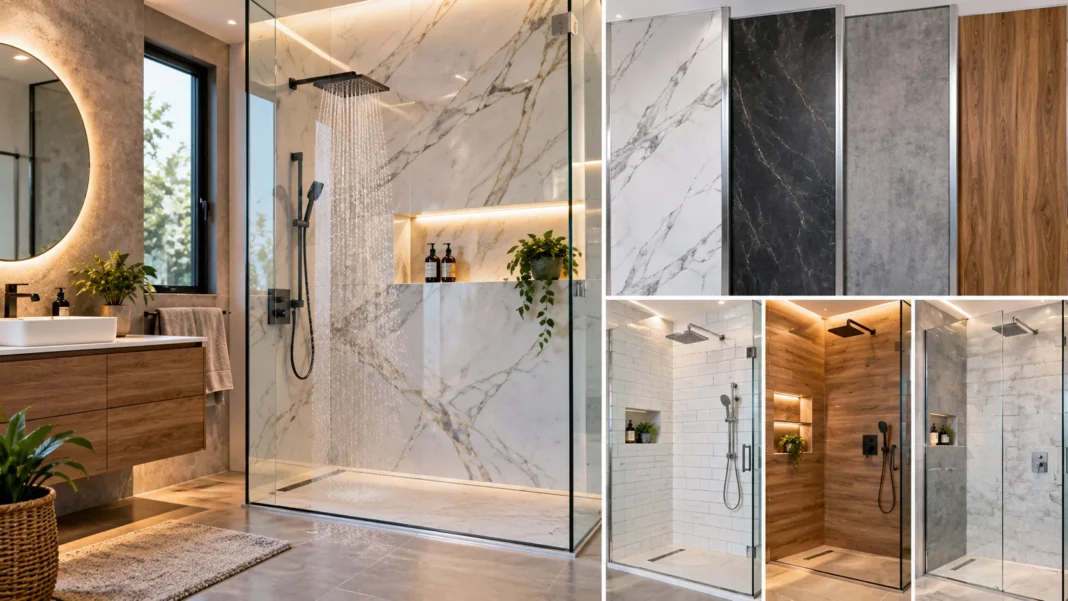

Shower wall panels have become a popular bathroom renovation option for homeowners who want a modern appearance without the extensive maintenance associated with traditional tiles. These panels create smooth, attractive shower walls and come in various materials, colors, textures, and finishes. Whether you are remodeling an existing bathroom or planning a new shower enclosure, understanding the available options can help you make better decisions.
Choosing the right shower wall panels involves more than selecting an attractive design. Material quality, waterproofing, installation requirements, maintenance needs, and overall costs all influence their long-term performance. This guide explores different types of shower wall panels, their advantages and disadvantages, typical costs, and practical considerations to help you choose a suitable solution for your bathroom.
What Are Shower Wall Panels?
Shower wall panels are large, moisture-resistant wall coverings designed for installation inside shower enclosures and other wet areas. Unlike traditional ceramic tiles, which require numerous individual pieces and grout joints, these panels cover larger wall sections. Their design can create a smooth, modern appearance while reducing the number of joints that require regular cleaning and maintenance.
These bathroom wall panels are manufactured using materials such as PVC, acrylic, fiberglass-reinforced plastic, solid surface composites, and specially designed waterproof laminate systems. Each material offers different advantages regarding durability, appearance, installation, and affordability. Some panels imitate natural stone, marble, or tile, allowing homeowners to achieve a decorative finish without using those original materials.
Shower panels are commonly installed around bathtubs, walk-in showers, and enclosed shower areas. Depending on the product, installation may involve adhesive bonding, mechanical fixing, or specialized joining systems. Proper sealing and suitable waterproof construction remain essential because even moisture-resistant panels can allow water behind the wall if their joints and connections are installed incorrectly.
PVC Shower Wall Panels: Affordable and Lightweight
PVC shower wall panels are made from polyvinyl chloride, a lightweight plastic material that resists water absorption. These panels are often selected for bathroom renovations because they are relatively affordable and available in numerous decorative finishes. Homeowners can choose simple white surfaces, contemporary patterns, or designs that imitate marble, stone, and traditional ceramic tiles.
One significant advantage of PVC bathroom panels is their relatively simple handling and installation. Their lightweight construction makes transportation easier, and certain products can be cut using suitable tools. Many PVC systems use tongue-and-groove connections or specially designed joining profiles, helping installers create continuous wall coverings with fewer visible gaps than conventional tiled surfaces.
However, not all PVC panels provide the same strength, thickness, or resistance to damage. Thin products may be more vulnerable to dents, flexing, and visible imperfections if installed over uneven surfaces. Homeowners should choose panels specifically approved for shower enclosures and follow the manufacturer’s instructions for adhesives, joint sealing, cleaning, and temperature exposure.
Acrylic Shower Wall Panels: Smooth and Modern
Acrylic shower wall panels are a popular option for homeowners who prefer a smooth, contemporary bathroom appearance. These panels are manufactured using acrylic-based materials and may incorporate additional backing layers for improved stability. Their nonporous surfaces resist water absorption, making them suitable for shower walls when properly installed with compatible sealing systems and finishing components.
Acrylic panels are available in various colors, glossy finishes, and decorative styles that complement modern bathroom fixtures. Their relatively seamless appearance can make compact showers feel cleaner and more spacious. Because acrylic surfaces do not require traditional tile grout, routine maintenance often involves wiping away soap residue and rinsing surfaces with suitable nonabrasive cleaning products.
Although acrylic panels offer attractive designs, they can be more expensive than some basic PVC alternatives. Certain surfaces may also develop scratches if cleaned using abrasive pads or unsuitable chemicals. Installation requires careful measurements and preparation because poorly aligned panels, damaged edges, or incorrectly sealed joints can affect both appearance and long-term moisture protection.
Fiberglass Shower Wall Panels: Practical and Durable
Fiberglass shower wall panels are commonly manufactured from fiberglass-reinforced plastic or related composite materials. They are designed to provide a durable, moisture-resistant surface suitable for bathrooms and other demanding environments. Many fiberglass shower surrounds are sold as molded sections or coordinated wall systems, making them an option for homeowners seeking practical, relatively straightforward bathroom renovations.
One benefit of fiberglass-reinforced panels is their combination of manageable weight and structural strength. Certain products resist everyday moisture exposure and are easier to maintain than surfaces containing numerous grout lines. Fiberglass systems are also available in simple, neutral designs that work well in rental properties, family bathrooms, and spaces where functional performance matters.
However, fiberglass products vary considerably in construction quality and finish. Some molded surfaces can become scratched, stained, or dull after prolonged use, especially when exposed to harsh cleaning methods. Homeowners should compare thickness, installation requirements, manufacturer warranties, and compatibility with existing shower fixtures before choosing fiberglass panels for a bathroom improvement project.
Solid Surface Shower Wall Panels: Premium Bathroom Finishes
Solid surface shower wall panels are manufactured using engineered materials that typically combine mineral fillers with polymer resins. These products often provide a substantial, refined appearance that appeals to homeowners planning higher-end bathroom renovations. Their designs can imitate natural stone or create a smooth, uniform finish that complements contemporary bathroom furniture and fixtures.
A major advantage of solid surface panels is their relatively durable and nonporous construction. Many products resist everyday staining and can be cleaned without the intensive grout maintenance associated with conventional tiled showers. Some solid surface materials also allow minor surface damage to be repaired using manufacturer-approved methods, although repairability depends on the specific formulation.
The main disadvantage is that solid surface panels generally cost more than basic plastic shower wall coverings. Their weight and installation requirements may also make professional fitting advisable, particularly for large panels. Homeowners should consider installation access, substrate strength, product thickness, and the total renovation budget before selecting these premium shower wall materials.
Waterproof Laminate and Composite Shower Wall Panels
Waterproof laminate shower wall panels offer decorative flexibility through printed or textured surfaces designed to resemble materials such as marble, concrete, or wood. Shower-rated laminate systems typically include a suitable core, protective surface layers, and sealed joining details. Their appearance can provide the character of traditional decorative materials without requiring the same number of individual wall pieces.
Composite shower panels represent another category that may combine polymers, mineral fillers, or other engineered components. Their performance depends on the materials and manufacturing process used. Some products provide rigid construction and realistic stone effects, while others prioritize lightweight installation and affordability, making it important to compare actual specifications rather than relying only on product names.
Not every laminate board or decorative wall panel is suitable for direct shower exposure. Products intended for dry interior walls may swell, deteriorate, or allow moisture damage when installed in wet areas. Homeowners should select systems explicitly approved for shower use and ensure the panels, adhesives, trims, and joint sealants work together as specified.
How Much Do Shower Wall Panels Cost?
The cost of shower wall panels varies according to material, size, thickness, design, and manufacturer. In the United States, basic panel materials may cost roughly $10 to $25 per square foot, while many higher-quality decorative systems range from approximately $25 to $60 per square foot. Premium solid surface and specialty products can exceed these broad estimates.
Installation adds another significant expense because walls may require preparation, repairs, waterproofing, and careful fitting around plumbing fixtures. A complete professionally installed shower wall panel project might cost approximately $1,000 to $5,000 or more, depending on its scope. These figures are illustrative planning ranges rather than fixed quotations and generally exclude extensive structural work or full bathroom remodeling.
Homeowners should calculate the total wall area before comparing material prices and installation estimates. A shower requiring 70 square feet of coverage would need approximately $1,400 in panels at $20 per square foot, before waste allowances and other expenses. Adhesives, profiles, sealants, delivery, labor, and necessary repairs should also be included when preparing a realistic project budget.
Benefits of Installing Shower Wall Panels
One of the biggest benefits of shower wall panels is the reduced number of grout lines compared with conventional tiled surfaces. Fewer grout joints can make routine cleaning simpler and reduce areas where soap residue accumulates. When properly installed, suitable waterproof shower panels create an attractive wall finish that requires less grout-related maintenance over time.
Another advantage is the opportunity to achieve a modern bathroom appearance using different decorative designs. Panels that imitate natural stone, concrete, or marble can create a stylish shower enclosure without installing individual tiles. Large-format panels also offer a relatively continuous visual surface, which may help smaller bathrooms appear more organized and less visually crowded.
Some shower panel systems may reduce installation time compared with traditional tile work, especially when existing surfaces are suitable and minimal preparation is required. Their modular designs can simplify certain renovation projects and provide predictable wall coverage. However, actual installation efficiency depends on the product, room dimensions, waterproofing requirements, and condition of the existing walls.
Disadvantages of Shower Wall Panels to Consider
Despite their benefits, shower wall panels have limitations that homeowners should evaluate before purchasing. Certain lightweight plastic products can become scratched, dented, or damaged through unsuitable cleaning and everyday impact. Premium panels may offer greater durability but can involve substantially higher material and installation expenses, reducing their appeal for homeowners working with limited renovation budgets.
Another important concern is the possibility of moisture entering through incorrectly installed joints or poorly sealed openings. Even when the panel surface itself resists water, connections around corners, shower fittings, and bottom edges require careful attention. Water trapped behind panels can damage surrounding building materials and may remain unnoticed until more extensive repairs become necessary.
Replacing damaged panels can also be inconvenient when a particular color, texture, or product range is discontinued. Unlike individual tiles, which may sometimes be replaced separately, larger panel sections may require more substantial work. Homeowners should consider product availability, warranty coverage, installation quality, and expected maintenance requirements when comparing panels with traditional bathroom wall finishes.
How to Choose the Best Shower Wall Panels
Choosing suitable shower wall panels begins with evaluating your bathroom’s size, layout, and daily usage. A heavily used family shower may benefit from durable, easy-to-clean materials, while a guest bathroom might prioritize decorative appearance. Consider the available budget, preferred finish, existing wall condition, and whether the project involves replacing tiles or constructing a completely new shower.
Material performance should be evaluated alongside appearance because different products offer different levels of strength, moisture resistance, and cleaning convenience. Check whether the manufacturer approves the panels for direct shower exposure and examine requirements for supporting surfaces. Product warranties, installation instructions, panel dimensions, and replacement availability can also help homeowners compare options more effectively.
The best choice is not necessarily the cheapest panel or the most expensive decorative design. A suitable shower wall system should provide dependable performance, complement existing bathroom fixtures, and remain practical to maintain. Comparing complete installation costs and requesting advice from experienced bathroom installers can help homeowners select products that match their renovation priorities.
Installation and Maintenance Tips for Shower Wall Panels
Proper installation begins with measuring the shower enclosure and preparing the underlying surfaces. Walls should be stable, clean, appropriately flat, and suitable for the selected panel system. Installers must also consider waterproofing requirements, plumbing penetrations, and movement allowances before fixing panels because inadequate preparation can create problems after the bathroom returns to regular use.
Different shower panel materials require different installation methods, including specific adhesives, mechanical fixings, trims, and sealing products. Following manufacturer instructions helps maintain the intended performance of the complete system. Particular attention should be given to corners, panel connections, and areas around shower controls because these locations are especially important for preventing water from reaching vulnerable wall materials.
Routine maintenance generally involves removing soap residue using compatible cleaning products and soft cloths. Harsh chemicals, abrasive brushes, and unsuitable cleaning tools should be avoided because they may damage protective finishes. Homeowners should also inspect accessible seals periodically and address deterioration promptly, helping maintain the shower enclosure’s appearance and moisture protection over time.
Conclusion
Shower wall panels provide homeowners with an alternative to traditional tiled shower walls, offering a variety of materials, finishes, and design possibilities. PVC, acrylic, fiberglass, solid surface, and waterproof composite systems each have different characteristics that influence cost, appearance, and performance. Understanding these differences helps homeowners choose suitable products for their bathrooms.
The benefits of shower wall panels include reduced grout maintenance, attractive large-format designs, and potentially convenient installation. However, material quality, accurate measurements, proper waterproofing, and professional installation remain important considerations. Evaluating both advantages and limitations prevents unrealistic expectations and supports better decisions when planning a bathroom renovation or replacing outdated shower wall coverings.
Before purchasing shower wall panels, compare material specifications, complete project expenses, and ongoing maintenance requirements. Choose products specifically designed for wet environments and ensure every component is installed according to the manufacturer’s guidance. With careful selection and proper maintenance, shower wall panels can provide an attractive, practical, and long-lasting finish for everyday bathroom use.
Frequently Asked Questions (FAQs)
1. What are the best types of shower wall panels?
Popular options include PVC, acrylic, fiberglass, solid surface, and waterproof composite panels. The best material depends on your budget, desired appearance, durability requirements, and how frequently the shower is used.
2. How much does it cost to install shower wall panels?
Professionally installed shower wall panels may cost approximately $1,000 to $5,000 or more in the United States. Total expenses depend on material selection, shower size, labor costs, and required wall preparation.
3. Are shower wall panels better than tiles?
Shower wall panels offer fewer grout lines and can be easier to clean than traditional tiles. However, tiles provide extensive design flexibility and different repair options, so the better choice depends on individual priorities.
4. Can shower wall panels be installed over existing tiles?
Some panel systems can be installed over existing tiles when the underlying surfaces are secure, suitable, and properly prepared. However, manufacturer requirements and waterproofing conditions must be checked before proceeding with installation.
5. How long do shower wall panels last?
High-quality shower wall panels can last for many years when correctly installed and maintained. Their actual lifespan depends on material quality, usage, cleaning practices, moisture protection, and the condition of joints and seals.


[…] Shower Wall Panels: Types, Costs, and Benefits […]