
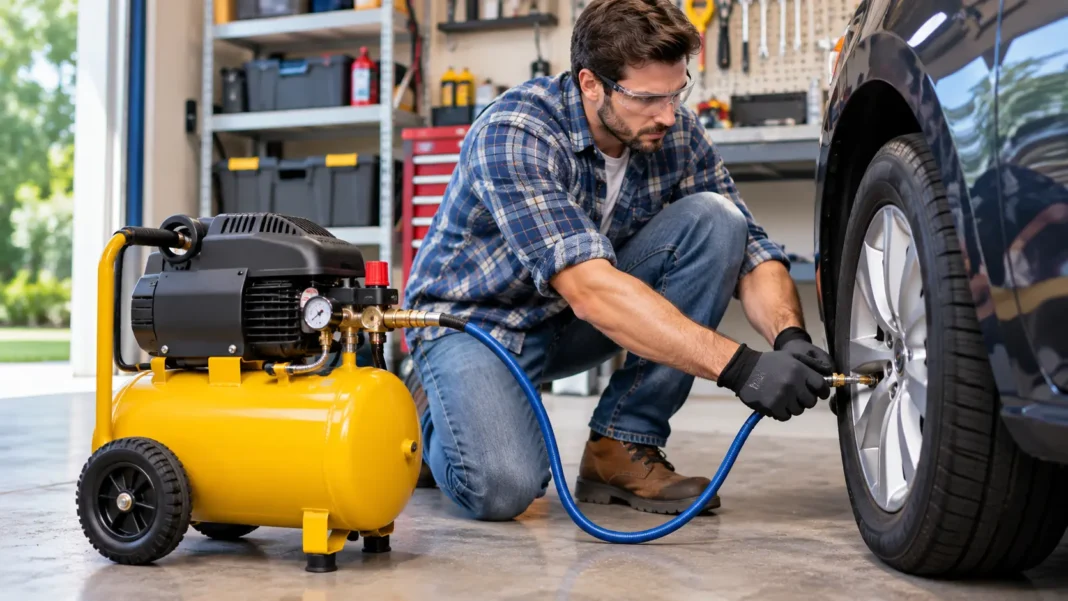

A portable air compressor is a practical tool for inflating tires, powering certain pneumatic tools, and handling everyday maintenance tasks. Whether you need one for your car, garage, workshop, or home improvement projects, choosing the right model can save time and prevent unnecessary frustration. However, not every compressor offers the same pressure, airflow, portability, or performance.
Many buyers focus on price or maximum PSI without understanding what their equipment actually requires. A compact tire inflator may work perfectly for roadside emergencies but struggle with demanding air tools. Similarly, a larger compressor might deliver excellent performance while being unnecessarily heavy for simple inflation tasks.
This guide explains how to choose the best portable air compressor for your needs. You will learn about compressor types, PSI, CFM, tank sizes, power sources, essential features, maintenance requirements, and common buying mistakes. With the right information, you can select a reliable compressor without overspending on unnecessary features.
What Is a Portable Air Compressor?
A portable air compressor is a device that compresses air and delivers it at controlled pressure for different applications. Unlike large stationary compressors, portable models are designed for easier transportation and storage. They range from small handheld tire inflators to larger wheeled units used in workshops and construction projects.
Most air compressors work by drawing surrounding air into a compression mechanism. The machine increases the air pressure and either stores the compressed air in a tank or delivers it directly through a hose. Different designs provide varying levels of pressure, airflow, and operating capacity.
Portable air compressors are commonly used for vehicle tire inflation, sports equipment, pneumatic tools, and maintenance work. However, one model cannot necessarily handle every task. Understanding the compressor’s specifications is essential before deciding whether it meets your requirements.
How Does a Portable Air Compressor Work?
A portable air compressor uses a motor to operate a pump that increases air pressure. Depending on the design, the motor may run on household electricity, a rechargeable battery, or another approved power source. The compressed air is then delivered through a hose or stored in a pressurized tank.
Tank-equipped compressors usually include a pressure switch that starts and stops the motor as tank pressure changes. A pressure regulator allows users to control the output pressure for compatible equipment. Pressure gauges display relevant readings so the operator can monitor the system.
Tankless portable inflators operate differently because they typically supply compressed air directly to the connected item. These devices are convenient for occasional tire inflation but generally cannot supply the continuous airflow required by demanding pneumatic tools. The internal design determines which applications a compressor can support effectively.
Types of Portable Air Compressors You Should Know
Portable air compressors are available in several designs, each suited to particular tasks. Handheld and compact tire inflators are generally lightweight and easy to store inside vehicles. Many use rechargeable batteries or 12-volt automotive power connections, making them convenient for travel and emergencies.
Pancake compressors feature compact, rounded air tanks and are commonly used for light-duty pneumatic tools. Hot-dog compressors use horizontal cylindrical tanks, while twin-stack models include two connected tanks. These designs provide different combinations of air storage, portability, and working capacity.
Wheeled portable compressors are often larger and designed for more demanding workshop or job-site applications. Some models use electric motors, while others use engines intended for outdoor operation. Choosing the correct type depends on your available power supply, required airflow, and transportation needs.
Understanding PSI and CFM Before Buying
PSI stands for pounds per square inch and measures air pressure. It indicates the force of compressed air delivered by a compressor. Maximum PSI can be useful when comparing machines, but it does not reveal how quickly a compressor can supply air.
CFM stands for cubic feet per minute and describes airflow volume. Compressor specifications commonly use SCFM, which expresses airflow under standardized conditions. Tools that consume substantial amounts of air need enough delivered airflow to operate correctly, even when the compressor can reach the required pressure.
For example, two compressors may both advertise a maximum pressure of 150 PSI but deliver different airflow rates. One may be suitable for light inflation, while the other can operate certain pneumatic tools. Always compare the compressor’s delivered SCFM at the pressure required by your equipment.
How to Choose the Right Portable Air Compressor Size
Choosing the correct compressor size begins with identifying the tasks you intend to perform. If you mainly inflate vehicle tires, a compact inflator may provide everything you need. Workshop activities involving pneumatic tools may require a compressor with greater airflow and air storage capacity.
The physical size of a compressor does not always indicate its performance. Some compact models deliver suitable airflow for light-duty tools, while larger units are designed for sustained operation. Motor design, pump capacity, tank size, and duty cycle all influence performance.
Before purchasing, compare the specifications of your intended equipment with the compressor’s rated output. Consider how frequently you will use the machine and where it will be stored. The right size should provide adequate performance without making transportation or storage unnecessarily difficult.
Tank vs. Tankless Portable Air Compressors
Tank-equipped compressors store compressed air so it is available when a connected tool requires it. The tank can support short periods of higher air demand while the pump replenishes pressure. This design is commonly used for nailers, staplers, and other compatible pneumatic tools.
Tankless compressors deliver air directly through the pump without relying on substantial stored capacity. Many portable tire inflators use this approach because it reduces weight and overall size. These machines are often convenient for occasional inflation but may require longer operating times for larger tires.
Neither design is automatically better for every application. A tankless unit may be ideal for keeping in a vehicle, while a tank-equipped compressor offers greater flexibility for workshop tasks. Choosing between them depends on airflow requirements, storage space, and intended use.
Electric, Battery-Powered, and 12V Air Compressors
Corded electric compressors are common in garages and workshops because they can operate using a suitable electrical outlet. They are available in a wide range of sizes and capacities. However, users must follow the manufacturer’s electrical requirements and use appropriately rated connections.
Battery-powered portable compressors provide flexibility when an electrical outlet is unavailable. They are particularly convenient for tire inflation and smaller maintenance tasks. Battery capacity, charging time, and compatibility with existing tools can influence their usefulness during repeated operation.
Twelve-volt tire inflators are designed to operate from compatible vehicle power connections. These compact devices are popular for roadside inflation and travel preparation. Before buying, confirm their current requirements, supported connection type, and suitability for your vehicle’s tires.
Best Portable Air Compressor for Car Tires
A portable air compressor for car tires should provide suitable inflation pressure, reliable controls, and convenient storage. Many compact inflators include a digital pressure display and automatic shutoff. These features can simplify tire inflation when used according to the manufacturer’s instructions.
Consider the length of the air hose and power cable before buying. A short cable may make it difficult to reach every tire on a larger vehicle. Some models offer battery operation or multiple power options, which can provide additional convenience.
Do not choose an inflator based only on its advertised maximum PSI. Check the recommended tire sizes, inflation performance, and operating limits. Always use the vehicle manufacturer’s specified cold tire pressure, usually listed on the driver’s door placard or in the owner’s manual.
Portable Air Compressors for Home and Garage Use
A portable compressor can be useful for home maintenance, workshop projects, and certain cleaning or inflation tasks. Common applications include inflating equipment and operating compatible pneumatic nailers or staplers. However, the compressor must supply the pressure and airflow required by each tool.
For occasional household tasks, a smaller electric compressor may provide adequate performance. Homeowners who regularly use several pneumatic tools may need greater airflow capacity. Consider the compressor’s noise level, tank size, and duty cycle when comparing workshop models.
Storage is another important consideration, particularly in smaller garages. A compact unit may fit conveniently on a shelf or beneath a workbench. Larger compressors require additional floor space and may be more difficult to transport between work areas.
How to Match an Air Compressor With Pneumatic Tools
Different pneumatic tools require different amounts of pressure and airflow. A small brad nailer may operate with relatively modest air consumption, while continuous-use tools often require much greater capacity. Checking the tool manufacturer’s specifications is essential before selecting a compressor.
For example, an air-powered impact wrench may require a particular SCFM rating at a specified operating pressure. The compressor should deliver enough airflow at that pressure for the intended workload. A suitable safety margin can help prevent performance problems during normal operation.
Some tools use air intermittently, while others consume air almost continuously. This difference affects how long a compressor can operate before needing recovery time. Matching airflow, pressure, and duty cycle is more reliable than selecting a machine based on tank capacity alone.
Important Features to Look for Before Buying
Useful portable air compressor features include clear pressure gauges, accessible controls, and dependable automatic shutoff functions. A suitable pressure regulator can help users match output to connected equipment. Some models also include built-in lighting or storage compartments for inflation accessories.
Portability features deserve attention because compressors vary considerably in weight and design. Comfortable carrying handles, wheels, and compact dimensions can make transportation easier. However, lightweight construction should not come at the expense of dependable components or appropriate safety protections.
Look for product specifications that clearly explain airflow, pressure, duty cycle, and operating requirements. Warranty coverage and replacement-part availability can also influence long-term value. A compressor with straightforward controls and reliable construction may be more useful than one offering numerous unnecessary accessories.
How Much Does a Portable Air Compressor Cost?
Portable air compressor prices vary according to size, power source, airflow capacity, and included features. Basic handheld tire inflators are generally less expensive than tank-equipped workshop compressors. Larger professional-grade machines usually cost more because they provide greater output and heavier-duty construction.
A budget-friendly inflator may be sufficient for occasional tire maintenance. However, paying more can be reasonable when you need faster inflation, higher airflow, or greater durability. The important factor is whether the additional performance matches your actual requirements.
When comparing prices, consider the total cost of ownership. Accessories, maintenance supplies, replacement batteries, and compatible hoses can add expenses. Choosing a reliable model with suitable specifications is often more economical than repeatedly replacing an underpowered compressor.
Common Portable Air Compressor Buying Mistakes
One common mistake is focusing entirely on maximum PSI while ignoring airflow. A compressor can reach a high pressure but still struggle to operate tools requiring substantial SCFM. Reviewing both specifications helps prevent purchasing equipment that cannot handle the intended workload.
Another mistake is selecting a compressor without considering its power requirements. A vehicle inflator may require a particular electrical connection, while a workshop compressor may need a dedicated suitable outlet. Using incompatible power sources or overloaded electrical connections can create safety problems.
Buyers also sometimes overlook noise, operating time, and maintenance requirements. A loud compressor may be inconvenient in a residential environment, while a low-duty-cycle machine may require frequent cooling periods. Reading the specifications carefully helps identify these limitations before purchasing.
How to Use a Portable Air Compressor Safely
Portable air compressors should be operated according to their manufacturers’ instructions and rated pressure limits. Before use, inspect accessible hoses, connections, and equipment for visible damage. Never operate a compressor with a damaged pressure vessel, missing protective components, or suspected mechanical problems.
Place the compressor on a stable surface with appropriate ventilation. Keep electrical equipment away from water and follow the product’s power requirements. Never direct compressed air toward people or animals, and do not use ordinary compressed air to clean skin or clothing.
Tank-equipped compressors require particular attention because stored compressed air contains significant energy. Never modify a pressure relief valve or exceed the equipment’s rated pressure. Use suitable eye and hearing protection when appropriate, and allow the machine to cool according to its operating instructions.
How to Maintain a Portable Air Compressor
Regular maintenance helps portable air compressors operate reliably and may extend their useful lifespan. Begin by reviewing the manufacturer’s maintenance schedule. Different machines have different requirements involving air filters, lubrication, moisture drainage, and inspection.
Oil-lubricated compressors may require periodic oil checks or changes using the specified lubricant. Oil-free models generally eliminate routine pump oil changes but still require other maintenance. Keeping ventilation openings clean can also help prevent excessive operating temperatures.
Tank-equipped compressors may collect moisture inside their air receivers during normal use. Follow the manufacturer’s instructions for safely draining accumulated water after depressurizing the system as directed. Regular inspection and appropriate storage can help reduce corrosion and other maintenance-related problems.
How Long Does a Portable Air Compressor Last?
The lifespan of a portable air compressor depends on its construction, workload, operating conditions, and maintenance. A light-duty tire inflator used occasionally may experience relatively little wear. A workshop compressor operating frequently may require more maintenance and component replacement.
Following the manufacturer’s duty cycle is important because some compressors are not designed for continuous operation. Excessive running time can cause overheating and premature wear. Allowing the equipment to cool when required helps protect the motor and pump.
Environmental conditions also influence durability. Dust, moisture, and improper storage can affect electrical components and mechanical parts. Selecting a compressor suited to your workload and maintaining it properly generally improves long-term reliability.
Conclusion
Choosing the right portable air compressor begins with understanding how you intend to use it. Compact tire inflators are convenient for vehicle maintenance, while tank-equipped compressors can support compatible workshop tools. Comparing pressure, airflow, tank capacity, and power requirements helps identify the most suitable equipment.
The best portable air compressor is not necessarily the largest, most expensive, or most powerful model. It should provide reliable performance for your intended tasks while remaining practical to transport and maintain. Features such as automatic shutoff, clear gauges, and dependable construction can improve everyday convenience.
Before buying, review product specifications, compare compatible models, and consider long-term maintenance needs. Avoid common mistakes such as overlooking SCFM ratings or choosing an unsuitable power source. A carefully selected compressor can provide years of useful service for home, garage, and travel applications.
Frequently Asked Questions About Portable Air Compressors
What Is the Best Portable Air Compressor for Home Use?
The best model depends on your tasks. A compact inflator works for tires and sports equipment, while a small tank-equipped compressor may be better for compatible pneumatic nailers and workshop tools.
How Much PSI Does a Portable Air Compressor Need?
Required PSI depends on the equipment being used. Car tires typically need pressures specified by the vehicle manufacturer, while pneumatic tools have their own operating requirements. Always check the relevant specifications.
Is a Tankless Air Compressor Better Than One With a Tank?
Tankless compressors are convenient for occasional inflation and compact storage. Tank-equipped models provide stored compressed air and are often more suitable for tools with intermittent airflow demands.
Can a Portable Air Compressor Inflate Truck Tires?
Some portable compressors can inflate truck tires, but suitability depends on pressure capacity, airflow, duty cycle, and the tire’s size. Check the product specifications before using it.
What Is the Difference Between PSI and CFM?
PSI measures air pressure, while CFM measures airflow volume. A suitable compressor must provide both the required pressure and enough airflow for the connected equipment to operate correctly.

