
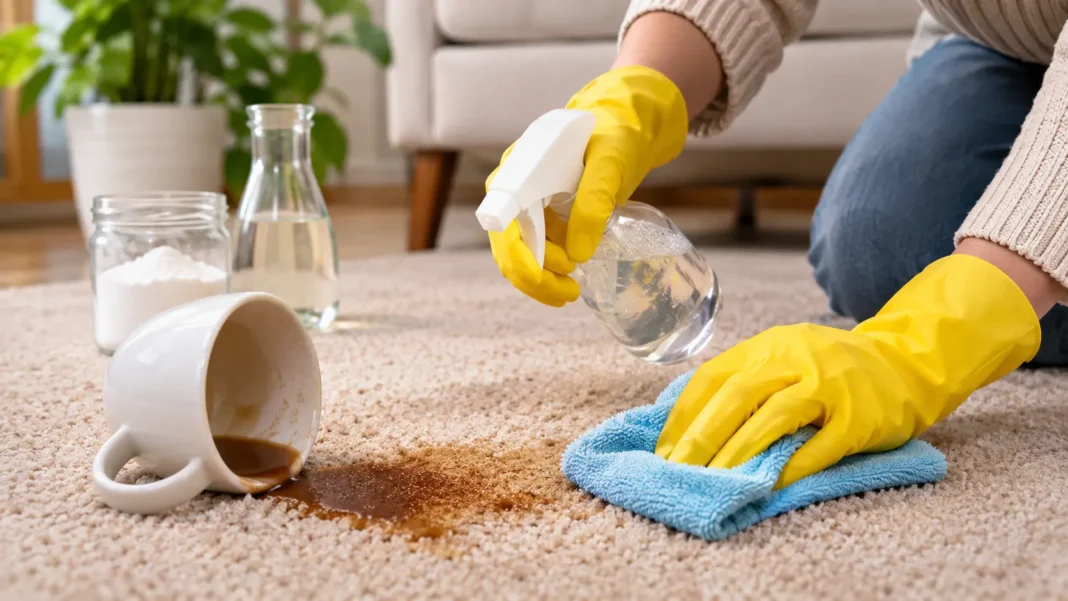

Spilling coffee on your carpet can be frustrating, especially when the dark liquid quickly spreads across the fibers. Whether it happens during a busy morning or while relaxing at home, coffee can leave noticeable marks that become more difficult to remove over time. Fortunately, many coffee spills can be treated with simple cleaning methods. Learning how to remove coffee stains from carpet can help you act quickly and protect your flooring from unnecessary damage.
Coffee contains natural pigments and other compounds that can leave discoloration on carpet fibers. Adding milk, cream, or sugar may make the stain more complicated because these ingredients leave additional residue. The cleaning method you choose should depend on the carpet material, stain age, and manufacturer instructions.
The good news is that you do not always need expensive equipment to clean a coffee spill. Gentle blotting, suitable carpet-cleaning products, and careful rinsing can help treat many stains. This guide explains how to remove fresh and dried coffee stains, which cleaning solutions to consider, common mistakes, and practical carpet maintenance tips.
Why Are Coffee Stains Difficult to Remove From Carpet?
Coffee contains colored compounds that can become trapped in carpet fibers after a spill. These compounds may leave visible discoloration, particularly on light-colored flooring. When liquid penetrates deeper into the carpet, cleaning becomes more challenging. The type of fiber also affects how easily the stain can be removed.
Fresh coffee is generally easier to clean because much of the liquid remains accessible. As the spill dries, staining compounds can become more difficult to lift. Repeated rubbing may spread the stain or push liquid deeper. Quick, gentle treatment is therefore important.
Carpet construction also influences cleaning results. Synthetic fibers may respond differently from wool or other natural materials. Some carpets have protective treatments that affect how spills behave. Understanding the carpet’s cleaning requirements helps reduce the risk of discoloration, shrinkage, or texture changes.
What to Do Immediately After Spilling Coffee
The first step is to prevent the spill from spreading unnecessarily. Place a clean, absorbent white cloth or paper towel over the affected area. Gently blot the coffee to absorb as much liquid as possible. Avoid pressing aggressively or moving the stain across a larger section.
Continue blotting with clean portions of the cloth until little additional moisture transfers. Work carefully from the outer edges toward the center. This approach can help limit spreading. Replace saturated towels rather than repeatedly using the same wet area.
Before applying a cleaning solution, check the carpet manufacturer’s instructions. Some materials require specialized products or professional cleaning. If the carpet has a care code, follow the recommended method. Testing an unfamiliar cleaner in an inconspicuous area can help identify unwanted reactions.
How to Remove Fresh Coffee Stains From Carpet
Fresh coffee stains often respond well to prompt blotting and a suitable mild cleaning solution. Begin by absorbing excess liquid with a clean white towel. Avoid scrubbing because friction can distort carpet fibers. The goal is to lift the spill without spreading it.
For carpets that permit water-based cleaning, a small amount of mild dishwashing liquid diluted in water may be useful. Apply the solution to a clean cloth rather than pouring it directly onto the carpet. Blot the stain gently and observe how the fabric responds. Avoid soaking the backing or padding.
After treating the area, use another clean cloth lightly dampened with water to remove remaining cleaning solution. Blot away excess moisture with a dry towel. Allow the carpet to dry thoroughly. If visible discoloration remains, consider a suitable carpet stain remover or professional assistance.
How to Remove Dried Coffee Stains From Carpet
Dried coffee stains can be more difficult to remove because the residue has remained in contact with the fibers. However, careful cleaning may still improve their appearance. Begin by identifying the carpet material and checking the manufacturer’s guidance. Avoid using strong cleaning chemicals without confirming compatibility.
Lightly dampen the stained area with a suitable cleaning solution when water-based treatment is permitted. Allow the cleaner to work according to its instructions. Gently blot with a clean white cloth. Avoid scrubbing or repeatedly saturating the same area.
Persistent stains may require a carpet-specific stain remover or professional cleaning. Different formulations are suitable for different fibers, so product labels matter. Do not repeatedly apply stronger solutions simply because the stain remains visible. Excessive treatment can damage the carpet without guaranteeing complete stain removal.
How to Remove Coffee Stains Using Dish Soap
Mild dish soap can help break down certain residues associated with coffee spills. However, it should only be used on carpets that allow suitable water-based cleaning. Choose a clear, mild product without unnecessary dyes or additives. Concentrated detergent should not be applied directly to the carpet.
Mix a small amount of dishwashing liquid with water to create a weak cleaning solution. Apply it to a clean white cloth and gently blot the stain. Work slowly to avoid spreading moisture. Use only the amount needed to treat the affected fibers.
Once the stain has improved, lightly blot the area with a cloth dampened with clean water. This helps remove remaining soap residue. Finish with a dry towel and allow proper airflow. Excess detergent can attract dirt, so rinsing is an important part of the process.
Can White Vinegar Remove Coffee Stains From Carpet?
White vinegar is sometimes suggested as a household cleaning ingredient for certain carpet stains. Its mild acidity may help with some residues, but it is not suitable for every carpet material. Some fibers, dyes, and protective finishes may react poorly. Manufacturer-approved cleaners are generally the safer starting point.
If the carpet manufacturer permits a diluted vinegar solution, test it in an inconspicuous area first. Apply a small amount using a clean cloth rather than pouring it over the carpet. Gently blot the affected area. Stop immediately if color transfer or changes in texture appear.
Vinegar should never be mixed with chlorine bleach or other incompatible cleaning chemicals. Such combinations can create hazardous fumes. It is also important to avoid excessive moisture. When unsure about the carpet material, use a suitable commercial cleaner or consult a professional.
How to Remove Coffee Stains With a Carpet Cleaner
Commercial carpet stain removers are designed for different types of spills and flooring materials. Some products specifically mention coffee stains on their labels. Selecting a cleaner appropriate for the carpet fiber is important. Always review the instructions before application.
Begin by blotting away any remaining liquid or loose residue. Test the product on a hidden section of carpet according to the label. Apply only the recommended quantity and follow the stated contact time. Avoid combining several cleaning products on the same stain.
After treatment, remove or rinse the product as directed. Some carpet cleaners require blotting, while others have different removal instructions. Allow the cleaned area to dry completely before normal use. If the stain remains, professional cleaning may be more appropriate than repeated chemical applications.
How to Remove Coffee Stains From White Carpet
Coffee spills can appear particularly noticeable on white or light-colored carpets. However, aggressive cleaning may cause more visible damage than the original stain. Begin with gentle blotting and check the carpet’s material. Light colors do not automatically mean stronger cleaning products are safe.
A suitable carpet-specific stain remover may help treat discoloration. Use the product according to the manufacturer’s instructions and test it first. Avoid applying ordinary household bleach because it can permanently alter fibers and backing materials. Some carpets are particularly sensitive to chemical exposure.
If the stain remains after appropriate treatment, seek professional cleaning advice. Persistent discoloration may require specialized methods that are unsuitable for home use. Repeated scrubbing can damage the carpet’s appearance. Careful cleaning protects both color and texture.
How to Remove Coffee With Milk From Carpet
Coffee containing milk or cream can leave additional residue beyond ordinary coffee discoloration. Dairy ingredients contain proteins and fats that may remain in carpet fibers. This can create lingering odors if the spill is not cleaned properly. Prompt treatment helps reduce these problems.
Start by blotting away as much liquid as possible with a clean towel. Use a suitable carpet cleaner that addresses food-related residue when the manufacturer permits it. Avoid hot water because heat may make certain protein-based stains more difficult to treat. Gentle cleaning is preferable.
After removing the visible stain, follow the product’s rinsing instructions carefully. Remaining residue can contribute to unpleasant smells or attract additional dirt. Allow the carpet to dry thoroughly. If odor or discoloration persists, professional extraction cleaning may be necessary.
How to Remove Coffee With Sugar From Carpet
Sugary coffee can leave a sticky residue even after the visible discoloration becomes less noticeable. This residue may attract dirt and create a darker patch over time. Removing both the colored stain and the remaining sugar is important. The cleaning method should still match the carpet material.
Blot the liquid immediately and apply a compatible mild cleaning solution. Work gently to loosen sticky residue without spreading the affected area. Avoid excessive moisture because sugar dissolved in liquid can travel deeper into the carpet. Controlled cleaning produces a more manageable result.
Finish by removing cleaning solution and dissolved residue according to the product instructions. Use clean, absorbent towels to reduce remaining moisture. Let the area dry completely before walking on it. Proper rinsing helps prevent the carpet from becoming sticky again.
How to Clean Coffee Stains From Wool Carpet
Wool carpet requires additional care because its natural fibers can react differently from synthetic materials. Strong detergents, excessive heat, and aggressive scrubbing may damage the surface. Some wool carpets also contain dyes that require careful handling. Always check the manufacturer’s cleaning guidance first.
Begin by gently blotting fresh coffee with a clean, absorbent cloth. Avoid rubbing the fibers or soaking the carpet. If cleaning is permitted, use a product specifically suitable for wool. Follow the label instructions and test carefully before treating a visible section.
Persistent wool carpet stains are often best handled by experienced professional cleaners. Specialized knowledge can help protect the fibers and minimize unwanted color changes. Do not experiment with ordinary bleach or highly alkaline household products. Gentle maintenance supports wool carpet appearance and longevity.
How to Remove Coffee Stains From Synthetic Carpet
Synthetic carpets commonly contain fibers such as nylon, polyester, or polypropylene. Their cleaning requirements vary according to construction, dyeing methods, and protective treatments. Some synthetic carpets tolerate water-based cleaning more easily than delicate natural fibers. However, the manufacturer’s instructions remain important.
Begin with thorough blotting to remove excess coffee. Apply a suitable cleaning solution using a cloth or as directed by the product label. Work from the outer edge toward the center. Avoid scrubbing aggressively because repeated friction can damage the carpet surface.
Rinse or remove cleaning residue according to the chosen method. Finish by blotting away excess moisture and allowing the area to dry. If the stain continues to appear, seek a product specifically approved for the carpet. Not every synthetic fiber responds identically to stain treatments.
How to Remove Coffee Stains Without a Carpet Machine
A carpet-cleaning machine is not always necessary for a small, fresh coffee spill. Basic supplies such as clean towels and an appropriate carpet cleaner may be sufficient. The key is limiting moisture and treating the stain carefully. Larger or deeply absorbed spills may require additional equipment.
Begin by blotting excess coffee until the cloth absorbs very little additional liquid. Use a suitable cleaner according to the manufacturer’s directions. Apply the solution sparingly and work gently. Avoid saturating the carpet or its underlying padding.
After treatment, remove remaining cleaning solution and absorb as much moisture as possible. Proper airflow can help the area dry. Do not cover the damp patch with furniture or rugs. If the spill has penetrated deeply, professional extraction may provide a more thorough cleaning option.
How to Prevent Coffee Stains From Returning
Sometimes a coffee stain appears to disappear during cleaning but becomes visible again after the carpet dries. This can occur when residue remains deeper in the carpet and moves toward the surface. The process is often called wicking. Incomplete cleaning or excessive moisture can contribute.
To reduce this problem, avoid pouring large amounts of water directly onto the stain. Use controlled cleaning and absorbent towels to remove liquid. Follow the cleaning product’s rinsing directions carefully. Thorough drying is also important.
If the stain repeatedly returns, the spill may have reached the carpet backing or padding. Surface cleaning may not remove all the trapped residue. A professional cleaner can assess whether extraction treatment is suitable. Repeating the same unsuccessful household method may only increase moisture exposure.
How to Get Coffee Smell Out of Carpet
Lingering coffee odors can occur when liquid remains trapped in carpet fibers or padding. Milk and cream may make unpleasant odors more likely if residue is not removed. Covering the smell with fragrance does not address the underlying problem. Proper cleaning and drying are more effective.
Start by treating the affected area with a suitable carpet-cleaning product. Follow the recommended instructions for removing food-related residue. Avoid using multiple deodorizing chemicals without checking compatibility. Excessive moisture can worsen odor problems if the carpet dries slowly.
Allow sufficient airflow and confirm that the cleaned area becomes completely dry. If a persistent sour smell remains, deeper contamination may be present. Professional extraction cleaning can help address residue below the visible surface. Severe contamination may require further assessment of the padding.
Can Baking Soda Remove Coffee Stains?
Baking soda is sometimes recommended for household cleaning because it can absorb certain odors. However, it is not a reliable standalone method for removing coffee pigments from carpet. Its effectiveness depends on the type of stain and surrounding conditions. It should not replace appropriate stain treatment.
Some carpet manufacturers discourage powdered cleaning agents because fine particles can remain trapped in the fibers. Removing residue completely may be difficult. Baking soda should therefore be used only when the manufacturer permits it. Applying large quantities is unnecessary.
If the main problem is visible coffee discoloration, a suitable carpet stain remover is generally more appropriate. Cleaning should focus on lifting the stain without damaging the fibers. Avoid combining household ingredients without understanding their compatibility. Safe, tested methods provide more predictable results.
Common Mistakes When Cleaning Coffee Stains
One of the most common mistakes is rubbing a coffee spill aggressively. Scrubbing can spread liquid and disturb carpet fibers. It may also push residue deeper into the flooring. Gentle blotting is usually a more appropriate starting point.
Another mistake is using excessive water or cleaning solution. Overwetting can affect backing materials and prolong drying. It may also contribute to recurring stains or odors. Applying only the necessary amount of cleaner helps reduce these problems.
Using unsuitable chemicals is another serious concern. Bleach, concentrated detergents, and incompatible cleaning mixtures may permanently damage carpets or create safety risks. Always follow product labels and avoid mixing cleaners. If the carpet is valuable or delicate, professional advice may be the safest option.
How to Protect Your Carpet From Future Coffee Spills
Preventing stains can be easier than removing them after a spill. Using stable cups with secure lids may reduce accidental spills in frequently used areas. Avoid placing beverages near the edges of tables or on unstable surfaces. Small changes can lower the chance of accidents.
Regular vacuuming helps remove dirt and loose particles that can affect carpet appearance. Clean flooring is also easier to inspect when a fresh spill occurs. However, vacuuming does not replace stain treatment. Liquids should be addressed promptly using suitable methods.
Consider following the carpet manufacturer’s guidance regarding stain protection treatments. Some carpets already include factory-applied protective finishes. Adding an unsuitable product may affect warranties or fabric performance. Proper maintenance and prompt cleaning are practical ways to protect carpet appearance.
When Should You Call a Professional Carpet Cleaner?
Professional cleaning may be appropriate when a coffee stain is large, deeply absorbed, or resistant to suitable household treatment. Valuable wool carpets and delicate materials may also require specialist care. Attempting aggressive cleaning can create additional damage. An experienced cleaner can assess the carpet before choosing a method.
Persistent odors, recurring stains, and substantial moisture penetration are additional reasons to seek assistance. These problems may involve residue below the visible carpet surface. Household blotting methods might not reach the affected material. Professional extraction equipment may be useful when appropriate.
Choose a cleaner familiar with your carpet’s material and construction. Ask about cleaning methods, drying requirements, and potential limitations. Some older stains cannot be removed completely without affecting the fibers. Realistic expectations help prevent unnecessary damage and disappointment.
Best Practices for Maintaining Clean Carpets
Regular carpet maintenance can help preserve appearance and reduce the buildup of dirt. Vacuum high-use areas according to the flooring manufacturer’s recommendations. Pay attention to entryways and spaces where food or drinks are frequently consumed. Consistent maintenance makes accidental stains easier to notice.
Treat spills as soon as practical rather than allowing them to remain on the carpet. Keep clean white towels and an appropriate cleaning product available. However, do not apply a product without checking compatibility. A cautious approach protects fibers and finishes.
Schedule professional cleaning when recommended for the carpet type and level of use. Avoid excessive moisture and allow adequate drying after every treatment. Check manufacturer warranty conditions when selecting cleaning methods. These habits can help maintain a comfortable and attractive living environment.
Conclusion
Learning how to remove coffee stains from carpet begins with acting quickly and choosing suitable cleaning methods. Fresh spills should be blotted gently before applying a compatible cleaning solution. Dried stains may require additional care, particularly when coffee has penetrated deeper into the fibers. The carpet material should always guide the cleaning approach.
Mild detergent solutions and commercial carpet stain removers may help treat certain coffee spills when used correctly. However, household ingredients are not universally suitable for every carpet. Overwetting, aggressive rubbing, and incompatible chemicals can cause additional damage. Proper rinsing and thorough drying are important parts of stain treatment.
Regular maintenance and prompt attention to spills can help keep carpets looking clean. If discoloration or odor persists, professional carpet cleaning may be appropriate. Avoid repeating harsh treatments that could harm the flooring. With careful handling and suitable products, many coffee stains can be improved without unnecessary damage.
Frequently Asked Questions
What Is the Fastest Way to Remove Coffee Stains From Carpet?
Blot the spill immediately with a clean white towel. Then use a carpet-compatible cleaning solution according to its instructions. Avoid rubbing and remove excess moisture carefully.
Can Old Coffee Stains Be Removed From Carpet?
Some dried coffee stains can be improved with suitable carpet cleaners and careful blotting. However, complete removal depends on the carpet material, stain depth, and previous treatments.
Does Vinegar Remove Coffee Stains From Carpet?
Diluted white vinegar may help with certain stains, but it is not appropriate for every carpet. Follow manufacturer guidance and test carefully before applying it to visible areas.
Can Baking Soda Remove Coffee Stains?
Baking soda is not a dependable solution for removing coffee discoloration. Some carpet manufacturers also discourage powdered cleaning products because residue may remain trapped in the fibers.
How Do You Remove Coffee Stains Without Damaging Carpet?
Check the carpet care instructions, blot gently, use a compatible cleaner, and avoid excessive moisture. Test unfamiliar products before use and seek professional help for delicate materials.

