
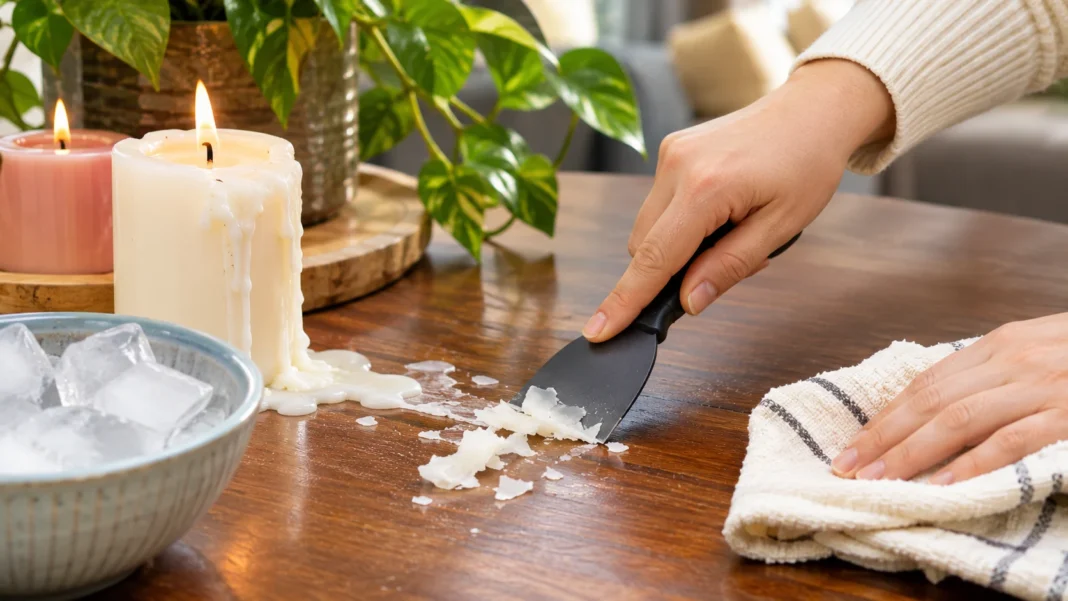

Candles can make a home feel warm and inviting, but spilled wax can quickly turn a relaxing moment into a cleaning problem. Whether candle wax drips onto your favorite tablecloth, sticks to a wooden surface, or hardens on the carpet, removing it can seem difficult. Scraping too aggressively or using the wrong cleaning method may damage the surface beneath. Learning how to remove candle wax safely can help you clean up spills without creating additional problems.
The best wax removal method depends on the material, the amount of wax, and whether the stain contains added color or fragrance oils. Some surfaces respond well to gentle cooling, while others require controlled warmth or careful cleaning. Delicate fabrics and finished furniture need extra attention. This guide explains practical methods for removing candle wax from common household surfaces, including clothing, carpets, glass, walls, floors, and furniture.
Why Is Candle Wax Difficult to Remove?
Candle wax changes from a liquid to a solid as it cools, allowing it to stick to different surfaces. While warm, the wax can spread into fabric fibers, carpet piles, and small surface gaps. Once hardened, it may form a stubborn layer. This makes removal more complicated than wiping away an ordinary liquid spill.
Many candles contain paraffin wax, soy wax, beeswax, or blends of different materials. These waxes have different melting characteristics and may behave differently during cleaning. Colored candles can also contain dyes that leave marks after the wax is removed. Fragrance oils may create additional residue on certain materials.
The surface beneath the wax is just as important as the wax itself. A method that works well on glass may damage painted wood or delicate fabric. Using excessive heat can also cause problems. Understanding the material helps you choose a safer and more effective cleaning approach.
What to Do Immediately After Spilling Candle Wax
When candle wax spills, the first priority is preventing burns and additional damage. Avoid touching freshly melted wax because it may be hot enough to injure skin. Keep children and pets away from the spill until it cools. Do not attempt to pick up liquid wax with your fingers.
For most household surfaces, allowing the wax to cool and harden is a practical first step. Wiping hot wax may spread it across a larger area or push it deeper into fabric. Once the wax becomes solid, it is often easier to lift. However, some materials may require specialized care.
Before cleaning, identify the affected surface and check any manufacturer instructions. Remove nearby objects that could interfere with the cleaning process. Avoid using sharp metal tools or strong chemicals without understanding their effects. A careful approach helps protect both the surface and the person cleaning it.
Tools and Supplies for Removing Candle Wax
Removing candle wax usually requires only a few basic household supplies. Common options include a plastic scraper, soft cloths, paper towels, and mild dish soap. A sealed bag containing ice may help harden wax on suitable surfaces. Different materials may require additional cleaning products.
For certain heat-resistant fabrics, an iron used at an appropriate low setting may help transfer remaining wax onto absorbent paper. However, this technique is not suitable for every textile. Some synthetic materials and delicate fibers can be damaged by heat. Always check the fabric care label first.
Soft brushes and vacuum cleaners can also be useful when removing wax fragments from carpets or upholstery. Avoid using abrasive tools that scratch finished surfaces. Strong solvents should not be the default cleaning option. Selecting gentle supplies first reduces the risk of unnecessary damage.
How to Remove Candle Wax From Clothes
Removing candle wax from clothing begins with allowing the wax to harden completely. Once solid, gently lift loose pieces using your fingers or the edge of a plastic scraper. Avoid pulling fabric fibers or scraping aggressively. This helps remove the thicker wax layer before addressing any remaining residue.
Check the garment’s care label before applying heat or cleaning products. For suitable washable fabrics, a controlled low-heat transfer method may help remove remaining wax. Place absorbent paper around the affected area and use an iron only if the fabric manufacturer permits it. Test carefully and avoid overheating.
After removing the wax, inspect the fabric for oily residue or colored marks. A suitable fabric stain remover or small amount of liquid laundry detergent may help with washable garments. Follow the product instructions before laundering. Delicate or dry-clean-only clothing is generally safer to take to a professional cleaner.
How to Remove Candle Wax From Carpets
Carpet fibers can trap candle wax, making removal more challenging than cleaning a hard surface. Begin by allowing the wax to cool and harden. Gently break up the thickest pieces without pulling or cutting the carpet fibers. A vacuum cleaner can remove loose fragments.
If wax remains embedded in the carpet, review the carpet manufacturer’s cleaning guidance before considering heat. Some carpet fibers can melt or become permanently damaged. Avoid placing a hot iron directly on carpet material. Professional cleaning may be preferable for delicate, valuable, or unfamiliar carpeting.
After the solid wax is removed, check for leftover color or oily residue. Some candle dyes can stain carpet fibers even after the wax disappears. Use a carpet-compatible cleaner only after testing an inconspicuous area. Avoid soaking the carpet, as excessive moisture may cause additional problems.
How to Remove Candle Wax From Upholstery
Candle wax on sofas and upholstered chairs requires careful cleaning because fabrics and padding vary considerably. Begin by checking the furniture’s cleaning label. Some upholstery is suitable for water-based cleaning, while other materials require solvent-based professional treatment. Using the wrong product may damage the fabric.
Allow the wax to harden before gently removing larger pieces. A plastic scraper may help lift surface residue without cutting the material. Avoid pressing the wax deeper into the upholstery. Vacuuming with a suitable attachment can remove loosened fragments.
If a visible stain remains, follow the manufacturer’s approved cleaning method. Avoid using hot irons, hair dryers, or excessive water on delicate upholstery. Heat can damage synthetic fibers, and moisture can penetrate the padding. A professional upholstery cleaner may be the safest choice for persistent stains.
How to Remove Candle Wax From Wooden Furniture
Wooden furniture requires gentle cleaning to protect its finish. Allow spilled candle wax to cool until it becomes solid. Then use a plastic scraper or another nonabrasive tool to carefully lift the wax. Avoid metal blades that may scratch or damage the surface.
A soft cloth can help remove small remaining fragments. If residue persists, use a cleaning product specifically approved for the furniture’s finish. Do not assume that all wood surfaces tolerate the same treatment. Painted, varnished, waxed, and unfinished wood can respond differently.
Avoid placing an iron directly on wooden furniture or applying excessive heat. High temperatures can soften finishes, leave marks, or damage adhesives. Strong solvents may also remove protective coatings. For valuable antique furniture or delicate finishes, professional advice is usually the safest approach.
How to Remove Candle Wax From Glass
Glass candle holders and containers commonly collect hardened wax after candles burn down. Allow the container to cool completely before cleaning. If the glass is suitable, gently loosen the solid wax using a plastic tool. Avoid using sharp metal objects that could scratch or crack the container.
For a sturdy, heat-safe container, mild warmth may soften remaining wax enough for gentle removal. However, sudden temperature changes can crack glass. Never pour boiling water directly into a cold glass container. Check whether the item is designed to tolerate temperature changes.
Once the larger pieces are removed, wash the container with warm water and mild dish soap if appropriate. Wipe away any remaining residue using a soft cloth. Collect wax fragments before washing rather than flushing them down the drain. This helps prevent plumbing blockages.
How to Remove Candle Wax From Walls
Candle wax can sometimes splash onto painted walls, particularly when candles are placed close to vertical surfaces. Allow the wax to harden completely before attempting removal. Gently lift larger pieces using a plastic scraper. Avoid pulling away paint or rubbing the area aggressively.
Painted walls can be sensitive to heat, moisture, and cleaning products. Test any cleaning method in an inconspicuous area first. A slightly damp, soft cloth may remove minor residue from washable paint. However, some flat or delicate finishes can become marked easily.
If candle dye has stained the wall, ordinary wax removal may not eliminate the discoloration. Avoid using strong solvents or abrasive sponges that could strip the paint. A stain may require appropriate surface preparation and repainting. Follow the paint manufacturer’s cleaning recommendations whenever possible.
How to Remove Candle Wax From Hardwood Floors
Hardwood floors can develop visible marks if candle wax is scraped carelessly. Start by allowing the wax to cool and become firm. Gently lift larger pieces using a plastic scraper with rounded edges. Keep the tool nearly flat to reduce the chance of scratching.
For remaining residue, use a soft cloth and a cleaning method approved for the floor finish. Avoid excessive water because moisture can damage certain wood floors. Heat should also be used cautiously, as some finishes are sensitive to high temperatures. Never place a hot iron directly on the flooring.
After cleaning, inspect the surface for changes in gloss or color. Some candle oils and dyes may leave marks that require specialized treatment. Avoid applying furniture polish or unrelated cleaning products without checking compatibility. Maintaining the floor’s protective finish is more important than aggressive wax removal.
How to Remove Candle Wax From Tile Floors
Tile floors are often easier to clean than fabric or unfinished wood, but the correct approach depends on the tile material. Ceramic and porcelain tiles generally tolerate gentle cleaning well. Natural stone may be more sensitive to cleaning chemicals. Begin by allowing the wax to harden.
Use a plastic scraper to carefully lift the solid wax from the tile surface. Work slowly near grout lines to avoid pushing residue deeper into small gaps. A soft cloth can remove loose particles. Avoid scratching polished or decorative tile finishes.
For leftover residue, use a cleaner suitable for the particular tile and grout. Natural stone may require a pH-neutral product designed for stone surfaces. Avoid acidic cleaners on materials such as marble and limestone. If wax has entered porous grout, additional cleaning or professional treatment may be needed.
How to Remove Candle Wax From Tablecloths
Tablecloths frequently collect candle wax during dinners and celebrations. The cleaning approach depends on whether the fabric is cotton, linen, polyester, or another material. Allow the wax to harden before gently removing the thickest pieces. Avoid rubbing because this may spread residue.
Read the tablecloth’s care label before applying heat or stain removers. Some sturdy washable fabrics may tolerate a controlled wax-transfer method. Delicate textiles, decorative embroidery, and certain synthetic fibers require more caution. Heat can damage the material or affect colored candle dyes.
After removing the wax, treat any remaining oil or color stains with an approved laundry product. Wash according to the fabric’s care instructions. Inspect the stain before machine drying because heat can make some marks harder to remove. Valuable or delicate table linens may benefit from professional cleaning.
How to Remove Candle Wax From Metal Surfaces
Metal candle holders and decorative trays may develop layers of hardened wax over time. Allow the item to cool before cleaning. Depending on the finish, a plastic scraper or soft cloth can help lift the wax. Avoid sharp tools that may scratch polished surfaces.
Some sturdy metal items can tolerate gentle warming, but decorative coatings and glued components may be heat-sensitive. Never place metal candle holders in an oven unless the manufacturer specifically permits it. Excessive heat can damage finishes or create handling hazards. Gentle mechanical removal is often preferable.
Once the wax is removed, clean the item using a product suitable for its metal type and finish. Brass, stainless steel, silver-plated, and painted metal surfaces may require different care. Avoid abrasive cleaners on delicate finishes. Proper maintenance helps preserve the candle holder’s appearance.
How to Remove Candle Wax From Plastic Surfaces
Plastic surfaces can be particularly sensitive to heat, making careful wax removal important. Begin by allowing the spilled wax to cool completely. Gently lift solid pieces using a soft plastic tool. Avoid scraping aggressively because some plastics scratch easily.
Do not use an iron, open flame, or high-temperature appliance to melt wax on plastic. Excessive heat can warp the material or damage its surface. Certain cleaning solvents may also cause discoloration or cracking. Check the manufacturer’s instructions before applying cleaning products.
A soft cloth and mild dish soap may help remove minor residue from suitable washable plastic. Test an inconspicuous area first if the finish is unfamiliar. If colored wax has stained porous plastic, complete removal may be difficult. Using gentle methods helps prevent additional damage.
How to Remove Colored Candle Wax Stains
Colored candles may contain dyes that remain visible after the solid wax has been removed. These stains can be particularly noticeable on light-colored fabrics and porous surfaces. The removal process depends on the dye and the affected material. Wax removal and stain treatment are often separate steps.
Begin by removing as much hardened wax as possible using a surface-safe method. Then identify whether the remaining mark is oily, colored, or both. Use an approved stain remover suitable for the material. Always test cleaning products before applying them to a visible area.
Some candle dyes are difficult to remove completely, especially after exposure to heat. Avoid using aggressive chemicals that could damage the underlying surface. Professional cleaning may be worthwhile for expensive clothing or furnishings. Realistic expectations are important because not every dye stain can be eliminated.
Should You Use Heat or Cold to Remove Candle Wax?
Both cooling and gentle warming can help remove candle wax under suitable conditions. Cooling encourages wax to become firmer and easier to lift in solid pieces. This method is often a useful starting point for hard surfaces. It also avoids introducing additional heat-related risks.
Controlled warmth may help transfer remaining wax from certain heat-tolerant fabrics. However, excessive temperature can damage fibers, finishes, and adhesives. Heat may also spread melted wax or set some dye stains. For this reason, it should not be the default method for every surface.
The safest approach depends on the material and manufacturer’s cleaning recommendations. When uncertain, begin with cooling and gentle removal rather than aggressive heating. Avoid using open flames or unapproved appliances. Delicate materials may require professional care instead of household methods.
How to Remove Candle Wax Without Damaging Surfaces
Protecting the underlying surface is the most important part of successful candle wax removal. Before cleaning, identify the material and any protective coating. Check manufacturer guidance where available. A method that works on one object may cause permanent damage to another.
Begin with the least aggressive option, such as allowing wax to harden and removing loose pieces gently. Use plastic tools instead of sharp metal blades. Avoid excessive pressure, high heat, and harsh chemicals. These precautions can reduce the chance of scratches, discoloration, and surface damage.
Test cleaning products in a hidden area whenever possible. If the material reacts negatively, stop rather than continuing. Persistent residue on delicate surfaces may require specialized treatment. Careful cleaning is more valuable than removing the wax quickly at the cost of damaging the item.
Common Candle Wax Removal Mistakes
One common mistake is wiping candle wax while it is still hot. This can spread the liquid into a larger area or push it deeper into fabric fibers. It also creates a risk of burns. Allowing wax to cool is often a safer first step.
Another mistake is using sharp knives or metal scrapers on delicate surfaces. These tools can scratch wood, glass coatings, or finished furniture. Applying excessive heat can also damage fabric and paint. The cleaning method should match the material rather than relying on force.
People sometimes pour melted wax down household drains after cleaning candle containers. As the wax cools, it may solidify and contribute to blockages. Collect the wax and dispose of it according to local waste guidance instead. Avoiding these common mistakes helps make cleanup safer and more effective.
How to Prevent Candle Wax Spills
Preventing wax spills begins with choosing stable candle holders and suitable locations. Place candles on level, heat-resistant surfaces away from edges. Avoid positioning them where people, pets, or moving objects could knock them over. A secure setup reduces the risk of accidental spills.
Use candle holders designed for the size and type of candle being burned. Follow the manufacturer’s instructions, including recommended burn times and safety distances. Never leave burning candles unattended. Keep them away from curtains, papers, and other flammable materials.
Consider flameless LED candles in areas where open flames create unnecessary risks. They can provide decorative lighting without producing melted wax. Protective trays may also help catch drips when suitable for the candle. Simple precautions can reduce cleaning problems and improve household safety.
When to Consider Professional Cleaning
Professional cleaning may be appropriate when candle wax affects expensive or delicate materials. Examples include antique furniture, silk garments, valuable rugs, and specialty upholstery. These items may react poorly to common household cleaning methods. A specialist can assess suitable treatment options.
Professional help may also be useful when wax has spread deeply into carpet fibers or porous surfaces. Colored wax can leave stains that require specialized cleaning techniques. Repeated home treatments may make some marks harder to remove. Seeking assistance early can help preserve the item.
Before choosing a cleaner, explain the surface type and the nature of the wax spill. Ask whether the service has experience with similar materials. A reputable professional should discuss realistic outcomes and potential limitations. Not every stain can be removed completely without affecting the surface.
Conclusion
Learning how to remove candle wax begins with understanding the affected material and choosing an appropriate cleaning method. Hardened wax can often be lifted gently from surfaces such as glass, tile, and certain types of furniture. Clothing, carpets, and upholstery may require additional care. The goal is to remove wax without damaging the material underneath.
Cooling, gentle scraping, and surface-compatible cleaning products are useful options for many household spills. Controlled heat may help with certain fabrics but can damage delicate materials and finishes. Colored wax may also leave stains after the solid residue is removed. Testing products and following care instructions are important precautions.
Preventing future spills can make candle use easier and safer. Stable holders, suitable surfaces, and careful supervision reduce the likelihood of accidents. If wax affects an expensive or delicate item, professional cleaning may be the better choice. With a patient and thoughtful approach, many candle wax spills can be managed without unnecessary damage.
Frequently Asked Questions (FAQs)
What is the easiest way to remove candle wax?
Allow the candle wax to cool and harden, then gently lift it using a plastic scraper. Remove any remaining residue with a cleaning method suitable for the affected material.
How do you remove candle wax from clothes?
Let the wax harden and gently remove the solid pieces. Check the fabric care label before using a suitable stain remover or controlled low-heat method. Delicate garments may require professional cleaning.
Can you remove candle wax from carpet?
Yes, many carpet wax spills can be cleaned by hardening the wax, gently removing fragments, and vacuuming. Remaining residue may require carpet-compatible treatment or professional cleaning.
Does vinegar dissolve candle wax?
Vinegar is not a reliable solvent for candle wax. It may also damage certain materials, including natural stone and some finishes. Use cleaning methods appropriate for the specific surface.
How do you remove candle wax from glass jars?
Allow the glass jar to cool, gently loosen the hardened wax, and remove the pieces. Clean remaining residue with mild dish soap if suitable, avoiding sudden temperature changes.


[…] How to Remove Candle Wax: Simple Guide […]