
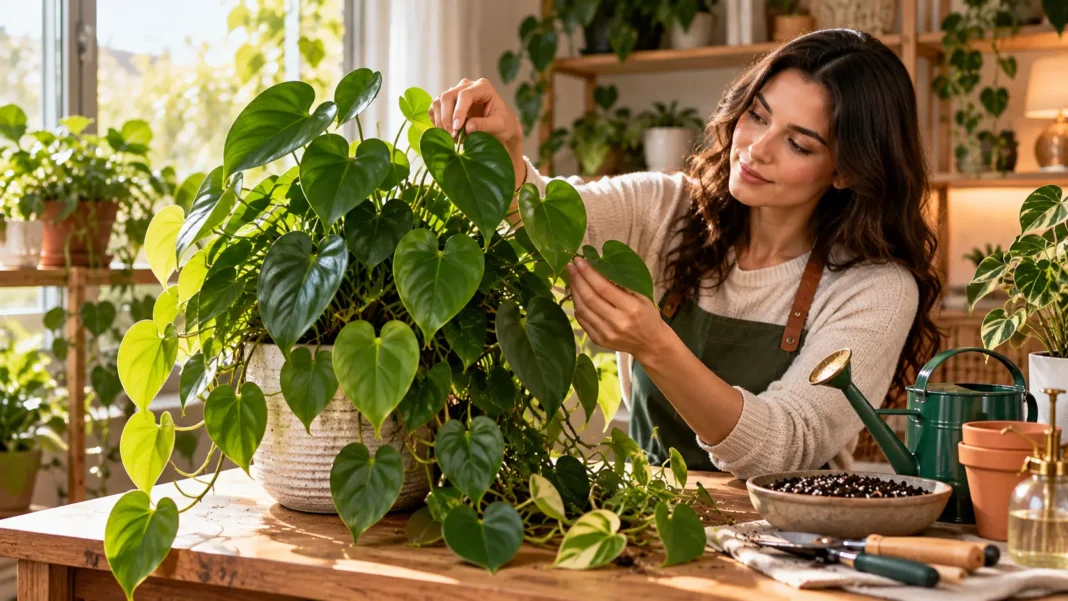

The Heart Leaf Philodendron is one of the most popular indoor plants, appreciated for its attractive heart-shaped leaves, trailing vines, and relatively simple care requirements. This tropical houseplant brings natural greenery into homes, offices, and indoor spaces without demanding complicated maintenance. Its adaptability makes it an appealing choice for beginners and experienced plant enthusiasts looking for beautiful foliage.
Scientifically known as Philodendron hederaceum, the Heart Leaf Philodendron originates from tropical regions of the Americas, where it naturally grows as a climbing or trailing vine. With suitable lighting, watering, soil, and occasional pruning, it can remain healthy and continue producing new foliage for years. This guide explains everything you need to know about Heart Leaf Philodendron care, growing conditions, propagation, popular varieties, and common problems.
What Is a Heart Leaf Philodendron?
The Heart Leaf Philodendron is a tropical evergreen climbing plant belonging to the Araceae family. Its botanical name, Philodendron hederaceum, refers to a species known for its flexible climbing stems and attractive foliage. The plant is commonly grown indoors because it adapts to household environments and can tolerate a range of indirect lighting conditions.
Its most recognizable feature is the collection of glossy, heart-shaped leaves growing along slender vines. Young leaves are generally smaller, while mature plants climbing suitable supports can develop considerably larger foliage. This growth pattern makes the plant attractive in hanging baskets, on shelves, and alongside moss poles or other vertical structures.
Unlike some houseplants that require carefully controlled environments, Heart Leaf Philodendron is relatively forgiving of occasional care mistakes. However, consistent growing conditions help prevent yellow leaves, weak growth, and root problems. Understanding its tropical background provides useful guidance when creating an indoor environment that supports healthy foliage and steady development.
Heart Leaf Philodendron Light Requirements
Providing appropriate lighting is one of the most important aspects of Heart Leaf Philodendron care. The plant generally performs best in bright, indirect sunlight, which supports healthy leaf development and consistent growth. A position near an east-facing window or slightly away from a brighter window often provides suitable conditions.
Although Heart Leaf Philodendron tolerates lower light levels, its growth may become slower when natural light is limited. Leaves may develop smaller sizes, and longer spaces between them can make vines appear sparse. Variegated varieties may also produce less distinctive patterns when they receive insufficient light for extended periods.
Direct afternoon sunlight can damage the foliage, especially when plants are suddenly exposed to intense conditions. Brown or pale patches may indicate excessive light exposure, while stretched vines can suggest insufficient illumination. Adjusting the plant’s position gradually helps maintain healthy growth without exposing delicate leaves to sudden environmental changes.
How Often Should You Water Heart Leaf Philodendron?
Watering requirements depend on the plant’s environment, container size, soil composition, and growth rate. Rather than following a fixed daily schedule, check the upper portion of the potting mix before watering. When the top inch or two feels dry, the plant may be ready for another thorough watering.
During warmer months, Heart Leaf Philodendron may require more frequent watering because increased light and temperature can encourage growth. In cooler seasons, the potting mix usually remains moist longer, making less frequent watering appropriate. Always check the soil rather than assuming the plant needs the same amount of water throughout the year.
Overwatering is one of the most common causes of Heart Leaf Philodendron problems. Constantly saturated soil limits oxygen around the roots and increases the risk of root rot. Using containers with drainage holes and allowing excess water to escape helps protect the root system while maintaining appropriate moisture levels.
Best Soil and Potting Mix for Heart Leaf Philodendron
Heart Leaf Philodendron grows best in a loose, well-draining potting mix that retains some moisture without becoming waterlogged. Its roots require access to both moisture and oxygen, making compact garden soil unsuitable for most indoor containers. A quality houseplant potting mix can provide a useful foundation for healthy root development.
Many growers improve drainage by combining regular potting mix with orchid bark and perlite. These materials create additional air spaces while helping prevent excessive compaction. The ideal mixture should allow water to pass through the container while retaining enough moisture to support the plant between watering sessions.
Pot selection is equally important because even well-draining soil can remain excessively wet in unsuitable containers. Choose a pot with drainage holes and avoid moving the plant into a container much larger than its root system. Appropriate soil and container conditions support steady growth and reduce the likelihood of moisture-related problems.
Ideal Temperature and Humidity for Healthy Growth
Heart Leaf Philodendron prefers warm indoor temperatures similar to the tropical environments where it naturally grows. Temperatures around 65–85°F, or approximately 18–29°C, generally support healthy development. Consistent warmth encourages active growth, while prolonged exposure to cold conditions can damage sensitive foliage and roots.
Humidity is another factor that influences the plant’s overall appearance. Heart Leaf Philodendron tolerates ordinary household humidity reasonably well, but moderate to higher humidity can support healthy leaf development. Extremely dry indoor air may contribute to brown leaf edges, particularly when combined with inconsistent watering or other environmental stress.
Avoid placing the plant directly beside heating vents, air conditioners, or frequently opened cold windows. Sudden temperature changes and drying airflow can create unnecessary stress. Grouping compatible houseplants or using a clean humidifier when indoor air is particularly dry can help maintain comfortable growing conditions.
How to Fertilize Heart Leaf Philodendron
Fertilizing provides additional nutrients that support foliage production and healthy vine growth. Heart Leaf Philodendron generally benefits from occasional feeding during active growing periods, particularly in spring and summer. A balanced houseplant fertilizer can provide nutrients needed for normal plant development when used according to the product instructions.
For many indoor plants, a diluted liquid fertilizer applied approximately every four to six weeks during active growth may be sufficient. However, the correct frequency depends on the product, growing medium, and plant condition. Newly potted plants growing in nutrient-rich soil may require less supplemental feeding than plants maintained in older potting mixtures.
Excess fertilizer can damage roots and cause brown leaf tips or unwanted mineral buildup in the soil. Avoid applying more fertilizer than recommended, especially when the plant is growing slowly or experiencing stress. Reducing feeding during periods of limited growth helps prevent unnecessary nutrient accumulation and supports healthier long-term maintenance.
How to Propagate Heart Leaf Philodendron
Propagation is one of the most enjoyable aspects of growing Heart Leaf Philodendron because the plant can produce roots from stem nodes. These nodes appear along the vine where leaves and aerial roots develop. Healthy stem cuttings containing suitable nodes can establish new plants when provided with appropriate moisture and growing conditions.
To propagate in water, take a healthy stem cutting just below a node using clean pruning scissors. Remove any leaves that would remain submerged, then place the node in clean water while keeping the remaining foliage above the surface. Position the container in bright, indirect light and replace the water when necessary.
Roots may begin developing within several weeks, although the timing varies according to temperature, light, and plant condition. Once the cutting has developed a suitable root system, it can be transferred into a well-draining potting mix. Maintaining gentle moisture during the transition helps the new plant adjust to growing in soil.
Popular Heart Leaf Philodendron Varieties
The classic green Heart Leaf Philodendron is recognized for its glossy, deep-green foliage and trailing growth. It remains a popular choice because it adapts to many indoor settings and works well in hanging baskets or climbing arrangements. Its simple appearance makes it easy to combine with other decorative houseplants.
This cultivar has attractive green leaves with irregular lime-green or yellowish markings. Its contrasting foliage adds color to indoor plant collections, and bright indirect light generally supports stronger variegation.
This cultivar features vivid yellow-green foliage that brings a brighter appearance to indoor spaces. Its trailing vines work well in hanging planters, while indirect light helps maintain healthy leaves.
These varieties offer different colors and textures while sharing broadly similar growing needs. Exact cultivar names and classifications can vary in retail listings, so checking botanical labels is useful. Selecting a variety based on your preferred foliage and available growing conditions can help create a plant collection that remains manageable and enjoyable.
How to Prune and Maintain Heart Leaf Philodendron
Regular pruning helps maintain the appearance of Heart Leaf Philodendron and encourages branching along its vines. Without occasional trimming, stems may become excessively long or uneven, particularly when the plant receives insufficient light. Pruning allows growers to manage the plant’s shape while removing damaged or unhealthy foliage.
Use clean, sharp scissors or pruning shears to cut stems just above a node when shortening vines. This encourages new growth from available growing points and may help create a fuller appearance over time. Healthy cuttings can also be propagated, allowing you to establish additional plants or fill gaps within an existing container.
Routine maintenance should include checking leaves for dust, inspecting stems for pests, and removing dead plant material. Dusty leaves can be gently cleaned with a damp cloth to maintain their appearance. These simple habits make it easier to recognize developing problems and support consistent growth throughout the year.
Common Heart Leaf Philodendron Problems and Solutions
Yellow leaves are among the most frequently reported Heart Leaf Philodendron problems. Occasional yellowing of older foliage can occur naturally, but widespread discoloration may indicate overwatering, insufficient light, or root stress. Checking soil moisture and drainage conditions is often the most useful starting point when investigating the cause.
Brown leaf tips may develop when the plant experiences inconsistent watering, excessively dry air, or fertilizer-related stress. Drooping leaves can indicate either insufficient moisture or damaged roots, making soil inspection important before adding more water. Adjusting care based on the underlying cause generally produces better results than responding to every symptom with additional watering.
Common houseplant pests, including spider mites, mealybugs, and scale insects, can also affect Heart Leaf Philodendron. Regularly inspect leaf undersides and stems for unusual spots, webbing, or visible insects. Isolating affected plants and using an appropriate, labeled treatment when necessary can help limit pest problems before they spread.
How to Grow Heart Leaf Philodendron in Hanging Baskets
Hanging baskets are a popular way to display Heart Leaf Philodendron because its vines naturally trail over container edges. As the plant grows, cascading stems create a decorative arrangement that works well near windows, shelves, and indoor plant stands. Choosing an accessible location also makes routine watering and maintenance easier.
When selecting a hanging planter, prioritize appropriate drainage and sufficient space for healthy root development. Lightweight potting mixtures can help reduce unnecessary container weight while maintaining suitable moisture conditions. Ensure the basket and its support are securely installed, especially when the plant becomes heavier after watering or producing additional foliage.
Occasionally rotating the container can encourage more even growth when light reaches the plant primarily from one direction. Long vines may be trimmed to maintain the preferred appearance or propagated into additional plants. Keeping the basket within comfortable reach simplifies inspections and makes it easier to maintain consistent care.
Can Heart Leaf Philodendron Grow on a Moss Pole?
Heart Leaf Philodendron is naturally capable of climbing, making moss poles and similar supports useful growing options. In tropical environments, its vines climb trees using aerial roots that attach to suitable surfaces. Providing vertical support indoors can encourage the plant to develop a different appearance compared with unsupported trailing growth.
A moss pole or climbing board offers a structure that helps guide vines upward. Gently securing stems with soft plant ties can encourage contact between aerial roots and the support without damaging the plant. Under suitable conditions, climbing growth may produce larger leaves than those commonly found on trailing houseplants.
However, climbing supports require appropriate maintenance and should not be forced into an unsuitable container. Choose a stable pole that matches the plant’s size and ensure the roots have enough space. Bright indirect light, consistent watering, and suitable humidity remain important regardless of whether the plant grows upward or trails downward.
Is Heart Leaf Philodendron Toxic to Pets?
Heart Leaf Philodendron contains insoluble calcium oxalate crystals that can cause irritation when the plant is chewed or swallowed. This makes it unsuitable for households where pets or young children may freely access the foliage. Cats, dogs, and other animals can experience discomfort after chewing the leaves or stems.
Possible symptoms of exposure include mouth irritation, drooling, and difficulty swallowing. The severity can vary, and concerning symptoms require prompt advice from a veterinarian or an appropriate medical professional. If a pet has chewed the plant, contacting a veterinarian is safer than attempting unverified home treatments.
Placing the plant in a high location may reduce access for some animals, but it is not always sufficient for climbing pets. Choosing a genuinely pet-safe houseplant may be preferable when accidental chewing is likely. Responsible placement helps protect household members while allowing plant enthusiasts to enjoy indoor greenery.
Conclusion
The Heart Leaf Philodendron is an attractive and relatively easy-to-maintain houseplant that brings tropical greenery into indoor spaces. Its heart-shaped leaves, adaptable growing habits, and variety of foliage colors make it suitable for shelves, hanging baskets, and climbing displays. Understanding its basic needs provides a foundation for healthy and consistent growth.
Successful Heart Leaf Philodendron care involves providing bright indirect light, appropriate watering, well-draining soil, and comfortable indoor temperatures. Occasional fertilizing, pruning, and pest inspections can further support plant health. Although the plant tolerates some variation in household conditions, avoiding constantly saturated soil and extreme environmental changes is especially important.
Whether you choose classic green foliage, colorful Brasil, velvety Micans, or vibrant Lemon Lime, Heart Leaf Philodendron offers opportunities to explore indoor gardening. With sensible maintenance and careful observation, it can continue growing for many years. Its combination of distinctive foliage and manageable care requirements makes it a rewarding addition to a thoughtfully maintained houseplant collection.
Frequently Asked Questions (FAQs)
How often should I water a Heart Leaf Philodendron?
Water your Heart Leaf Philodendron when the upper inch or two of soil feels dry. The frequency varies depending on temperature, light, container size, and season, so checking soil moisture is more reliable.
Does Heart Leaf Philodendron need direct sunlight?
No, Heart Leaf Philodendron generally prefers bright, indirect light. It can tolerate lower light conditions, but intense direct sunlight may damage leaves, while insufficient lighting can cause slower growth and sparse vines.
Is Heart Leaf Philodendron easy to grow indoors?
Yes, Heart Leaf Philodendron is considered a beginner-friendly indoor plant because it adapts to ordinary household conditions. Providing suitable light, well-draining soil, and consistent watering supports healthy foliage and steady growth.
Can Heart Leaf Philodendron grow in water permanently?
Heart Leaf Philodendron can survive and grow in water when provided with adequate nutrients, oxygen, and suitable maintenance. However, growing indefinitely in plain water without appropriate nutrient management may eventually limit healthy development.
Why are my Heart Leaf Philodendron leaves turning yellow?
Yellow leaves may result from overwatering, poor drainage, insufficient light, or natural aging. Check the soil and growing conditions before changing your care routine, since different problems can produce similar symptoms.

